

Kids’ Dental Emergencies: A Parent’s Handbook for Quick Action
Why Every Parent Needs to Know About Emergency Dental for Children
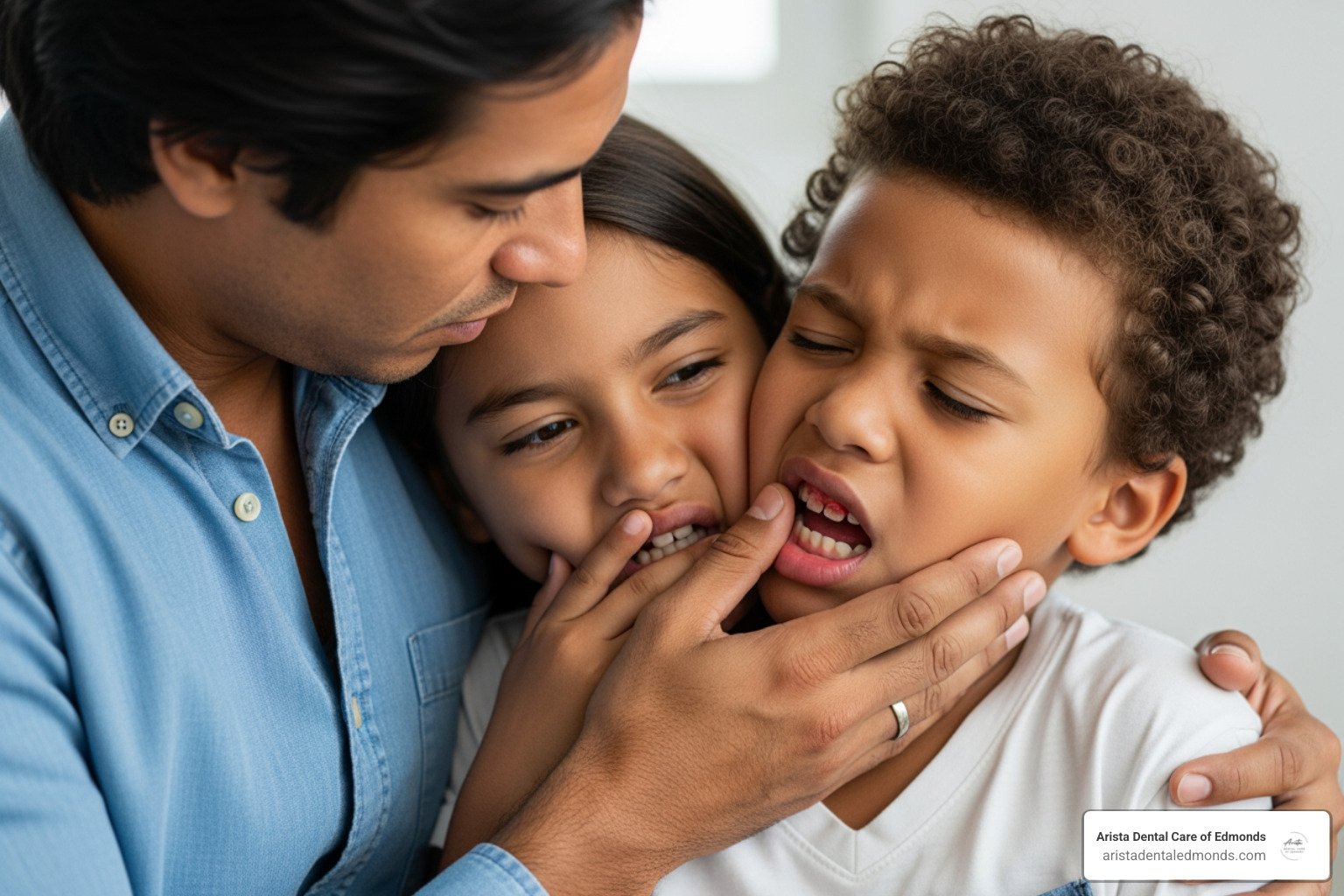
Emergency dental for children is one of those topics you hope you’ll never need—but when a dental crisis strikes, knowing what to do can mean the difference between saving and losing your child’s tooth. Dental injuries are surprisingly common in children, particularly during the active years between ages 6-12 when kids are playing sports, learning new activities, and testing their physical limits.
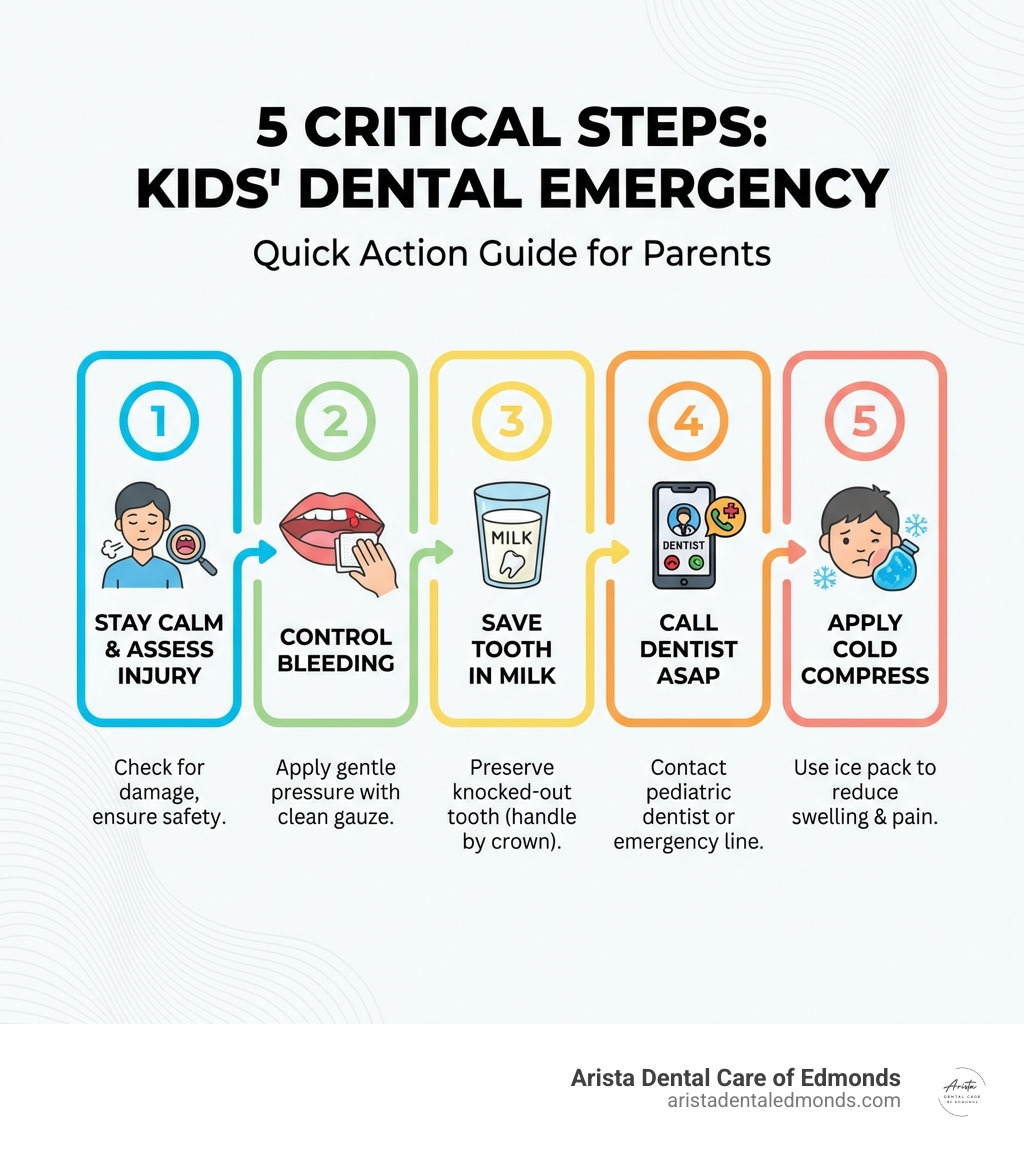
If your child has a dental emergency right now:
- Call your pediatric dentist immediately at their emergency line
- For knocked-out permanent teeth: Place in milk and get to the dentist within one hour
- For severe bleeding: Apply firm pressure with clean gauze for 15 minutes
- For facial swelling or breathing difficulty: Go to the hospital emergency room
- For severe pain: Rinse with warm salt water, apply cold compress, and contact your dentist
Most dental emergencies fall into a few key categories: knocked-out or broken teeth, severe toothaches, cuts to the mouth or gums, and infections that cause swelling. Sports-related injuries account for a significant portion of these cases, but everyday activities like running, climbing, or even just learning to walk can lead to dental trauma.
The good news? Many dental emergencies can be successfully managed when parents act quickly and know the right steps to take. Some situations require immediate professional care, while others can be stabilized at home until you can reach your dentist during regular hours.
I’m Dr. Risha Khan, and over the past decade at Arista Dental Care of Edmonds, I’ve helped countless families steer the stress and uncertainty of emergency dental for children. My focus has always been on gentle, personalized care that puts both kids and parents at ease during these challenging moments.
Identifying a Dental Emergency for Children
When a child experiences a dental issue, it can be tough to distinguish between a minor inconvenience and a true emergency. However, some situations clearly demand immediate attention to prevent further pain, infection, or permanent damage. We understand that parents want to do everything they can to protect their children, and knowing what constitutes a dental emergency is the first step in providing effective care.
At Arista Dental Care of Edmonds, we follow guidelines from leading dental organizations, such as the American Academy of Pediatric Dentistry (AAPD), which states that emergency care for children is an essential duty of every dentist. This includes addressing issues like facial swelling, infections, uncontrolled bleeding, severe pain, and oral-facial trauma. These types of injuries are most common in children aged 6-12 years, often occurring during play or sports.
Signs of a Serious Dental Infection
A dental infection in a child can escalate quickly and requires urgent attention. Keep an eye out for these tell-tale signs:
- Fever: A sudden increase in body temperature can indicate a systemic infection.
- Gum Boils or Pimples: These small, pus-filled bumps on the gums often point to an abscess.
- Facial Swelling: Swelling around the jaw, cheek, or under the eye can be a sign of a spreading infection. This is particularly concerning if the swelling is spreading towards the eyes, neck, or affecting breathing, which requires immediate medical attention.
- Throbbing Pain: Persistent, throbbing pain that doesn’t subside with over-the-counter pain relievers is a strong indicator of an underlying infection.
- Bad Breath or Taste: A foul odor or taste in the mouth, especially if accompanied by other symptoms, can suggest an abscess that is draining.
If you observe any of these symptoms, especially facial swelling, it’s crucial to seek professional dental care immediately. Scientific research on dental emergencies indicates that an untreated infection can lead to serious health complications.
When to Seek Immediate Emergency Dental for Children
While all dental pain should be addressed, certain situations demand immediate attention from an emergency dentist. Acting quickly can often mean saving a tooth or preventing a more serious health issue.
Here are some scenarios where you should seek immediate emergency dental for children:
- Knocked-Out Permanent Tooth: This is perhaps the most time-sensitive dental emergency. If a permanent tooth is fully dislodged from its socket, immediate action (ideally within an hour) can significantly increase the chances of successful reimplantation. We’ll discuss the first aid steps for this below.
- Severe Toothache: A toothache that is persistent, throbbing, or severe enough to disrupt sleep or daily activities, especially if accompanied by swelling or fever, needs prompt evaluation. It could indicate an abscess or deep decay.
- Broken or Chipped Tooth with Pain or Exposed Nerve: If a broken tooth exposes the inner pulp (which looks like a red dot or causes extreme sensitivity), or if the break is extensive and causing severe pain, it’s an emergency.
- Facial Trauma or Suspected Broken Jaw: Any significant injury to the face, especially if it leads to difficulty opening or closing the mouth, severe bruising, or persistent pain, could indicate a fractured jaw. In such cases, a hospital emergency room might be the first stop.
- Uncontrolled Bleeding in the Mouth: Bleeding that doesn’t stop after applying firm pressure for 10-15 minutes is a serious concern.
- Loose or Displaced Permanent Tooth: If a permanent tooth is pushed out of alignment or feels very loose after an injury, it needs immediate attention to prevent further damage or loss.
Dental injuries are common in children, with sports-related incidents accounting for a significant portion. Whether it’s a fall during play or a collision on the field, these moments can be startling for both child and parent. Knowing when to call us for More info about emergency dental options across Washington is critical. We aim to make Comfortable Dental Visits Guide available even during emergencies.
Immediate First Aid for Common Pediatric Dental Injuries
When a dental emergency strikes, those first few minutes can be crucial. Knowing exactly what to do can help ease your child’s discomfort and improve the outcome of the situation. Here are the immediate first-aid steps for some of the most common pediatric dental injuries, as highlighted by sources like the American Academy of Pediatrics’ HealthyChildren.org.
Saving a Knocked-Out Permanent Tooth
This is arguably the most urgent dental emergency for children. Time is of the essence, ideally within one hour, to increase the chances of saving the tooth.
- Find the Tooth: Locate the knocked-out tooth.
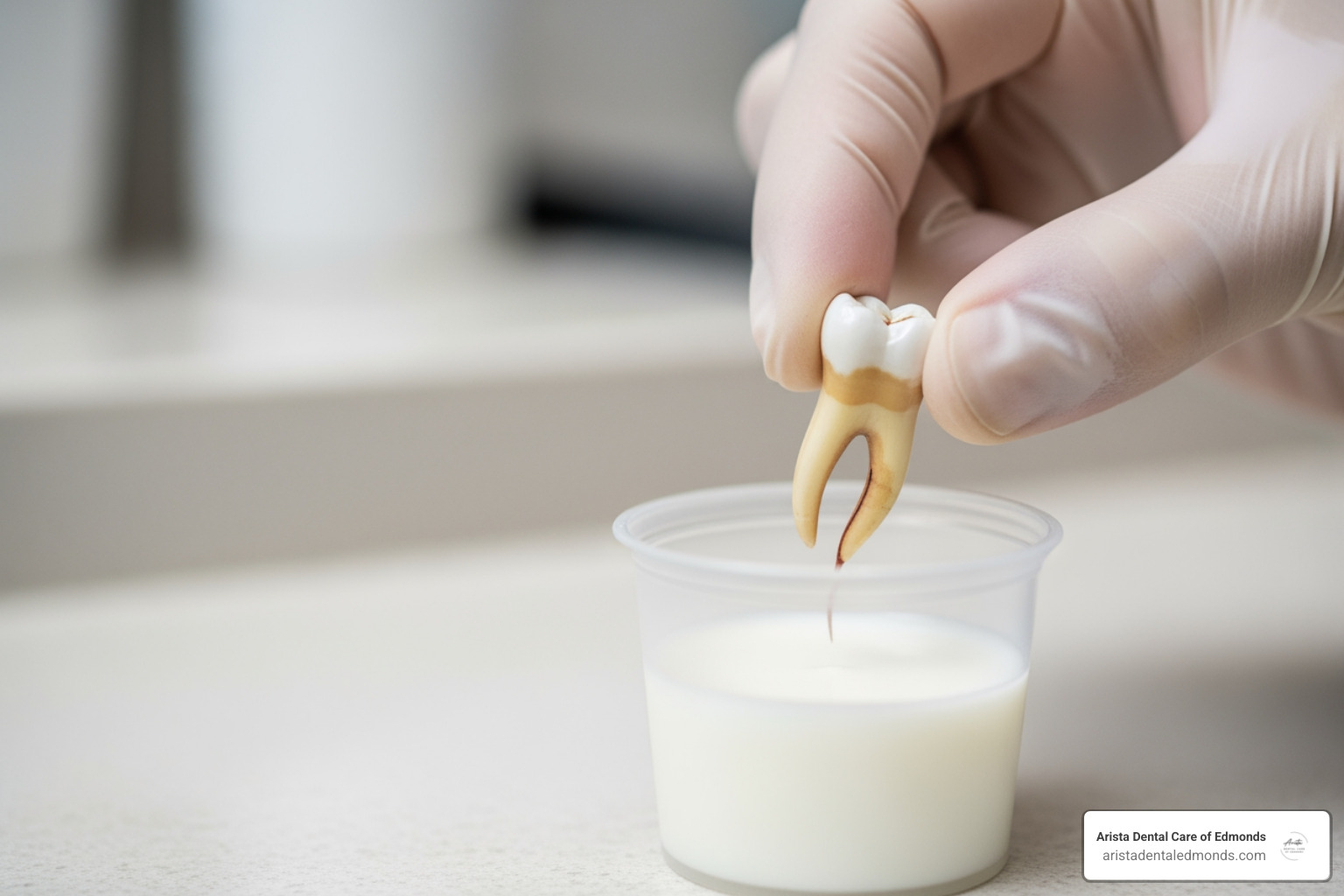
- Handle with Care: Pick up the tooth by the crown (the chewing surface), never by the root. Touching the root can damage the delicate cells necessary for reattachment.
- Clean (Gently): If the tooth is dirty, gently rinse it with cold water for no more than 10 seconds. Do NOT scrub it, wipe it, or use soap.
- Reinsert if Possible: If your child is calm and cooperative, try to gently reinsert the tooth into its socket. Have them bite down on a clean piece of gauze or a clean cloth to hold it in place.
- Moist Storage: If reinsertion isn’t possible (or if you’re unsupported doing it), keep the tooth moist. The best options are:
- In a container of milk (whole milk is preferred).
- In a tooth preservation product (if you have one).
- In the child’s mouth, between their cheek and gum (only if they are old enough to not swallow it).
- As a last resort, in water, but milk is much better.
- Seek Immediate Dental Care: Get to our office or an emergency dental clinic in Edmonds, Shoreline, Lynnwood, or Mountlake Terrace, WA, immediately. The faster you act, the better the prognosis for saving the tooth.
For more detailed guidance, the Dental Emergencies: What Parents Need To Know guide offers excellent advice. We strive to make these urgent visits as stress-free as possible, ensuring Painless Smiles: Making Every Dental Visit a Breeze even in challenging circumstances.
Managing Severe Toothaches and Broken Braces
For Severe Toothaches:
- Rinse: Have your child rinse their mouth thoroughly with warm water.
- Floss: Gently use dental floss to remove any food particles or debris that might be caught between the teeth. Sometimes, this can be the cause of the pain.
- Cold Compress: If there’s any swelling on the face, apply a cold compress to the outside of the cheek.
- Pain Relief: Administer an over-the-counter children’s pain reliever (like acetaminophen or ibuprofen) according to dosage instructions. Do NOT put aspirin directly on the aching tooth or gums, as it can burn the delicate gum tissue.
- Contact Us: Call our office for an emergency appointment. Even if the pain subsides, it’s crucial to identify the underlying cause.
For Broken Braces and Wires:
Orthodontic emergencies are common, and while often not life-threatening, they can be quite uncomfortable.
- Assess the Damage: Carefully examine the broken appliance.
- Remove Loose Pieces: If a broken appliance can be easily removed without further injury, do so.
- Cover Sharp Edges: If a wire is poking or a bracket is sharp, use a small piece of orthodontic wax, a cotton ball, or even sugar-free chewing gum to cover the offending part. This prevents it from irritating the cheeks, lips, or tongue.
- Do NOT Cut Wires: Never attempt to cut a wire that is stuck in the gums, cheek, or tongue. This can cause more severe injury.
- Contact Your Orthodontist (or Us): Schedule an appointment as soon as possible. If it’s after hours and causing significant pain, contact our emergency dental for children line for guidance.
We understand that these situations can be scary, and our goal is to help you steer them with confidence. At Arista Dental Care of Edmonds, we’re here to help you get From Fear to Calm: Your Guide to Stress-Free Dental Visits.
When to Choose Emergency Dental for Children vs. the Hospital
Deciding whether to head to a dental clinic or a hospital emergency room can be confusing during a dental emergency. It’s important to understand the capabilities of each to ensure your child receives the most appropriate and timely care. Generally, if the injury is isolated to the teeth and gums, a dental office is the best choice. However, if there’s broader trauma, suspected fractures beyond the teeth, or systemic issues, the hospital ER is more suitable. For additional context on managing these situations, the NHS Guide to Dental Emergencies provides a helpful framework.
Here’s a quick comparison to guide your decision:
| Situation | Go to Dental Clinic (e.g., Arista Dental Care of Edmonds) | Go to Hospital Emergency Room (ER) |
|---|---|---|
| Severe Toothache/Dental Pain | Yes | No (unless severe swelling affecting breathing) |
| Knocked-Out Tooth (Permanent) | Yes (immediate) | No (dentist is specialized) |
| Broken/Chipped Tooth | Yes | No |
| Lost Filling or Crown | Yes | No |
| Dental Abscess (localized swelling) | Yes | No (unless spreading rapidly) |
| Uncontrolled Bleeding from Mouth | Yes (if minor, dental office can manage) | Yes (if severe and persistent after pressure) |
| Facial Swelling affecting Breathing | No | Yes |
| Suspected Fractured Jaw | No | Yes |
| Severe Trauma to Head/Face (beyond teeth) | No | Yes |
| Difficulty Swallowing or Airway Obstruction | No | Yes |
Hospital ER Situations
For certain severe injuries, the hospital emergency room is the appropriate first stop. These typically involve broader head and facial trauma that might extend beyond the scope of a dental office.
- Facial Bone Fractures: If you suspect a broken jaw or other facial bones, especially after a fall or accident, the ER can provide immediate diagnostic imaging (X-rays, CT scans) and consult with oral and maxillofacial surgeons.
- Airway Obstruction: Any swelling in the mouth or throat that makes it difficult for your child to breathe is a life-threatening emergency. Head to the ER immediately.
- Severe Lacerations: Deep cuts to the lips, tongue, or inside of the mouth that are bleeding profusely and cannot be controlled with direct pressure for 15 minutes may require stitches and emergency medical attention.
- Concussion or Head Injury: If the dental emergency is part of a larger head injury (e.g., loss of consciousness, confusion, vomiting), the ER should be your first destination to rule out concussions or other neurological damage.
Pediatric Dentist Situations
For the vast majority of emergency dental for children issues, your pediatric dentist is the best resource. We are specifically trained and equipped to handle dental trauma and pain in children, providing specialized care that an ER typically cannot.
- Chipped Teeth: Even if it’s not painful, a chipped tooth should be evaluated to prevent further damage or sensitivity. We can often restore it with bonding.
- Lost Fillings: While not always painful, a lost filling leaves the tooth vulnerable to decay and sensitivity. We can replace it quickly.
- Tooth Displacement (Luxation): If a tooth is pushed out of its normal position, but not fully knocked out, a pediatric dentist can reposition and stabilize it.
- Dental Abscesses: For localized infections causing pain and swelling, we can drain the abscess, prescribe antibiotics, and address the source of the infection (e.g., root canal or extraction if necessary).
- Knocked-Out Permanent Teeth: As discussed, immediate attention from a dentist is critical for reimplantation.
At Arista Dental Care of Edmonds, we specialize in Pediatric Dentistry Edmonds, and our team is prepared to handle these situations with gentle, child-focused care. We want to ensure your child receives the comfort and expertise they need during a stressful time.
Professional Treatments and Emergency Dental for Children Services
When your child experiences a dental emergency, our priority at Arista Dental Care of Edmonds is to provide prompt relief, accurately diagnose the problem, and deliver effective treatment. We understand that these situations can be scary for both children and parents, and our compassionate team is here to guide you through every step.
Sedation Options for Urgent Care
We know that a dental emergency can be an even more anxiety-inducing experience for a child. To ensure your child’s comfort and to allow us to perform necessary treatments effectively, we offer various sedation options. Our approach is always to use the least invasive method possible while ensuring a positive and pain-free experience.
- Nitrous Oxide (Laughing Gas): This is a very common and safe option for children. It helps them relax and reduces anxiety during the procedure. The effects wear off quickly after the mask is removed.
- Conscious Sedation: For children who need a bit more relaxation, we can administer oral medication that helps them feel drowsy and calm, though they remain awake and responsive.
- General Anesthesia: In rare cases, for very extensive procedures, uncooperative children, or those with special health care needs, general anesthesia might be recommended. This is typically administered in a hospital setting or with a specialized anesthesiologist in our office, allowing the child to be completely asleep during treatment.
Our team will discuss the best sedation option for your child’s specific needs and the nature of their emergency dental for children treatment, always prioritizing their safety and comfort. For new patients, we make the process as smooth as possible, ensuring you New Patient: Discover a Dental Practice That Puts You First.
Restoring Your Child’s Smile After Trauma
Once the immediate emergency is addressed, our focus shifts to restoring your child’s smile and ensuring long-term oral health. The specific treatments will depend on the type and severity of the injury.
Common treatments for dental emergencies include:
- Composite Bonding: For chipped or fractured teeth, a tooth-colored resin can be bonded to the tooth to restore its original shape and appearance.
- Dental Fillings: If decay led to a severe toothache or infection, a filling will be used to remove the decay and restore the tooth.
- Dental Crowns: For more extensive fractures or damaged teeth, a crown (a cap that covers the entire tooth) may be necessary to protect the tooth and restore its function.
- Pulp Therapy (Root Canal Treatment for Children): If an injury or deep decay affects the nerve (pulp) inside the tooth, pulp therapy can save the tooth from extraction.
- Tooth Extraction: In cases of severe infection, irreparable damage, or when a baby tooth needs to be removed to make way for a permanent tooth, extraction may be necessary.
- Space Maintainers: If a baby tooth is lost prematurely due to trauma or extraction, a space maintainer might be used to hold the space open for the permanent tooth, preventing alignment issues.
- Follow-Up Care: After any emergency treatment, follow-up appointments are crucial to monitor healing, ensure the stability of the restored tooth, and address any potential long-term complications.
We also believe in proactive care, so after an emergency, we’ll discuss preventative measures, such as mouthguards for sports, to help avoid future incidents. Our comprehensive approach ensures that we’re not just treating the immediate problem but also safeguarding your child’s oral health for the future. This is part of our commitment to being A Parent’s Guide to Baby’s First Dentist Visit and Beyond.
Preparing for a Potential Dental Emergency
While we can’t predict when a dental emergency will happen, we can certainly prepare for one. Being ready can make a world of difference in how quickly and effectively you can respond.
Here’s how parents can prepare:
- Establish a Dental Home: Have a regular pediatric dentist in Edmonds, Shoreline, Lynnwood, or Mountlake Terrace, WA. This means your child has a dental professional who knows their history and can provide continuous, comprehensive care. This also ensures you know who to call in an emergency.
- Emergency Contact Information: Keep our emergency contact number readily available (e.g., saved in your phone, posted on the fridge).
- Basic First-Aid Kit: Assemble a small dental first-aid kit with items like:
- Small container with a lid (for knocked-out teeth)
- Milk (if traveling, a small carton) or a tooth preservation product
- Clean gauze pads
- Children’s pain reliever (acetaminophen or ibuprofen)
- Orthodontic wax (if your child has braces)
- Know Your Child’s Medical History: Have a concise summary of your child’s allergies, medications, and any pre-existing medical conditions ready.
- Understand Your Insurance: Familiarize yourself with your dental insurance coverage for emergency procedures. Many dental emergencies require treatments that can be expensive, so understanding your coverage is crucial to managing costs effectively. Dental insurance typically covers necessary procedures like X-rays, extractions, or root canal therapies associated with treating a dental emergency.
- Discuss with Your Child: Talk to your child about what to do if they hurt their mouth or teeth, emphasizing the importance of telling an adult immediately.
- Sports Safety: If your child plays sports, ensure they wear a properly fitted mouthguard. This simple device can prevent many traumatic dental injuries.
What Information Should Parents Have Ready When Calling for Emergency Dental Care?
When you call for emergency dental for children, having key information ready will help us assess the situation quickly and provide the best advice or prepare for your arrival.
Be ready to provide:
- Child’s Name and Age:
- Brief Description of the Incident: What happened? When did it happen?
- Symptoms: What pain is your child experiencing? Is there swelling, bleeding, or sensitivity?
- Type of Injury: Is a tooth knocked out, chipped, loose, or is it a severe toothache?
- Any First Aid Administered: What steps have you already taken?
- Your Contact Information:
We also understand that emergencies don’t always happen during regular business hours. Many pediatric dental practices, including ours, offer same-day, after-hours, and weekend care to address pain and injuries promptly. When you call our office, we’ll provide guidance and make arrangements for the quickest possible care in Edmonds, Shoreline, Lynnwood, or Mountlake Terrace, WA.
Frequently Asked Questions about Kids’ Dental Emergencies
It’s natural to have questions when your child is facing a dental emergency. Here are answers to some of the most common concerns parents have:
What should I do if my child knocks out a baby tooth?
If your child knocks out a baby tooth (also known as a primary tooth), the immediate steps are slightly different than for a permanent tooth.
- Find the Tooth: Try to locate the tooth.
- Do NOT Reinsert: Unlike permanent teeth, you should not attempt to reinsert a baby tooth into its socket. Reinserting a baby tooth can potentially damage the developing permanent tooth underneath.
- Control Bleeding: Apply gentle pressure with clean gauze to the area to stop any bleeding.
- Contact Your Dentist: Call us immediately. We will need to assess the area to ensure no fragments of the tooth remain and to check for any potential damage to the permanent tooth bud. We’ll also provide guidance on managing pain and follow-up care.
Can I use aspirin to manage my child’s dental pain?
No, you should not use aspirin to manage your child’s dental pain, especially by placing it directly on the tooth or gums. Aspirin is acidic and can cause chemical burns to the delicate gum tissue, leading to further irritation and damage.
Instead, for temporary pain relief, you can use:
- Acetaminophen (e.g., Tylenol): Administer according to the package directions based on your child’s age and weight.
- Ibuprofen (e.g., Motrin, Advil): Also administer according to dosage instructions. This can also help reduce swelling.
Always ensure you follow the recommended dosage and consult with your pediatrician or pharmacist if you have any questions. The most important step is to contact us for professional care to address the root cause of the pain.
How long do I have to save a knocked-out permanent tooth?
The window of opportunity to successfully reimplant a knocked-out permanent tooth is critical and relatively short. Ideally, you should get to a dentist with the tooth within 30-60 minutes of the injury.
The viability of the root cells on the tooth’s surface is crucial for reattachment. The longer the tooth is out of the mouth and dry, the lower the chances of successful reimplantation. That’s why keeping the tooth moist (in milk or a tooth preservation product) and seeking immediate professional care are paramount. Every minute counts!
Conclusion
Navigating a dental emergency with your child can be a challenging experience, but with the right knowledge and a trusted dental partner, you can handle these situations effectively. Acting quickly and knowing the appropriate first-aid steps are key to minimizing discomfort and preserving your child’s precious smile.
At Arista Dental Care of Edmonds, we are committed to providing comprehensive, gentle, and compassionate care for all ages, including urgent emergency dental for children needs. Our team in Edmonds, Shoreline, Lynnwood, and Mountlake Terrace, WA, is equipped with advanced technology and a child-friendly approach to make even stressful visits as comfortable as possible. We encourage you to establish a dental home with us, so you always know who to call when an unexpected dental crisis arises. Your child’s oral health is our top priority, and we’re here to support your family every step of the way.
Don’t hesitate to reach out to us for guidance or to schedule an appointment.

Edmonds Dentist

21727 76th Ave W Ste G, Edmonds, WA 98026
(425) 967-7272
info@aristadentaledmonds.com