

What is Odontophobia? A Comprehensive Guide to the Fear of Teeth
Understanding the Fear of Teeth: Why It Matters More Than You Think
Fear of teeth, also known as dentophobia, is more common than you might imagine. If the thought of a dental visit makes you anxious or terrified, you’re not alone.
Quick Facts About Fear of Teeth:
- 36% of people in the U.S. experience fear of dental treatment
- 12% suffer from extreme fear, which may qualify as a phobia
- 3-5% of adults avoid the dentist completely due to dentophobia
- Women are affected more often than men (nearly 5% vs. 3%)
- Fear often starts in childhood and can persist throughout life
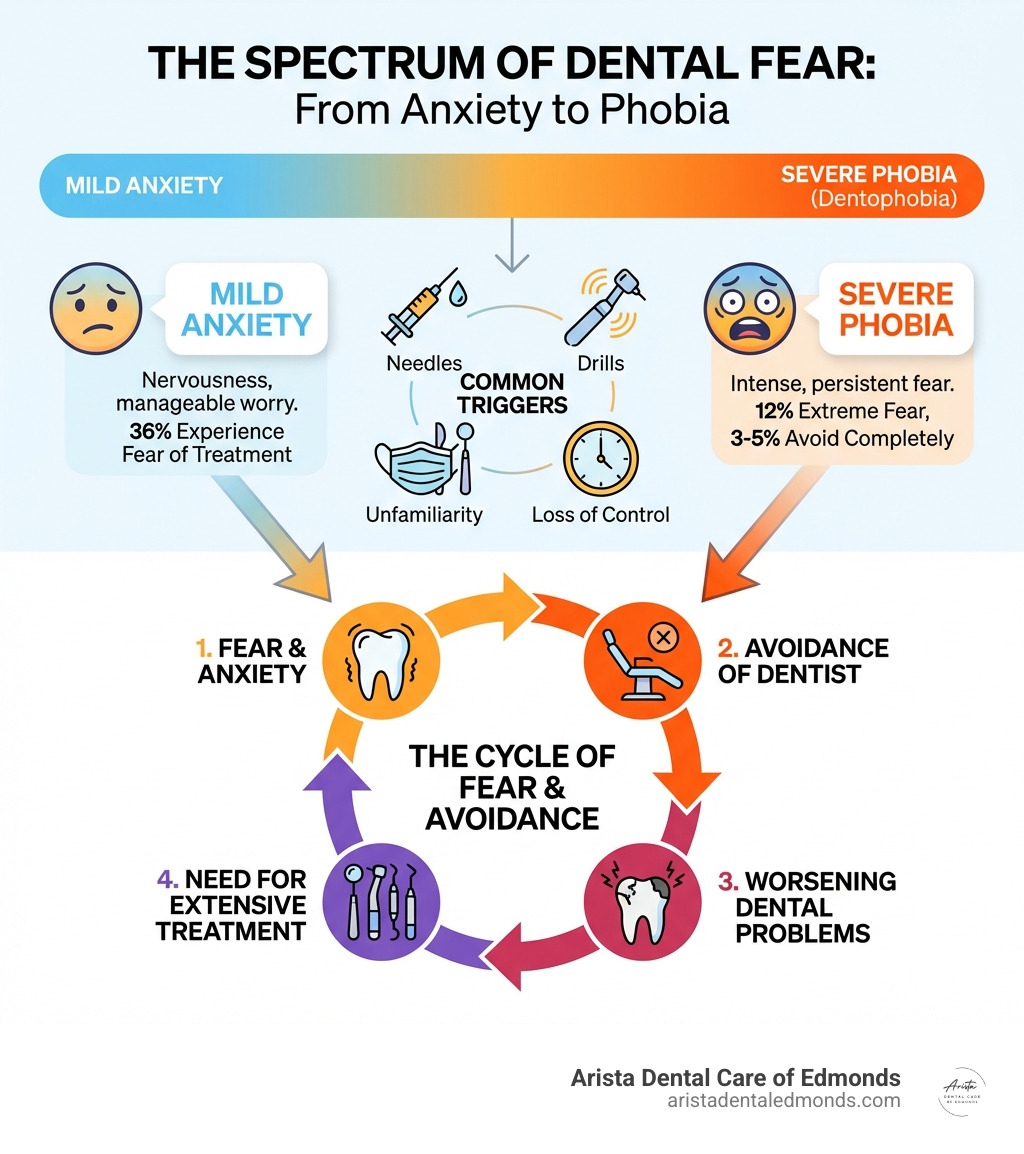
The key difference is between dental anxiety (feeling nervous) and dentophobia (an intense, persistent fear that leads to complete avoidance). This avoidance creates a vicious cycle: skipping appointments worsens dental problems, requiring more extensive treatment and reinforcing the fear.
This guide will help you understand the roots of your fear, its impact on your health, and what you can do about it. We’ll cover proven management techniques, from relaxation to sedation, and explain how the right dental team can transform your experience.
As Dr. Risha Khan DMD, I’ve spent the past decade helping anxious patients overcome their fear of teeth with gentle, personalized care. My goal is to show you that dental fear is treatable, so you can smile confidently without anxiety holding you back.
Understanding Dentophobia and Dental Anxiety
While it’s common to feel nervous before a dental appointment (dental anxiety), for some, this escalates into a more intense and debilitating condition: dentophobia.
Dentophobia, or odontophobia, is an extreme and persistent fear of teeth or dentists. It’s a specific phobia that is so profound it often leads to complete avoidance of dental care, even when in pain. While people with dental anxiety usually manage to attend appointments, those with dentophobia avoid the dentist at all costs. This avoidance can last for years, leading to a significant decline in oral health.
This deep-seated fear of teeth is a widespread issue. About 36% of people in the U.S. report some fear of dental treatment, with 12% experiencing extreme fear that may qualify as dentophobia. It affects women more often than men and frequently begins in childhood, which can lead to a lifelong struggle if not addressed.
For a more in-depth clinical perspective on this condition, you can explore a clinical overview of dentophobia.
What are the common triggers?
Understanding what triggers the fear of teeth is crucial. While triggers are personal, some common themes emerge:
- Fear of pain: A universal trigger, often from past negative experiences or worry that anesthetic won’t work.
- Needles and injections: The sight or thought of a needle for local anesthetic is a frequently cited fear.
- The dental drill: The high-pitched sound and vibration can be highly aversive.
- Feelings of helplessness: Lying back in a dental chair can evoke feelings of vulnerability and loss of control.
- Gag reflex: An exaggerated gag reflex can make procedures uncomfortable and create a fear of choking.
- Embarrassment: Feeling shame about the state of one’s teeth can lead to avoidance, which worsens the problem and reinforces the fear.
- Other sensory triggers: The unique smells, bright lights, and clinical environment of a dental office can also act as triggers.
How is dentophobia diagnosed?
Diagnosing dentophobia involves looking for a pattern of severe anxiety and avoidance that impacts a person’s life. Dentists and mental health professionals use several methods:
- Self-assessment questionnaires: Tools like the Modified Dental Anxiety Scale (MDAS) help quantify a patient’s anxiety level to guide management strategies.
- Professional evaluation: A dentist or mental health professional looks for diagnostic features like expressed, unfounded fear, severe anxiety upon entering the office, and avoidant behavior despite needing care.
- Behavioral observation: Dentists may notice signs like an anxious facial expression, agitation, avoidance of eye contact, or nervous movements.
- Differentiating from other disorders: It’s important to distinguish dentophobia from other conditions like panic disorder or PTSD, as they can co-exist and contribute to dental fear. A thorough assessment ensures the underlying causes are properly addressed.
The Causes and Consequences of the Fear of Teeth

The fear of teeth is complex, often rooted in a mix of personal experiences, learned behaviors, and individual predispositions. Understanding these causes is the first step toward overcoming it.
Understanding the Psychological Roots of Your Fear of Teeth
The psychological underpinnings of dental fear are diverse. Many fears are learned responses stemming from several key sources:
- Direct Traumatic Experiences: A painful procedure, especially in childhood, can create a lasting association between the dentist and pain. This is a form of traumatic conditioning where neutral stimuli (like the dental chair or drill sound) trigger a fear response. A history of physical or sexual abuse can also make the dental setting feel threatening due to the vulnerability and invasion of personal space involved.
- Vicarious Learning: Fear can be acquired indirectly. Children often model their parents’ anxieties about dental visits. Hearing frightening stories from peers or seeing negative portrayals of dentistry in the media can also instill fear without any personal experience.
- Internal Factors: Some individuals are more susceptible to developing dental fear. This can be due to a genetic predisposition to anxiety, personality traits like high neuroticism, or co-existing conditions like generalized anxiety disorder, panic disorder, or claustrophobia.
Statistics confirm that about half of dentally anxious individuals report their fear started in childhood, highlighting the importance of positive early dental experiences.
The Impact on Oral and General Health
Allowing fear of teeth to dictate your dental habits has profound consequences that extend beyond your mouth. The cycle of avoidance leads to:
- Worsening Oral Health: Without regular check-ups, small cavities can become extensive decay, leading to infections, abscesses, and tooth loss. Gum disease can also flourish, leading to more severe periodontal issues. Phobic patients are significantly more likely to have active decay and missing teeth.
- Poorer Quality of Life: The deterioration of oral health negatively affects daily life, making it harder to eat, speak, and socialize. This leads to increased shame and tension.
- Impact on General Health: Oral health is linked to overall systemic health. Gum disease, for example, is connected to serious conditions like heart disease and diabetes. Difficulty chewing can also lead to digestive issues and malnutrition. You can learn more about this vital connection by reading How oral health impacts your body.
- Psychosocial Effects: The appearance of unhealthy teeth can cause social withdrawal, low self-esteem, and impact personal and professional relationships. The fear of judgment from dental staff can be so strong that patients would rather endure pain than face a dental professional.
Breaking the Vicious Cycle of Dental Avoidance
The most detrimental aspect of the fear of teeth is the self-perpetuating “vicious cycle of dental avoidance.” This cycle explains why dental fear persists and worsens over time.
Here’s how it unfolds:
- Fear: An individual experiences significant dental anxiety or dentophobia.
- Avoidance: Driven by fear, the individual avoids or cancels dental appointments.
- Worsening Problems: Without preventive care, minor issues like small cavities progress into major problems like infections or severe decay.
- More Invasive Treatment: The individual is eventually forced to seek emergency care, which is often more complex, painful, and expensive (e.g., root canals or extractions).
- Increased Fear: This difficult experience reinforces the initial fear of teeth, confirming the belief that dental visits are painful and making the fear more intense for the future.
This loop is fueled by cognitive distortions like catastrophic thinking, where normal sensations are misinterpreted as signs of impending disaster. Anxious patients also tend to remember past pain more vividly, which serves as a powerful deterrent to seeking care.
How Avoidance Perpetuates the Fear of Teeth
While avoidance offers immediate relief, it’s the primary driver that keeps the fear of teeth alive.
- Reinforcement through relief: Avoiding the dentist provides a temporary escape from anxiety, which rewards the avoidance behavior and prevents you from learning that dental visits can be manageable.
- Lack of positive experiences: By staying away, you miss opportunities for gentle dental care that could challenge your fearful beliefs.
- Escalation of dental problems: Avoidance leads to neglect. A simple filling becomes a root canal, validating the initial fear in a self-fulfilling prophecy.
- Increased complexity and cost: The longer problems are left untreated, the more complicated and costly the treatments become, adding another layer of stress.
- Feelings of shame and guilt: Many who avoid the dentist feel shame about their oral health, which can be isolating and make the thought of a dental visit even more overwhelming.
Overcoming Dentophobia: Management and Treatment Options
Overcoming the fear of teeth is a journey, and with the right approach and a compassionate dental team, it’s entirely achievable.
The cornerstone of managing dental anxiety is open communication. It is vital to share your fears and past experiences with your dental team. We are here to listen without judgment and tailor your treatment to your needs. Building a trusting relationship is paramount.
One powerful tool is using control signals. We can agree on a simple hand signal that tells us to stop immediately if you need a break. Knowing you have this power can significantly reduce feelings of helplessness.
Psychological and Behavioral Strategies
Many effective non-pharmacological strategies can help you manage the fear of teeth and build positive associations with dental care.
| Technique | Description | Benefits |
|---|---|---|
| Relaxation Techniques | Includes deep breathing, meditation, and progressive muscle relaxation to calm your nervous system. | Reduces physical symptoms of anxiety (e.g., rapid heart rate). Promotes a sense of calm and can be used before and during appointments. |
| Distraction Methods | Engaging your mind with music, podcasts, or movies to shift attention away from the procedure. | Diverts focus from anxiety-inducing stimuli like the sound of the drill. Music is particularly effective at reducing fear. |
| Cognitive Behavioral Therapy (CBT) | A therapeutic approach to identify and change negative thought patterns and behaviors related to dental fear. | Highly effective for long-term management. Studies show most patients can later attend appointments without sedation. |
| Systematic Desensitization | Gradual, controlled exposure to feared stimuli (e.g., pictures of instruments, sitting in the chair) in a safe environment. | Desensitizes you to triggers over time, reducing the fear response. Often combined with relaxation techniques. |
| “Tell-Show-Do” Technique | The dentist explains (tell), demonstrates (show), and then performs the procedure (do). | Reduces fear of the unknown and builds trust. Particularly effective for children but also helpful for anxious adults. |
| Weighted Blankets | Applies gentle, even pressure across the body to promote calmness. | Uses deep pressure to reduce nervous system activity, increase serotonin, and decrease the stress hormone cortisol. |
| Hypnotherapy | Uses guided relaxation and focused attention to reframe perceptions and reduce anxiety. | Can be effective in reducing anxiety and pain perception, helping patients develop a more positive outlook. |
| Virtual Reality Exposure Therapy (VRET) | Uses VR headsets for immersive, simulated dental environments to confront fears in a controlled virtual space. | A promising new approach that allows for repeated, controlled exposure to feared situations without an actual dental visit. |
For a comprehensive review of these methods, you can refer to this review of psychological treatments.
Sedation and Pharmacological Approaches
For moderate to severe fear of teeth, pharmacological options can provide invaluable support.
- Nitrous Oxide (“Laughing Gas”): A mild sedative inhaled through a nose mask. It induces relaxation, and the effects wear off quickly after the procedure. It’s a safe option for many patients in Edmonds, Shoreline, Lynnwood, and Mountlake Terrace.
- Oral Conscious Sedation: An anti-anxiety pill taken about an hour before your appointment. You’ll feel deeply relaxed but remain awake. You will need someone to drive you home.
- IV Sedation: Administered intravenously for a deeper level of relaxation, or “twilight sleep.” You’ll be conscious but drowsy with little memory of the procedure. This is monitored closely by our trained team.
- General Anesthesia: The deepest form of sedation, where you are completely unconscious. It’s typically reserved for complex surgeries or extreme phobias and is performed in a hospital or specialized facility.
The choice of sedation depends on your fear level, the procedure, and your health. We will discuss all options with you to ensure the safest, most comfortable experience. You can learn more by exploring medication and sedation options.
Frequently Asked Questions about Dentophobia
Here are answers to some common questions about managing your fear of teeth.
How do I find a dentist who is good with anxious patients?
Finding the right dental team is crucial. Here are some tips:
- Check their philosophy: Look for practices that emphasize gentle care and anxiety management on their website, like ours at Arista Dental Care of Edmonds.
- Read online reviews: Patients often share their experiences with dental anxiety. Look for mentions of a “gentle touch,” “patient listening,” and a “calm environment.”
- Ask about amenities: Inquire if they offer distractions like music, weighted blankets, or other comfort items.
- Schedule a consultation: A non-treatment “meet and greet” is a great way to assess the office and team without the pressure of a procedure.
- Inquire about sedation: A practice offering a range of sedation options demonstrates a commitment to patient comfort.
Can the fear of teeth be cured completely?
Yes, for many people, the fear of teeth can be significantly reduced or even cured. It’s a process, but with the right support, you can transform your dental experience. Therapies like Cognitive Behavioral Therapy (CBT) have high success rates, helping patients attend appointments without sedation years later. The goal is to reduce the underlying anxiety, making dental care a manageable part of your health routine.
Is sedation dentistry a safe option for managing dental fear?
Yes, when administered by qualified professionals, sedation dentistry is a very safe and effective option for managing the fear of teeth. Patient safety is our top priority. Before any sedation, we conduct a thorough review of your medical history to choose the safest method for you. During the procedure, your vital signs are closely monitored. It’s a wonderful tool to help you get the care you need without overwhelming anxiety.
Conclusion
Living with a fear of teeth is challenging, impacting your health and quality of life. But this fear is common, understandable, and, most importantly, treatable. You don’t have to let dentophobia control your health.
The first step is finding a compassionate dental team who will listen without judgment and create a comfortable, personalized experience. At Arista Dental Care of Edmonds, serving our communities in Edmonds, Shoreline, Lynnwood, and Mountlake Terrace, our team is dedicated to providing gentle, anxiety-free dental care. We believe everyone deserves a healthy, confident smile, and we have the tools and empathy to help you achieve it.
Whether through open communication, behavioral strategies, or sedation options, we are committed to changing your dental visits. Don’t let your fear of teeth hold you back any longer.
Contact us to discuss your anxiety and learn about our gentle approach. We’re here to help you take that brave first step.

Edmonds Dentist

21727 76th Ave W Ste G, Edmonds, WA 98026
(425) 967-7272
info@aristadentaledmonds.com