

From Nerves to New Smiles: Navigating Dental Treatment When You’re Anxious
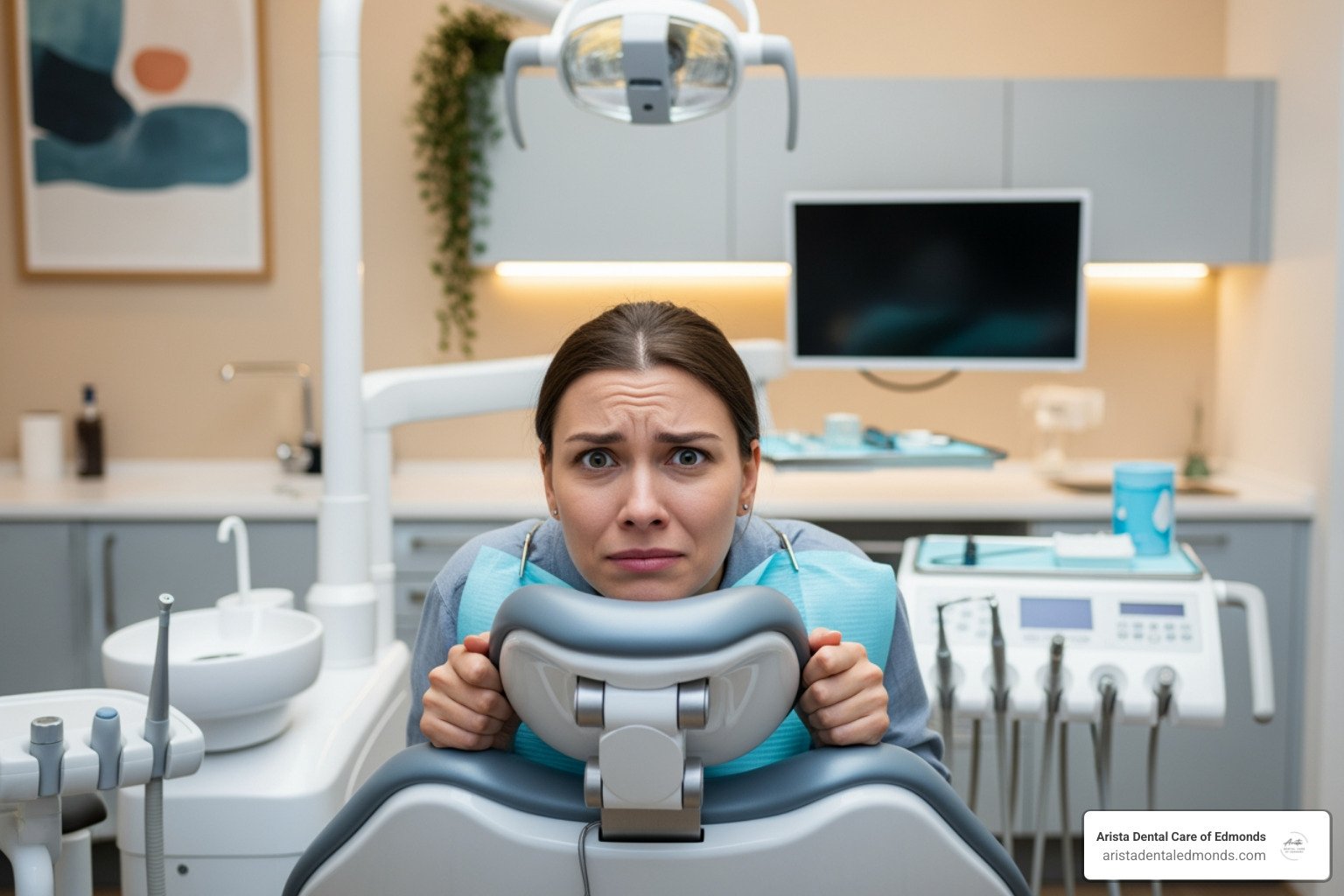
Why Being Scared of the Dentist but Need Treatment Doesn’t Have to Be a Barrier
If you’re scared of the dentist but need treatment, you’re facing a challenge that affects millions of Americans—and there are proven, modern solutions that can help you get the care you need without the overwhelming fear.
Quick Solutions for Dental Anxiety:
- Communicate openly with your dental team about your specific fears
- Start with a consultation-only visit to build trust without treatment pressure
- Use comfort measures like weighted blankets, headphones, and agreed-upon “stop” signals
- Consider sedation options ranging from mild (laughing gas) to deeper relaxation (oral or IV sedation)
- Choose a dentist trained in anxiety management who offers modern, pain-reducing technology
You are not alone in this struggle. About 36% of people in the U.S. have a fear of dental treatment, with 12% experiencing extreme fear. As many as 1 in 3 people report experiencing anxiety about dental appointments. The good news? Modern dentistry has evolved dramatically to address these fears. Dentists today are trained to work with anxious patients, and new technologies have made procedures quieter, faster, and often pain-free.
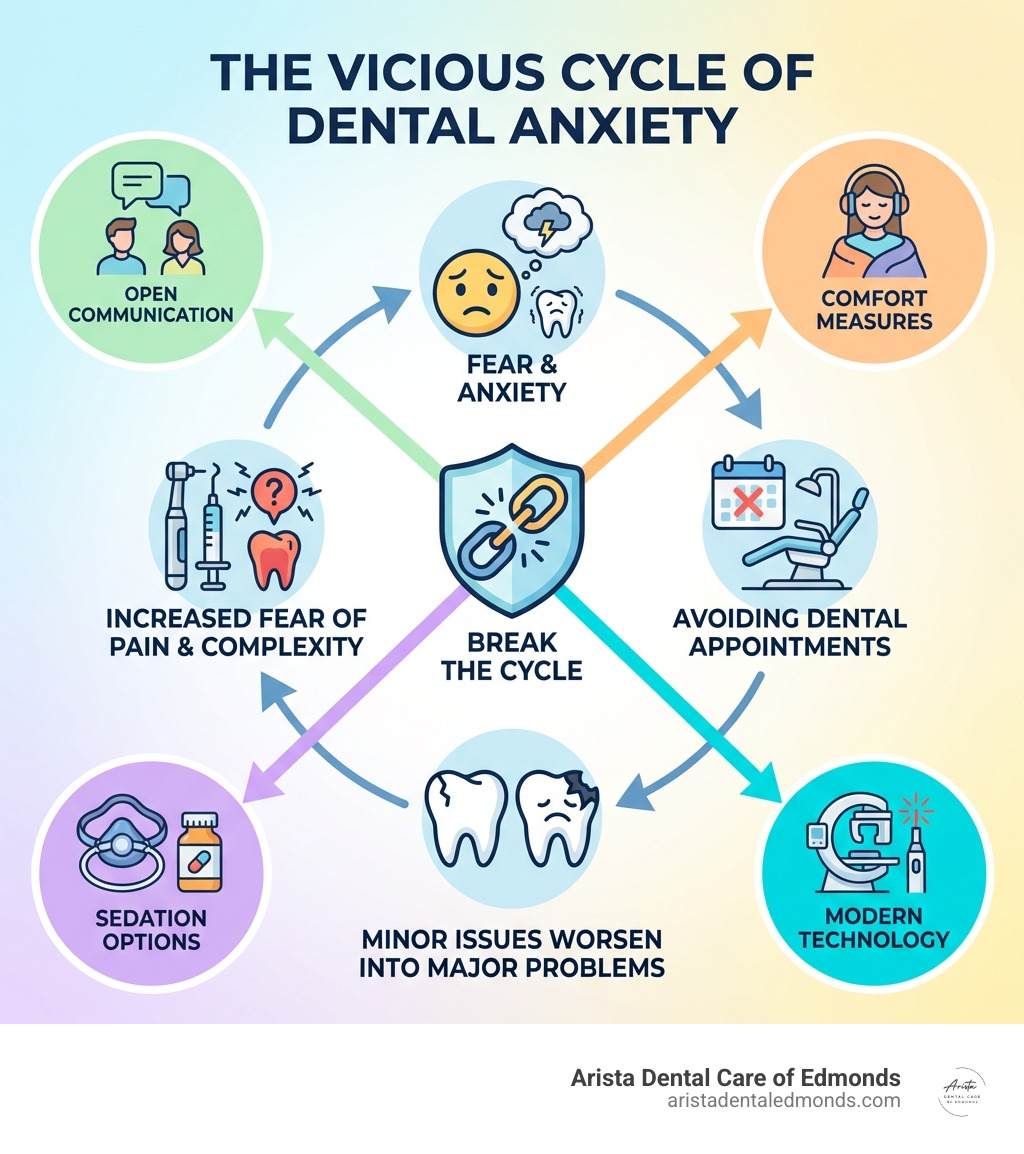
The challenge is that dental anxiety creates a vicious cycle: fear leads to avoiding the dentist, which allows small problems to grow into painful, complex issues, which reinforces the fear. But this cycle can be broken—and it starts with understanding your options.
As Dr. Risha Khan, I’ve spent over a decade helping patients who are scared of the dentist but need treatment find their path to comfortable dental care. My focus has always been on building trust, offering personalized solutions, and ensuring every patient feels heard and supported—because I believe dental anxiety should never stand between you and a healthy smile.
Understanding Dental Anxiety and Phobia
When we talk about being scared of the dentist but need treatment, it’s important to understand that there’s a spectrum of fear. On one end, you might have general dental anxiety, which is an uneasiness or worry about an upcoming dental appointment. On the other end is dental phobia, a more intense and often debilitating condition.
Dental phobia, also known as odontophobia, is a severe form of dental anxiety where someone experiences extreme fear at the mere thought of going to the dentist or while in the dental office. It’s classified as a specific phobia disorder, characterized by an excessive and irrational fear of an event or situation that isn’t actually harmful. People with a dental phobia might do everything possible to avoid dental visits, even when experiencing significant pain. While dental anxiety involves distress and discomfort, individuals with anxiety will likely still attend their appointments, albeit reluctantly. However, those with true phobia will often avoid care entirely, leading to serious consequences for their oral health.
Common Causes of Dental Anxiety and Phobia
Why do so many of us feel this way? The causes of dental anxiety and phobia are varied, often stemming from past experiences or perceived threats:
- Negative Past Experiences: This is one of the most common triggers. A painful or unpleasant experience, especially one from childhood, can create a lasting impression. Even stories heard from others or portrayed in media can contribute to this fear.
- Fear of Pain: Despite advances in pain management, the apprehension of feeling pain during a procedure is a significant concern for many. This can include fear of anesthetic failure, leading to unexpected discomfort.
- Fear of Needles: The sight or thought of injections can cause immense distress. Some patients also worry about the side effects of anesthetics, such as dizziness or nausea.
- Loss of Control: Lying back in a dental chair, with instruments in your mouth and unable to speak freely, can create a feeling of vulnerability and loss of control.
- Embarrassment: Some people feel self-conscious about the condition of their teeth or their oral hygiene, fearing judgment from the dental team.
- Sensory Triggers: The distinct sounds of dental drills, the smells of a dental office, or even the bright lights can trigger anxiety. The noise of drills and instruments, for example, can be a major source of unease.
- Other Phobias or Conditions: Dental anxiety can sometimes be a symptom of broader anxiety disorders like claustrophobia (fear of enclosed spaces), agoraphobia (fear of situations where escape might be difficult), obsessive-compulsive disorder (OCD), or generalized anxiety disorder. The confined space of the dental chair, or the feeling of being trapped, can exacerbate these underlying conditions.

Signs and Symptoms of Dental Fear
Recognizing the signs of dental anxiety is the first step toward addressing it. These can manifest both physically and psychologically:
- Physical Symptoms:
- Racing heart or palpitations and increased heart rate
- Sweating or hot flashes
- Upset stomach or nausea
- Shaking or trembling
- Difficulty breathing or hyperventilation
- Low blood pressure and fainting (especially at the sight of blood or needles)
- Muscle tension
- Psychological Symptoms:
- A general feeling of unease, dread, or panic when thinking about the dentist
- Sleeplessness the night before an appointment
- Intense discomfort at the thought of going to the dentist
- Feeling aggressive, withdrawn, or agitated
- The urge to cry
- Shame or discomfort discussing dental visits
- Behavioral Signs:
- Avoiding making dental appointments altogether
- Canceling appointments at the last minute
- Difficulty sitting still in the waiting room
- Increased panic or behavioral shifts when arriving at the dental office
How Avoiding the Dentist Affects Your Health
For those who are scared of the dentist but need treatment, the decision to avoid dental care can have profound and escalating consequences for your oral and overall health. This creates what we call the “vicious cycle of dental anxiety.”
- The Cycle of Avoidance: When you avoid the dentist, minor issues like small cavities or early gum inflammation go untreated. These problems don’t just disappear; they worsen. A small cavity can become a deep one, eventually leading to excruciating pain and requiring more invasive procedures like a root canal or even extraction. Early gum disease can progress to periodontitis, which can result in tooth loss. The more severe the problem, the more complex and potentially uncomfortable the treatment becomes, reinforcing your initial fear and making future visits even more daunting.
- Impact on Overall Health: Oral health is inextricably linked to your systemic health. Chronic inflammation from gum disease has been connected to serious conditions such as heart disease, stroke, diabetes, and even certain types of cancer. Untreated dental infections can spread to other parts of the body. Furthermore, lifestyle factors that contribute to dental disease, like high sugar intake, smoking, and alcohol consumption, are also linked to these broader health issues.
- Connection to Self-Esteem: Beyond physical health, neglecting dental care can severely impact your self-esteem. Stained, decayed, or missing teeth can make you hesitant to smile, speak, or eat in public, affecting your social interactions and overall quality of life. This can lead to a sense of shame or embarrassment, making it even harder to seek help.
At Arista Dental Care of Edmonds, we believe no one should suffer these consequences because of fear. We are here to help you break this cycle and achieve a healthy, confident smile.
Your First Step: Communication and Building Trust
If you’re scared of the dentist but need treatment, the single most powerful tool you have is your voice. Open and honest communication with your dental team is not just helpful—it’s essential for a comfortable and successful experience.
The Power of Speaking Up
We understand that it can be incredibly difficult to admit your fears, but please know that we are here to listen without judgment. When you communicate your anxiety, you empower us to tailor your experience to your needs. This means informing everyone you interact with:
- Receptionist: When you call to schedule an appointment, mention your anxiety. This allows our team to allocate extra time, schedule you during quieter periods, or ensure you’re matched with a dentist and hygienist experienced in anxiety management.
- Hygienist: During your cleaning and check-up, share your specific triggers. Is it the sound of the scaler? The feeling of pressure? Knowing this helps them adjust their technique and offer immediate comfort.
- Dentist: Your dentist wants to understand your concerns. We are caring and compassionate people who got into dentistry to help others. We fear our patients experiencing pain due to avoidance of treatment. Discussing your fears allows us to explain procedures thoroughly, agree on coping strategies, and explore sedation options together.
Building a partnership with your dental team is key. At Arista Dental Care of Edmonds, our entire team is dedicated to making you feel safe and understood. You can learn more about our philosophy and meet our dedicated professionals by visiting our Meet Edmonds Dental Team page.
Establishing trust through open dialogue involves:
- Asking Questions: Don’t hesitate to ask about any aspect of your treatment. Understanding what will happen, why it’s necessary, and how long it will take can significantly reduce fear of the unknown.
- Understanding Procedures: We are happy to explain each step of your treatment in simple terms, so you feel informed and prepared.
What to Do if You’re Scared of the Dentist but Need Treatment
Taking the first step can feel daunting, but we’re here to guide you. Here are some initial actions you can take:
- Find a Compassionate Dentist: Look for a dental practice that explicitly mentions anxiety management, gentle care, or sedation dentistry. Read online reviews to hear about other patients’ experiences. Our Edmonds Dentist Reviews offer insights into how we prioritize patient comfort and care.
- Schedule a Consultation-Only Visit: You don’t have to jump straight into treatment. Many practices, including ours, offer a consultation where you can simply meet the team, discuss your fears, and take an Edmonds Dental Office Tour. This low-pressure environment allows you to build rapport without the immediate expectation of treatment.
- Discuss Your Fears Openly: Be upfront about your anxiety from your very first contact. We appreciate you sharing your concerns, as it helps us create the best possible experience for you.
Overcoming Dental Anxiety to Get the Treatment You Need
Modern dentistry has made incredible strides in creating a comfortable and anxiety-free environment, particularly for those who are scared of the dentist but need treatment. Our focus is on making every visit a positive experience, as highlighted in our article Painless Smiles: Making Every Dental Visit a Breeze.
Creating a calming environment is a multi-faceted approach, addressing everything from sensory triggers to feelings of control.
Creature Comforts and Distraction Techniques
We offer a range of amenities designed to make your visit more relaxing:
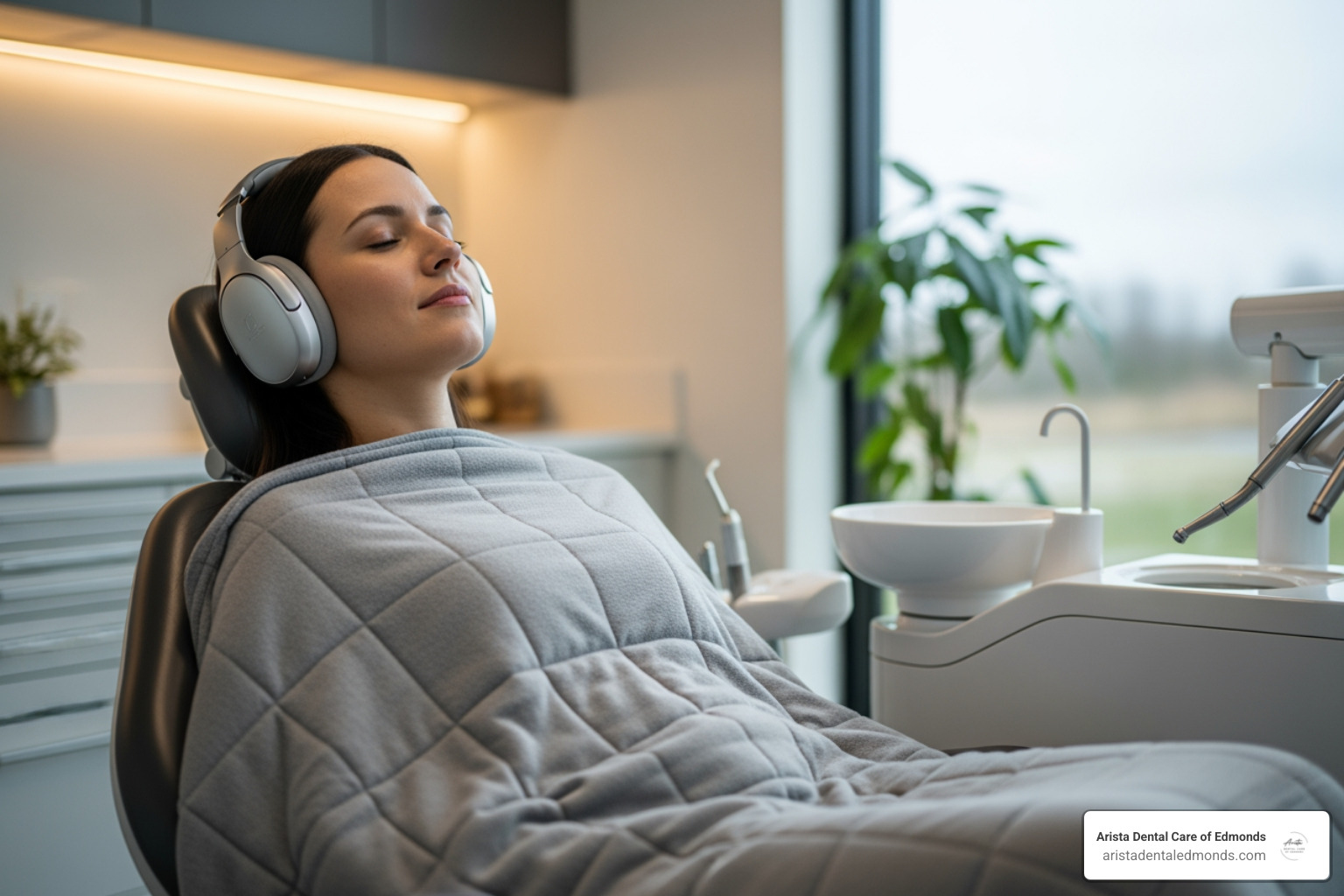
- Noise-Canceling Headphones: The sound of dental drills can be a major anxiety trigger. Wearing headphones to listen to your favorite music, a podcast, or an audiobook can effectively mask these sounds and provide a welcome distraction.
- Sunglasses for Bright Lights: The overhead dental lights can be intense. Sunglasses can shield your eyes and help you relax more comfortably.
- Weighted Blankets: These blankets provide deep pressure touch stimulation, which can reduce nervous system activity, increase serotonin (the “feel-good” hormone), and decrease cortisol (the stress hormone). It’s like a comforting hug that helps balance your mood and reduce anxiety, heart rate, and blood pressure.
- Stress Balls: Having something to squeeze can help release nervous energy and provide a tactile distraction.
- Watching TV During Treatment: Some of our treatment rooms are equipped with ceiling-mounted televisions, allowing you to watch a movie or your favorite show, further diverting your attention from the procedure.
Calming Techniques You Can Use in the Chair
Beyond the amenities we provide, there are powerful techniques you can employ to manage your anxiety during treatment:
- Deep Breathing Exercises: Simple yet effective, deep breathing can calm your nervous system. Try counting your inhales and exhales: inhale slowly for a count of four, hold for four, and exhale slowly for a count of six. Focusing on your breath helps ground you and reduces physiological arousal.
- Mindfulness and Body Scans: Bring your attention to the present moment. A body scan involves mentally moving through your body, noticing and relaxing each muscle group from head to toe. This can help release tension you might not even realize you’re holding.
- Guided Imagery: Close your eyes and visualize a peaceful, relaxing place. Focus on the details – the sounds, smells, and sensations of your imagined safe haven. This mental escape can be a powerful distraction.
- The “Stop” Signal: This is one of the most crucial tools for enhancing your sense of control. Before treatment begins, agree on a simple hand signal with your dentist (like raising your hand). If you feel uncomfortable, need a break, or just want to pause, use the signal, and we will immediately stop. This ensures you always feel in control and heard. Research shows that this simple act can significantly reduce anxiety.
The Benefits of Advanced Dental Technology
Many of our patients who are scared of the dentist but need treatment find immense relief in knowing that modern dental technology has revolutionized the patient experience:
- Laser Dentistry: This advanced technology uses a highly concentrated light beam to treat teeth and gums, often eliminating the need for traditional drills and needles in many procedures. Imagine a drill-free, noise-free, and often pain-free experience! This significantly reduces common anxiety triggers. Laser treatments are also incredibly precise, leading to less trauma to surrounding tissues and faster healing times.
- Digital Scanners Replacing Messy Impressions: For many orthodontic or restorative procedures, we no longer need uncomfortable, gooey impression materials. Digital scanners create highly accurate 3D models of your teeth quickly and comfortably, avoiding the gag reflex and claustrophobic feelings associated with traditional impressions.
- Reduced Noise and Vibration: Many modern instruments are designed to be quieter and produce less vibration than older equipment, further contributing to a more peaceful environment.
- Faster Healing Times: Precision technologies often result in less invasive procedures, which means quicker recovery and less post-treatment discomfort.
A Guide to Sedation Dentistry Options
For many who are scared of the dentist but need treatment, traditional comfort measures and calming techniques might not be enough. This is where sedation dentistry becomes a game-changer. Sedation dentistry uses medication to help you relax during dental procedures, allowing you to get the care you need without overwhelming fear. It’s a safe and effective option for patients with moderate to severe dental anxiety or for those undergoing lengthy or complex procedures.
Who is a candidate for sedation? If you experience significant anxiety, have a strong gag reflex, a low pain threshold, very sensitive teeth, or need a lot of dental work done, you might be an excellent candidate for sedation. We always conduct a thorough medical history review to ensure sedation is safe for you.
There are different levels of sedation available, custom to your specific needs and anxiety levels. The American Dental Association provides helpful information on Anxiety | MouthHealthy – Oral Health Information from the ADA.
Here’s a comparison of the most common types of sedation we offer:
| Sedation Type | Level of Consciousness | ||
|---|---|---|---|
| Nitrous Oxide (Mild Sedition) | You are fully awake and can communicate. You will feel a sense of relaxation and well-being. | Effects wear off within minutes after the mask is removed. You can drive yourself home and resume normal activities. | Ideal for managing mild to moderate anxiety, gag reflexes, or short procedures. |
| Oral Sedation (Moderate Sedation) | You will be awake but very relaxed and drowsy. You may fall asleep but can be easily roused. You might have little memory of the procedure. | You will need someone to drive you home and should not operate machinery or make important decisions for the rest of the day. | Suitable for moderate to severe anxiety, longer procedures, or patients who prefer a deeper state of relaxation. |
| IV Sedation (Deep Sedation) | You will be in a deeply relaxed state, often feeling like you’re asleep, but can still respond to verbal commands. You will have little to no memory of the procedure. | You will need someone to drive you home and should rest for the remainder of the day. Close monitoring is essential during and after the procedure. | Best for severe anxiety, complex or lengthy procedures (e.g., wisdom tooth extractions, multiple fillings), or patients who prefer not to be aware of the procedure. |
Mild Sedation: Nitrous Oxide (“Laughing Gas”)
Nitrous oxide, often called “laughing gas,” is a mild sedative that helps you relax during your dental visit. It’s administered through a small mask placed over your nose. You simply breathe normally, and the gas works quickly to induce a feeling of calm, often described as light-headedness or tingling. You remain fully awake and can communicate with us throughout your treatment, but you’ll feel much more at ease. A major benefit of nitrous oxide is that its effects wear off almost immediately once the mask is removed, meaning you can drive yourself home and resume your normal activities right after your appointment. It’s an excellent option for managing mild to moderate anxiety, sensitive gag reflexes, or for shorter procedures.
Moderate Sedation: Oral Sedation
For a deeper level of relaxation, we offer oral sedation. This involves taking a prescribed pill, usually about an hour before your appointment. The medication helps you achieve a state of deep relaxation and drowsiness. You’ll be awake and able to respond to our instructions, but you’ll likely feel very detached from what’s happening around you. Many patients report having little to no memory of their procedure afterward, which can be a huge relief for those who are scared of the dentist but need treatment. Because the effects of oral sedation last longer, you will need to arrange for a trusted friend or family member to drive you home and stay with you until the medication fully wears off.
Advanced Options for When You’re Scared of the Dentist but Need Treatment
For those with severe dental phobia or who require extensive procedures, we offer more advanced sedation options:
- IV Sedation: Administered directly into your bloodstream, intravenous (IV) sedation provides a deeper level of relaxation quickly and predictably. You’ll enter a dream-like state, often feeling as though you’re asleep, though you can still be gently roused. We closely monitor your vital signs throughout the procedure to ensure your safety and comfort. Like oral sedation, you will have little to no memory of the treatment, and you will need someone to drive you home and assist you afterward. IV sedation is a fantastic choice for patients with significant anxiety, long appointments, or complex surgical procedures.
- General Anesthesia: In specific cases where patients are extremely phobic, have significant medical issues, or require very extensive and complex dental work, general anesthesia may be considered. With general anesthesia, you are completely unconscious and will have no memory of the procedure. This is typically performed in a hospital setting or a specialized facility with an anesthesiologist present, ensuring the highest level of safety and monitoring. Referral for general anesthesia is considered when behavioral and conscious sedation techniques alone are not sufficient, especially for a large amount of treatment, complex medical problems, or highly intricate dental procedures, after all less restrictive options have been thoroughly explored.
Preparing for a Calmer Dental Visit
Taking proactive steps before your dental appointment can significantly reduce anxiety, especially if you’re scared of the dentist but need treatment. Preparation involves both mental and physical aspects.
Mental Preparation
- Visualization Techniques: Before your appointment, take some time to visualize a calm and positive experience. Imagine yourself comfortably seated in the dental chair, feeling relaxed, and the procedure going smoothly. Focus on the feeling of relief and satisfaction after your treatment is complete.
- Positive Affirmations: Challenge negative thoughts with positive affirmations. Instead of thinking, “This is going to be awful,” try, “I am brave, and I can do this,” or “My dental team is here to help me.” Remind yourself that you’re taking a vital step for your health.
Physical Preparation
- Getting a Good Night’s Sleep: A well-rested body is better equipped to handle stress. Aim for 7-9 hours of quality sleep the night before your appointment.
- Eating a Light Meal: Avoid heavy or sugary foods, which can cause energy crashes or an upset stomach. A light, healthy meal a few hours before your appointment can help stabilize your blood sugar and mood.
- Avoiding Caffeine: While tempting to boost energy, caffeine can exacerbate anxiety. Opt for water or herbal tea instead.
- Arranging Transportation if Needed: If you are planning on any form of sedation beyond nitrous oxide, it is crucial to arrange for someone to drive you to and from your appointment. You will not be able to operate a vehicle safely afterward.
- Confirm Your Appointment: Double-check your appointment time and location. You can easily manage your upcoming visits and more on our Edmonds Dental Appointment page.
Conclusion
Being scared of the dentist but need treatment is a common challenge, but it doesn’t have to be a permanent barrier to your oral health. As we’ve explored, you have numerous options and strategies available to make your dental visits comfortable, effective, and even positive.
The journey to a healthier, happier smile begins with a single step: open communication. Share your fears with our compassionate team, and let us partner with you to find the best solutions. From creature comforts and calming techniques to advanced sedation options and modern technology, we are dedicated to alleviating your dental anxiety and providing the gentle care you deserve.
Your oral health is too important to neglect. Taking that first step, even a small one like a consultation, can break the cycle of fear and avoidance, leading you toward a future of painless smiles and improved overall well-being.
At Arista Dental Care of Edmonds, we have extensive experience working with anxious patients, and we encourage you to think of us as a partner in healing and alleviating your dental anxiety. We are committed to ensuring every patient in Edmonds, Shoreline, Lynnwood, and Mountlake Terrace receives the care they need in an environment of trust and comfort.
Don’t let fear hold you back any longer. Your new smile is waiting. Book Appointment with us today.

Edmonds Dentist

21727 76th Ave W Ste G, Edmonds, WA 98026
(425) 967-7272
info@aristadentaledmonds.com