

Smile-Ready: A Parent’s Guide to Baby’s First Dentist Visit and Beyond

Why Your Baby’s First Dentist Appointment Matters
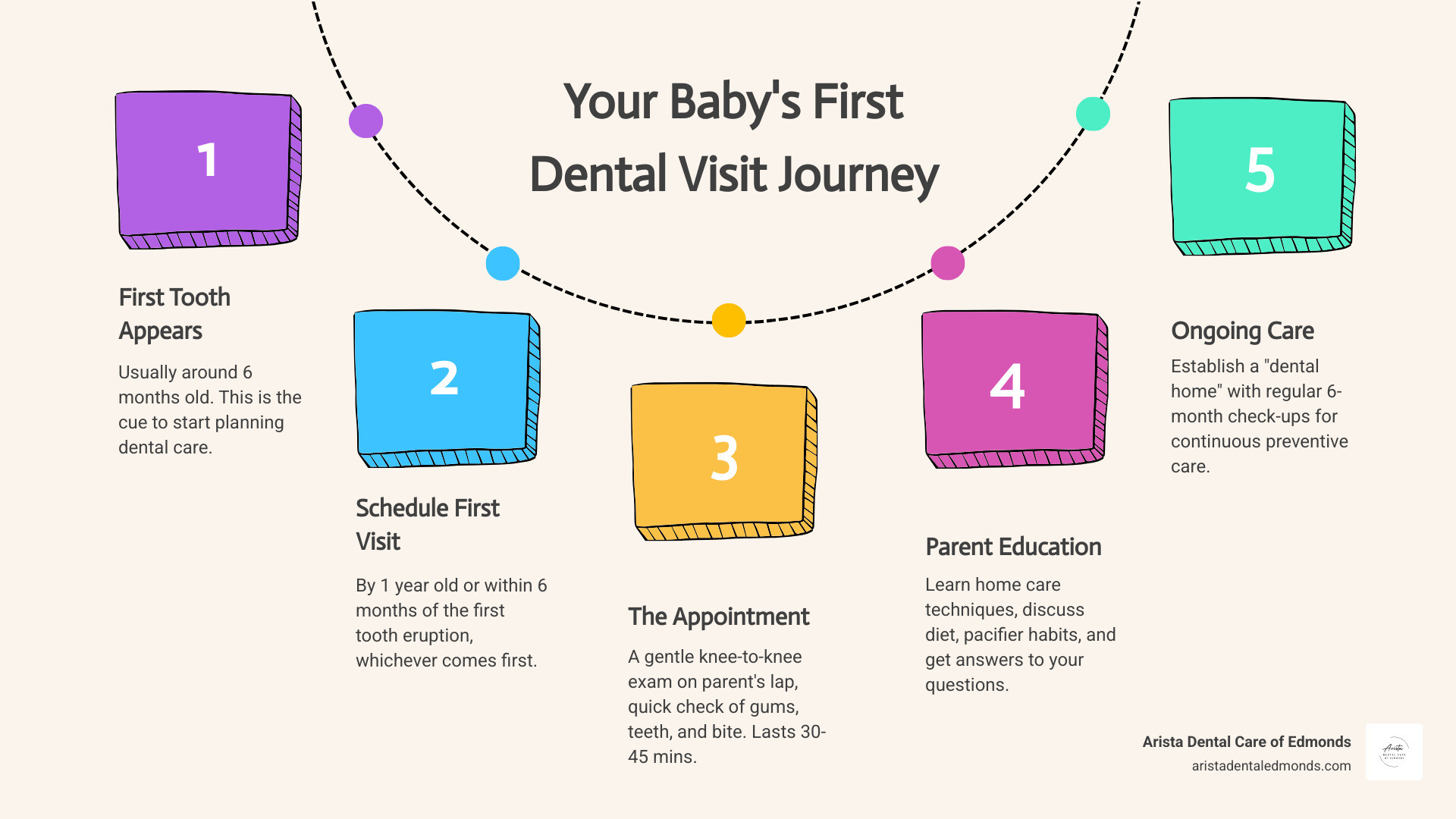
Your baby’s first dentist appointment is a milestone that often catches parents by surprise. The answer is simple: schedule your baby’s first dental visit within 6 months of their first tooth erupting, or by their first birthday—whichever comes first.
Quick Guide: Baby’s First Dentist Appointment
- When to go: By age 1 or within 6 months of first tooth
- What happens: Quick exam, gentle cleaning, parent education
- How long: 30-45 minutes
- What to bring: Comfort item, list of questions
- Where to sit: Baby sits on your lap for the exam
Your baby’s first tooth is adorable—but it’s also vulnerable to decay from day one. That tiny tooth needs professional care just like adult teeth do. Early dental visits aren’t just about checking teeth. They help your baby get comfortable with the dentist, teach you proper care techniques, and catch potential problems before they become painful or expensive.
Many parents wonder if baby teeth really matter since they’ll fall out anyway. The truth is that primary teeth act as “nature’s braces,” holding space for permanent teeth and helping your child speak clearly and chew properly. Losing baby teeth too early can create problems that last for years.
I’m Dr. Risha Khan, DMD, and I’ve spent the past decade making first dentist appointments for babies positive experiences that set the foundation for lifelong oral health. My approach combines gentle care with advanced preventive techniques to help your little one start their dental journey with confidence.
This guide walks you through everything you need to know—from preparing for that first visit to establishing daily care routines at home. You’ll learn what to expect, how to choose the right dentist, and when to schedule follow-up visits.
Why Early Dental Care is a Milestone for Your Baby
The arrival of your baby’s first tooth is an exciting moment, but it also signals the time to schedule their first dentist appointment baby. This isn’t just a recommendation; it’s a crucial step in safeguarding their oral health and overall well-being.
The “Age 1” Rule
Across the board, leading dental organizations, including the American Academy of Pediatric Dentistry (AAPD) and the Canadian Dental Association (CDA), strongly recommend the “Age 1 Rule.” This means your child should have their first dental assessment within six months of their first tooth erupting or by their first birthday, whichever comes first. Why so early? Because as soon as your baby has teeth, they are susceptible to cavities.
Our goal at Arista Dental Care of Edmonds is to establish what we call a “dental home” for your child. This means we want to be your trusted partners in your child’s oral health journey from the very beginning. By starting early, we can:
- Prevent tooth decay: Early visits allow us to identify and address potential issues like early childhood caries (cavities) before they become serious. We provide guidance on proper cleaning techniques and dietary habits that can significantly reduce the risk of decay.
- Establish a dental home: This provides a consistent place for all your child’s dental needs, fostering comfort and familiarity. It ensures continuous, comprehensive, and coordinated care.
- Detect problems early: Many dental issues in infants and toddlers can go unnoticed by parents. Early visits enable us to spot developmental concerns, bite problems, or signs of decay that might otherwise be missed. Catching these problems early often means simpler, less invasive, and more cost-effective treatment.
We believe that early dental care sets the stage for a lifetime of healthy smiles. To learn more about our philosophy and services for young patients, explore More about our approach to children’s dentistry.
The Crucial Role of Baby Teeth
It’s common for parents to think that because baby teeth (also known as primary teeth) eventually fall out, they aren’t as important as permanent teeth. This couldn’t be further from the truth! Baby teeth play several vital roles in a child’s development and long-term oral health.
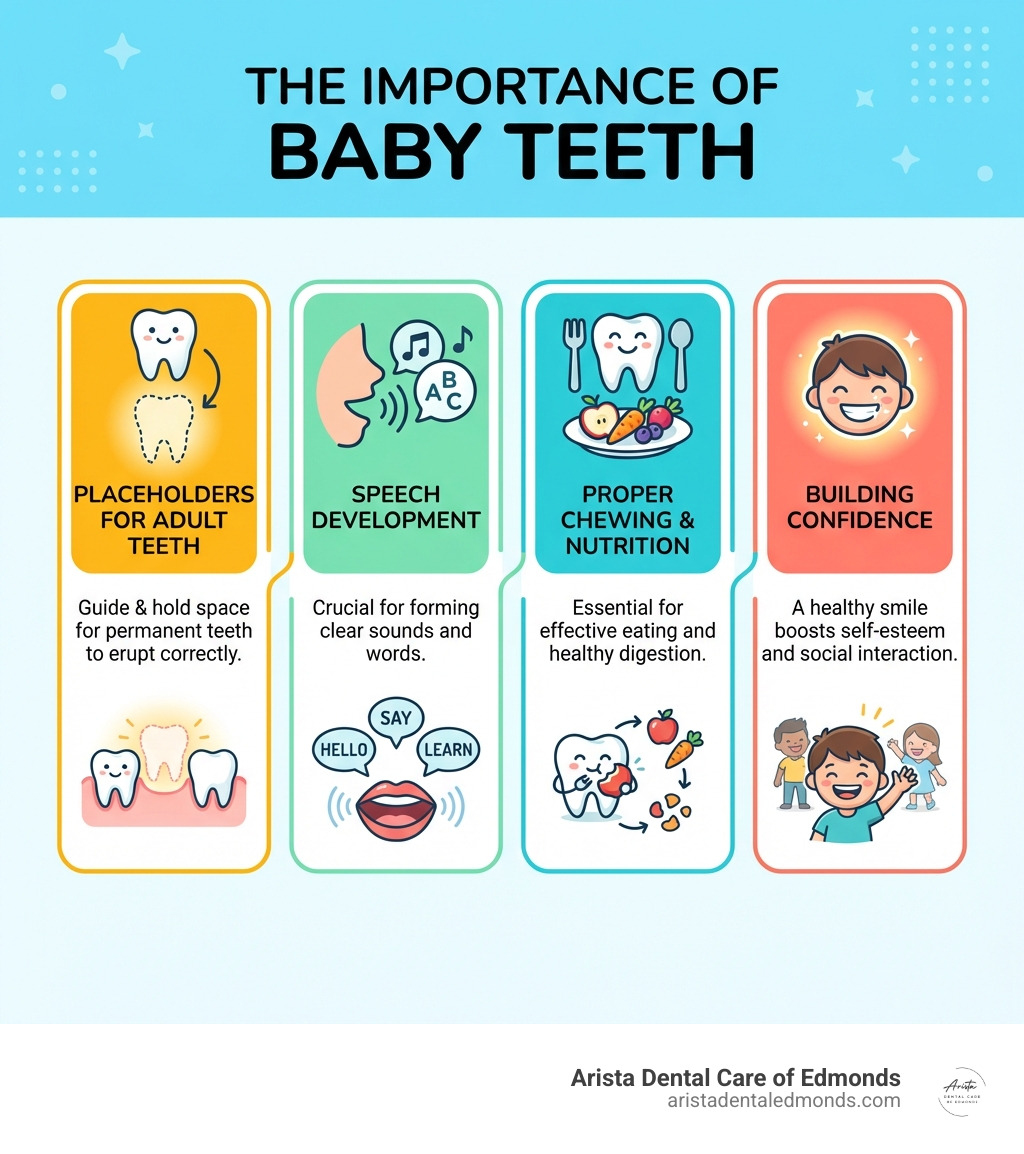
- Placeholders for adult teeth: Baby teeth are often referred to as “nature’s braces.” They hold the necessary space in the jaws for the permanent teeth that will follow. Each baby tooth has a predetermined time to emerge and a predetermined time to fall out, with a permanent tooth waiting to replace it.
- Speech development: Proper alignment and presence of baby teeth are crucial for a child to form words correctly and develop clear speech patterns. Gaps or missing teeth can impact this development.
- Proper chewing and nutrition: Healthy baby teeth allow children to chew their food effectively, which is the first step in healthy digestion. This ensures they get the nutrients they need for proper growth and development.
- Building confidence: A healthy, bright smile contributes significantly to a child’s self-esteem and confidence in social interactions.
- Consequences of early tooth loss: If a baby tooth is lost prematurely due to decay or injury, the adjacent teeth can shift into the empty space. This can block the permanent tooth from erupting correctly, leading to crowding, crooked teeth, or bite problems that may require extensive orthodontic treatment later on. Sometimes, a space maintainer is needed to hold the space open. Broken or infected baby teeth can also negatively impact a child’s health and self-esteem, and can even threaten the health of the permanent teeth developing beneath them.
Understanding the significance of these tiny teeth reinforces why their care, starting with the first dentist appointment baby, is so incredibly important. You can find more information about the importance of primary teeth at Baby Teeth | MouthHealthy – Oral Health Information from the ADA .
Long-Term Benefits of Consistent Care
Starting your child’s dental journey early and consistently offers a wealth of long-term benefits that extend far beyond just healthy teeth.
- Reduced dental anxiety: The first dentist appointment baby is a chance to create a positive, comfortable experience. Children who have positive early interactions with the dentist are far less likely to develop dental anxiety later in life. We strive to make each visit fun and reassuring, building trust and familiarity.
- Lower risk of cavities: Regular check-ups allow us to monitor your child’s oral health closely. We can apply preventive measures like fluoride treatments and discuss dental sealants for permanent molars once they erupt. This proactive approach significantly reduces the incidence of cavities and other dental problems.
- Cost-effectiveness of prevention: A small cavity spotted early might cost $150-250 to fix with a basic filling. Waiting could lead to a root canal and crown costing $2,000-3,000. Preventing problems is always more cost-effective than treating them. Consistent preventive care helps you avoid more painful and expensive issues down the road.
- Monitoring growth and development: Our dental team carefully monitors the development of your child’s jaws, bite, and the eruption of both primary and permanent teeth. This allows us to identify any potential issues like malocclusion (bite problems) or crowding early, and intervene if necessary.
- Positive health habits for life: Early dental visits are an opportunity for us to educate both you and your child on proper oral hygiene techniques, dietary choices, and healthy habits. Establishing these routines from a young age sets the foundation for lifelong oral health and overall well-being.

Your Guide to the First Dentist Appointment Baby
Starting on your baby’s first dental visit is a big step, but it doesn’t have to be daunting. Think of it as a friendly introduction to a lifetime of healthy smiles. Our goal is to create a positive foundation for your child’s oral health journey, fostering a comfortable and educational experience for both of you. This is truly A parent’s guide to the first visit.
At Arista Dental Care of Edmonds, we view this as a partnership between parents and our dental team. We’re here to support you with gentle care and clear information every step of the way.
What to Expect During the Visit
The first dentist appointment baby is designed to be quick, gentle, and informative. It’s primarily about getting your child comfortable in the dental environment and providing you with essential guidance.
- Knee-to-knee exam: This is a common and effective technique for examining infants and toddlers. Your child will sit on your lap, facing you, while you recline slightly. The dentist will sit opposite you, knee-to-knee, allowing for a clear view of your baby’s mouth. This position provides security for your child and makes the examination easier.
- Parent holding baby: You’ll be actively involved, holding your baby throughout the exam. This provides comfort and reassurance, making the experience less stressful for your little one.
- Quick visual inspection: We’ll gently examine your baby’s existing teeth for any signs of decay, check their bite, and assess the health of their gums and other oral tissues. We’ll also look for any potential developmental issues or injuries.
- Gentle teeth cleaning: Depending on your child’s age and the number of teeth, we may perform a gentle cleaning. For very young children, this might involve wiping the teeth and gums. For toddlers, it could include polishing and the application of a fluoride varnish.
- Short appointment duration (30-45 mins): We understand that little ones have short attention spans! The first dentist appointment baby is typically brief, lasting about 30 to 45 minutes, focusing on creating a positive initial impression and providing key information.
During this visit, we’ll also discuss good oral hygiene practices, cavity prevention, fluoride needs, oral habits (like thumb sucking or pacifier use), developmental milestones, and nutrition. We’ll also plan for future appointments. Don’t worry if your child cries or wiggles – it’s completely normal, and our team is experienced in making the visit as positive as possible.
Preparing for Your Baby’s First Dentist Appointment
Preparing for your baby’s first dentist appointment can significantly contribute to a positive experience for everyone involved. Here are some actionable steps you can take:
- Schedule during a happy time (not naptime): Choose an appointment time when your baby is usually well-rested, fed, and cooperative. Avoid scheduling during their naptime or when they might be hungry. Morning appointments often work best for young children.
- Positive language: Talk to your child about the visit in a positive, reassuring way. Avoid using words that might instill fear, like “shot,” “drill,” or “hurt.” Instead, focus on the fun aspects, like getting their teeth counted or polished. You can say things like, “The dentist will count your teeth and make them sparkly!”
- Practice opening mouth at home: Make it a game! Practice opening your child’s mouth and counting their teeth at home. This familiarizes them with the sensation and makes them more cooperative during the actual exam. You can even use the rounded end of a small spoon to gently pull back their cheek, getting them used to a similar motion.
- Bring a comfort item: A favorite blanket, stuffed animal, or toy can provide a sense of security and comfort for your baby during the visit.
- Make a list of questions for the dentist: Write down any concerns you have, especially about teething, pacifier use, thumb-sucking, or specific oral hygiene products. This ensures you get all your questions answered.
Your attitude can greatly influence your child’s. Stay calm and positive, and they’re more likely to feel at ease. For more preparation tips, you can refer to Baby’s First Dentist Visit , Your Child’s First Visit , and A Child’s First Dental Visit Fact Sheet .
Choosing the Right Dentist for Your Family
Deciding where to take your baby for their first dentist appointment baby is an important decision. You might wonder whether to choose a general dentist or a pediatric dentist. Both can provide excellent care, but there are some differences to consider.
| Feature | General Dentist | Pediatric Dentist |
|---|---|---|
| Training | 4 years of dental school, treats all ages. | 4 years of dental school + 2-3 years specialized training in childhood dentistry and development. |
| Office Environment | Geared towards adults, may or may not have child-friendly amenities. | Specifically designed for children with kid-friendly decor, toys, and smaller equipment. |
| Approach | Can treat children, but may not specialize in child psychology or behavior management techniques. | Expertise in child psychology, behavior management, and treating children with special healthcare needs. |
| Focus | Comprehensive dental care for the whole family. | Oral health from infancy through adolescence, focusing on prevention and early intervention specific to developing mouths. |
At Arista Dental Care of Edmonds, our team includes skilled professionals experienced in treating patients of all ages, including infants and young children. We strive to create a warm, welcoming, and child-friendly environment where your little one can feel safe and comfortable. Our compassionate approach helps manage anxiety and build a positive relationship with dental care from the start.
If your child has significant developmental delays or complex medical conditions, a pediatric dentist might offer more specialized expertise. However, for most families, a family-friendly general dental practice like ours in Edmonds, Shoreline, Lynnwood, or Mountlake Terrace, WA, is perfectly equipped to handle your child’s first dentist appointment baby and ongoing care. We pride ourselves on our gentle techniques and ability to make dental visits a positive experience for every member of your family.
We invite you to get to know us better and see how we create a comfortable and caring environment for our youngest patients. Meet our compassionate dental team.
Building a Foundation: At-Home Oral Care for Infants
While the first dentist appointment baby is a cornerstone of oral health, daily care at home is equally vital. Establishing a consistent daily routine from infancy sets the stage for a lifetime of healthy habits. We believe in partnering with you to ensure your child’s smile stays healthy and bright. You can find more information on Good oral hygiene practices.
Brushing and Gum Care from Day One
Oral hygiene starts even before the first tooth erupts!
- Wiping gums with a soft cloth: From a few days after birth, gently wipe your baby’s gums twice a day with a clean, damp, soft cloth or gauze. This removes food debris and bacteria, keeping their mouth fresh and healthy. It also gets them accustomed to having their mouth cleaned.
- Introducing a soft baby toothbrush: As soon as that first tooth pops through, it’s time to introduce a soft-bristled baby toothbrush. Choose one with a small head designed for infants.
- Rice-sized amount of fluoride toothpaste: For children under three, use just a tiny smear of fluoride toothpaste, about the size of a grain of rice. For children aged 3-6, a pea-sized amount is appropriate. Fluoride is incredibly effective in fighting cavities and strengthening enamel.
- Brushing twice daily: Brush your baby’s teeth (or tooth!) twice a day, typically after breakfast and before bedtime. Continue to help them brush until they are around 7 or 8 years old and can consistently spit out toothpaste and perform the task independently.
- Making it fun: Turn brushing into a fun activity! Sing a song, use a sticker chart, or let them watch you brush your teeth. Making it a positive experience will encourage good habits.
Once your baby has two teeth that touch, you should also start flossing daily. Talk to us at your child’s first dentist appointment baby for demonstrations and personalized advice on brushing and flossing techniques.
Addressing Common Infant Oral Health Concerns
Beyond daily brushing, understanding and addressing common infant oral health concerns is crucial for protecting your baby’s developing smile.
- Teething symptoms and relief: Teething usually begins around 6 months, bringing symptoms like low-grade fever, crankiness, poor sleep, ear tugging, and increased drooling. While we can’t stop teething, we can offer advice on safe ways to soothe your baby’s discomfort, such as teething rings or gentle gum massage.
- Pacifier and thumb-sucking habits: These habits are normal for infants and toddlers and often provide comfort. However, prolonged thumb-sucking or pacifier use beyond age 4 can affect tooth alignment and jaw development. We can discuss strategies for phasing out these habits when the time is right.
- Preventing baby bottle tooth decay: This is a serious concern. Never put your baby to bed with a bottle containing milk, formula, juice, or any other sugary liquid. The sugars bathe the teeth for extended periods, leading to rapid decay. If you must give a bottle at bedtime, fill it with plain water. Encourage your child to transition from a bottle to a cup around their first birthday, and definitely by 18 months.
- Healthy diet and nutrition tips: Limiting sugary snacks and drinks is paramount. The healthier your child’s diet, the healthier their teeth will be. Offer water between meals and choose healthy snacks like fruits and vegetables instead of sugary treats. Fruit, with its natural fibers, can even help clean teeth, unlike juice which is just concentrated sugar.
We are here to provide comprehensive guidance on all these aspects during your baby’s visits to our Edmonds, Shoreline, Lynnwood, or Mountlake Terrace, WA offices.
Frequently Asked Questions about Baby’s Dental Health
It’s natural for parents to have many questions about their baby’s dental health, especially concerning the first dentist appointment baby and subsequent care. We’re here to provide clear, reassuring answers.
How often should my child see the dentist after the first visit?
After the initial first dentist appointment baby, the standard recommendation for most children is to visit the dentist every six months for routine checkups and cleanings. This frequency is crucial for several reasons:
- Why consistency is key: Regular visits allow us to continuously monitor your child’s oral development and catch any potential issues like cavities, bite problems, or gum inflammation early. When problems are detected early, they are usually simpler, less invasive, and less expensive to treat.
- Monitoring rapid development: A child’s mouth changes rapidly as they grow, with teeth erupting and jaws developing. Six-month intervals allow us to keep pace with these changes and ensure everything is progressing as it should.
- Building comfort and trust: Consistent, positive experiences help reinforce that the dental office is a safe and friendly place, reducing dental anxiety and establishing good habits for a lifetime.
- When more frequent visits might be needed: Some children may require more frequent visits (e.g., every three months) if they have a higher risk of cavities, certain medical conditions, or specific developmental concerns. We’ll work with you to determine a personalized schedule that’s right for your child.
What are the signs my baby needs to see a dentist sooner?
While regular check-ups are essential, there are certain signs and symptoms that warrant an earlier visit to the dentist, even before their scheduled appointment. Don’t hesitate to call us if you notice any of the following:
- Tooth pain or sensitivity: Your baby might be fussier than usual, refuse to eat, or point to their mouth.
- Mouth injuries: Any trauma to the mouth, teeth, or gums, such as a chipped tooth, a knocked-out tooth, or cuts to the lips/gums.
- Discoloration or spots on teeth: White, brown, or black spots on the teeth can indicate early signs of decay.
- Bleeding or swollen gums: This could be a sign of gum inflammation or infection.
- Sores that don’t heal: Any mouth sores that persist for more than a week or two should be examined.
- Changes in bite: If you notice your child’s bite seems off, or they are struggling to chew.
Early intervention for these issues can prevent them from becoming more severe and ensure your child’s comfort.
Will my baby need dental X-rays?
For a baby’s first dentist appointment baby, X-rays are typically not routine. Our initial focus is on a visual examination and building a positive rapport with your child. However, there are situations when dental X-rays might be recommended:
- When X-rays are recommended:
- Suspected decay: If a visual exam suggests decay between teeth or under the gum line that isn’t visible to the naked eye.
- Trauma or injury: To assess damage to teeth or jawbone after a fall or accident.
- Monitoring adult tooth development: As children grow, X-rays become more common, usually around age 5 or 6 when permanent teeth start to emerge. This helps us check their position, development, and ensure there are no issues with eruption.
- Higher risk for decay: Children with a history of frequent cavities or those prone to baby bottle tooth decay might need X-rays sooner to monitor their oral health more closely.
- Specific conditions: For children with conditions like cleft lip/palate, X-rays may be needed earlier to monitor development.
We use modern digital X-rays, which expose your child to minimal radiation, and we always prioritize your child’s safety and comfort. We will only recommend X-rays if they are truly necessary for accurate diagnosis and treatment planning. Learn more about the role of X-rays in pediatric dentistry at More on dental X-rays for children.
Your Partner in Lifelong Dental Health
Bringing your baby for their first dentist appointment baby is more than just a check-up; it’s an investment in their future. We’ve explored the critical milestones, from the “Age 1 Rule” to the invaluable role of baby teeth, and how a positive start creates a foundation for lifelong oral health. Proactive care, both at home and through regular dental visits, truly is the best care.
At Arista Dental Care of Edmonds, we are committed to being your trusted partner on this journey. Our team in Edmonds, Shoreline, Lynnwood, and Mountlake Terrace, WA, is dedicated to providing comprehensive, gentle, and compassionate dental care for every member of your family, starting with your littlest smiles. We look forward to helping your child develop a positive relationship with dentistry and achieve a lifetime of healthy, happy smiles.
Give your child the gift of optimal oral health from the very beginning. Schedule your baby’s first visit with our pediatric dentistry team in Edmonds today!

Edmonds Dentist

21727 76th Ave W Ste G, Edmonds, WA 98026
(425) 967-7272
info@aristadentaledmonds.com