
Bruxism and Abfraction: What Teeth Grinding Does to Your Smile
If your hygienist has ever pointed at a worn edge or a small notch near your gums, you may have heard two unfamiliar words: bruxism and abfraction. They sound technical, but they describe something common. Both are much easier to manage when they’re caught early.
What is bruxism?
Bruxism is the medical name for grinding or clenching your teeth. It can happen while you’re awake, often when you’re concentrating or stressed. It also happens during sleep, when you can’t feel it at all.
Many people who grind at night don’t know they do it. The first clue is often a partner who hears it, or a dentist who notices wear on your teeth.
Signs you might be grinding your teeth
- A sore or tired jaw when you wake up
- Dull headaches around your temples in the morning
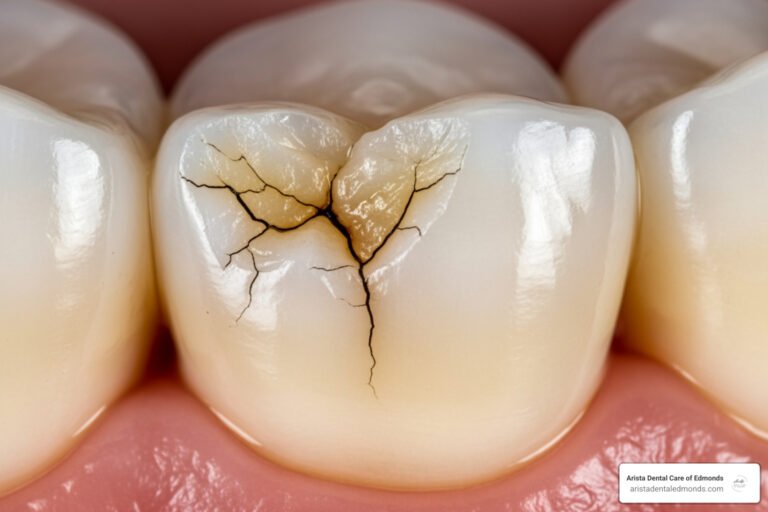
- Teeth that look flatter, shorter or chipped along the edges
- New sensitivity to cold drinks or brushing
- A tight or clicking feeling in your jaw joint
- A partner who hears grinding at night
What is abfraction?
Abfraction is a small, wedge-shaped notch in a tooth, right at the gumline. It usually shows up on the cheek side of premolars and canines. It can make a tooth sensitive to cold or to brushing, and it can trap plaque.
Dentists believe abfraction comes partly from heavy biting forces that flex the tooth near its neck, where the enamel is thinnest. Brushing too hard and acidic foods and drinks can deepen the notch, so it often has more than one cause.
How bruxism and abfraction are connected
When you clench or grind, your teeth take much more force than normal chewing puts on them. Over time that force can wear down biting edges and may help notches form at the gumline.
That’s why we look for both at the same visit. Spotting the pattern early means we can protect your teeth before the wear goes deeper.
How we help at Arista Dental Care
At your exam, Dr. Khan checks for worn edges, small chips and notches, and asks about jaw soreness or headaches. She explains what she sees in plain language, with no lecture and no rush.
- A custom night guard. We make a mouth guard from a precise impression of your teeth, so it fits comfortably and protects them while you sleep.
- Tooth-colored bonding. If a notch is sensitive, trapping plaque or getting deeper, we can fill it with bonding shaded to match your tooth.
- Small habit changes. A soft-bristled brush, a lighter touch and noticing daytime clenching can all ease the strain on your teeth.
- A look at your sleep. Grinding and snoring sometimes go together. If you also snore or wake up tired, ask Dr. Khan whether a sleep evaluation makes sense.
When to book a visit
Book a visit if you notice morning jaw pain, new sensitivity, or teeth that look shorter or chipped. Worn teeth are much easier to protect early than to repair later.
If the dentist makes you nervous, you’re not alone (odontophobia even has a name). Our team takes things slowly, and you’ll have a warm blanket and Netflix while you’re in the chair.
Frequently asked questions
Is bruxism harmful?
Occasional clenching is common and often harmless. Regular grinding can wear down and crack teeth, strain your jaw muscles and cause headaches, so it’s worth a dentist’s look.
Can I use a store-bought mouth guard?
Over-the-counter guards can help for a while, but they’re bulkier and fit less precisely. A custom guard is made for your bite, so it’s usually more comfortable to wear every night.
Does abfraction always need treatment?
No. Small notches that don’t bother you are often just watched at your checkups. We suggest treatment when a notch is sensitive, getting deeper or hard to keep clean.
Does bonding a notch hurt?
Bonding a small notch usually needs little or no drilling. Dr. Khan will walk you through it first and make sure you’re comfortable.
Book your visit
Arista Dental Care of Edmonds is at 21727 76th Ave W, Suite G, Edmonds. Book online or call (425) 967-7272, and let us know you’d like us to check for grinding.