

Navigating Dental Care Through the Decades: What Every Age Group Needs to Know
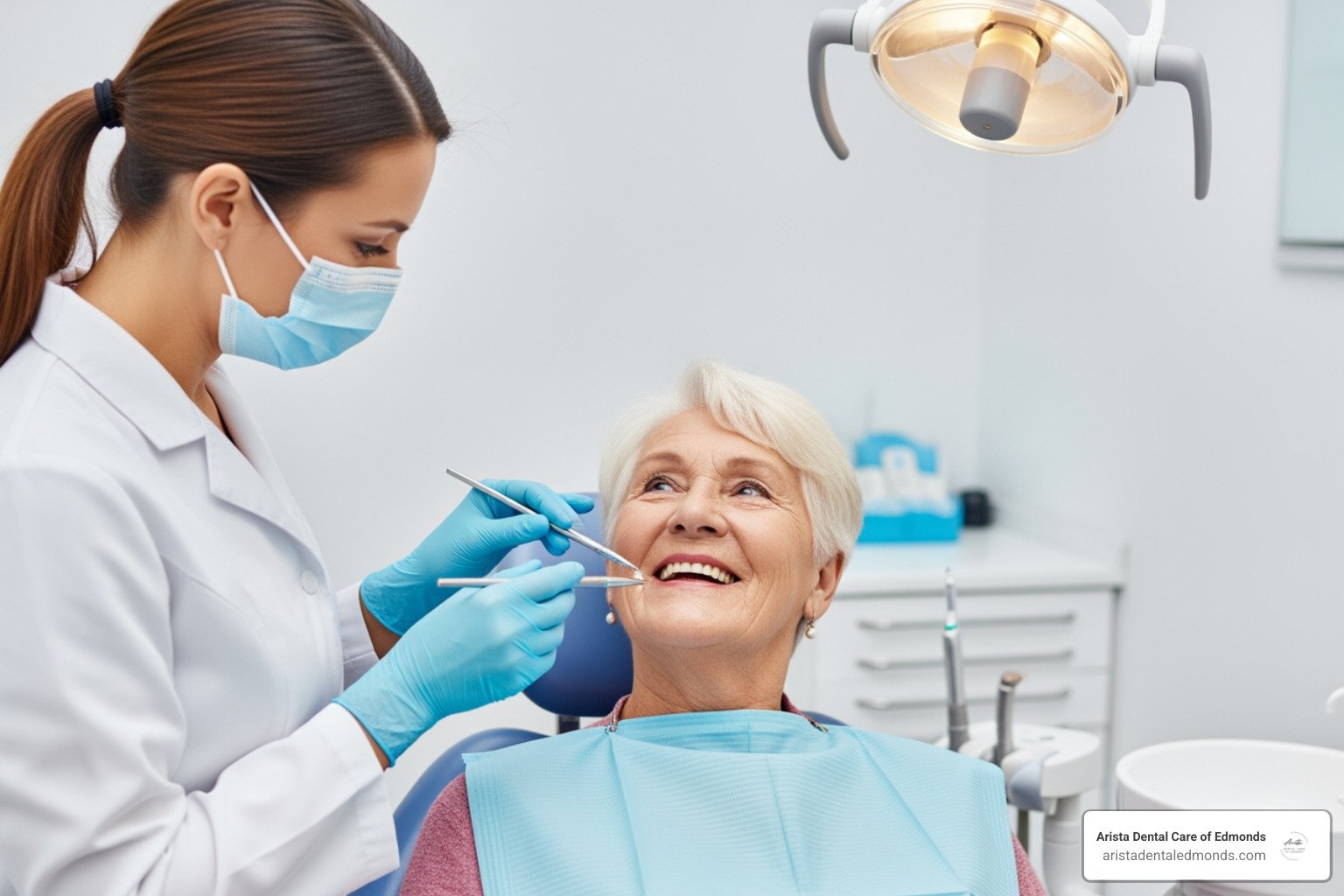
Why Elderly Dental Care Matters More Than Ever
Elderly dental care is essential for maintaining overall health, preventing disease, and preserving quality of life as we age. Here’s what every senior needs to know:
Key Elderly Dental Care Priorities:
- Combat dry mouth – affects 30-40% of seniors and increases cavity risk
- Monitor for root decay – impacts 50% of adults over 75
- Maintain gum health – periodontitis affects 3 in 5 older adults
- Regular professional cleanings – every 6 months or more frequently if needed
- Screen for oral cancer – risk increases with age
- Address tooth loss – 17% of seniors have lost all natural teeth
- Manage denture fit – check annually, replace every 5 years
Your mouth changes dramatically as you age. The cumulative effects of decades of wear, medications, chronic health conditions, and natural biological shifts create unique challenges that didn’t exist in your younger years.
The stakes are higher now. Poor oral health in seniors isn’t just about cavities or dentures – it’s linked to serious conditions like heart disease, diabetes complications, pneumonia, and even cognitive decline. Nearly 9 in 10 adults over 65 take prescription medications, many of which cause dry mouth and increase infection risk.
Yet many seniors face significant barriers to care. Medicare doesn’t cover routine dental work. Physical limitations make brushing difficult. Cognitive changes complicate home care routines. These obstacles shouldn’t prevent anyone from maintaining a healthy smile.
As Dr. Risha Khan DMD at Arista Dental Care of Edmonds, I’ve spent over a decade providing personalized Elderly dental care, helping seniors steer everything from managing medication-related dry mouth to coordinating treatment with their medical providers. My approach focuses on gentle, comprehensive care that addresses both immediate concerns and long-term oral health goals.
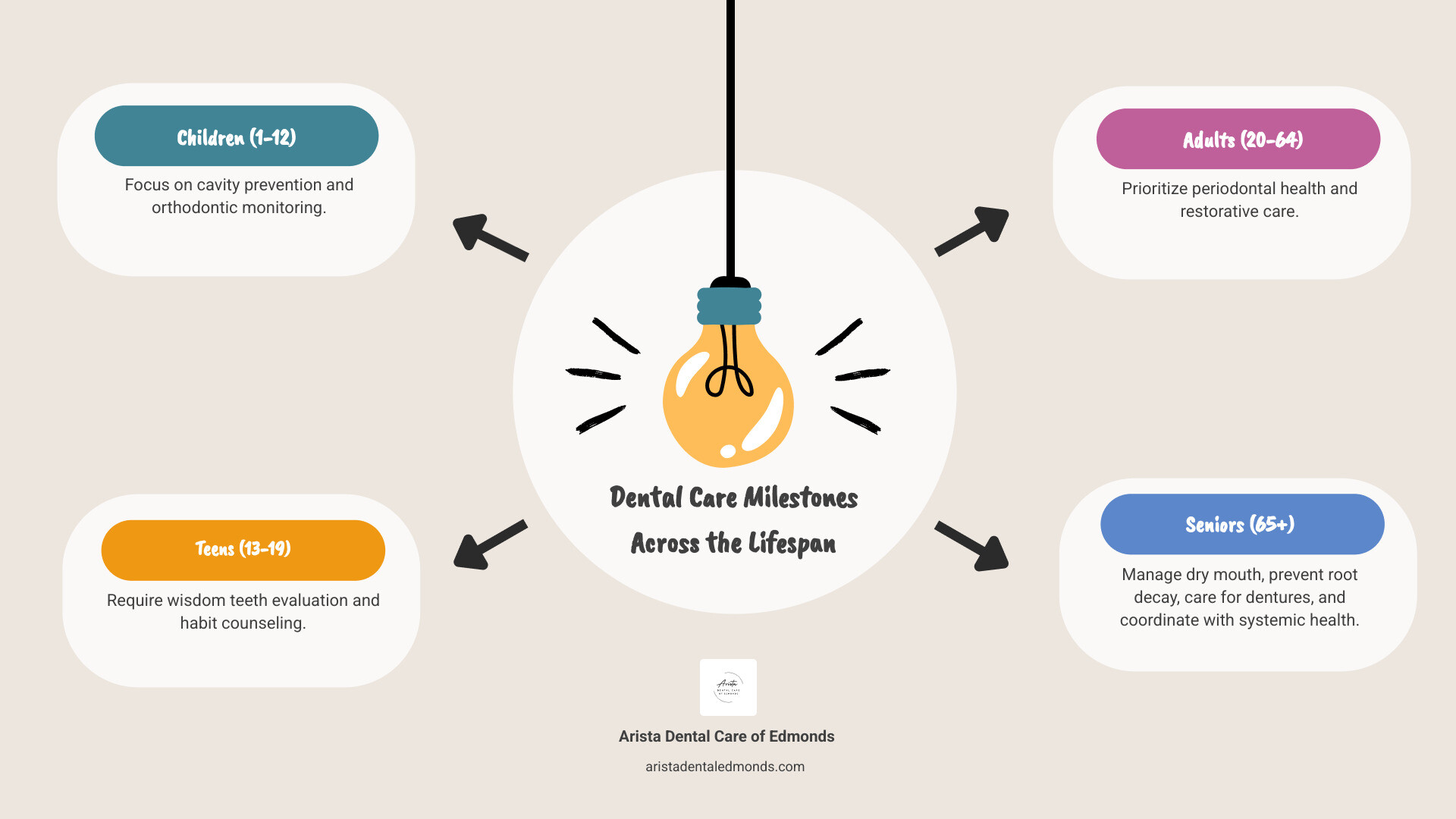
The Evolution of Oral Health Across the Lifespan
Our teeth are remarkably resilient, but they aren’t invincible. Over time, the protective layer of enamel undergoes significant changes. As we age, enamel can thin, making teeth appear darker or more yellowish as the underlying dentin shows through. This isn’t just a cosmetic issue; it often leads to increased sensitivity and a higher susceptibility to staining from coffee, tea, or tobacco.
One of the most common shifts we see in our patients across Edmonds, Shoreline, and Lynnwood is gum recession. This “getting long in the tooth” phenomenon isn’t just an old saying—it is a clinical reality where the gum tissue pulls away from the tooth, exposing the vulnerable root surfaces. Unlike the crown of the tooth, roots are not covered by enamel, making them prime targets for decay.
Research indicates that the average older adult has approximately 20.7 natural teeth. While this is an improvement over previous generations, the cumulative effect of decay remains high. Statistics show that 96% of all non-edentulous older adults have experienced tooth decay at some point in their lives. Maintaining these remaining teeth requires a shift in strategy, focusing more on Oral health for seniors that accounts for these biological changes.
Unique Challenges in Elderly Dental Care
As we transition into our senior years, the dental landscape changes. We are no longer just fighting the occasional cavity; we are managing a complex environment influenced by systemic health and lifelong habits.
The statistics are eye-opening:
- Untreated decay: 1 in 6 older adults currently has untreated tooth decay.
- Edentulism: About 17% of adults aged 65 and older have lost all of their natural teeth.
- Periodontitis: Three in five older adults are affected by some form of gum disease.
- Severe tooth loss: Nearly one-quarter of seniors suffer from severe tooth loss (having fewer than nine teeth).
At Arista Dental Care of Edmonds, we focus on identifying these issues early. We often see “darkened teeth,” which can be caused by the thinning of enamel or years of consuming stain-inducing substances. However, it can also signal changes in the tissue beneath the enamel. Continuous monitoring is vital to ensure these changes don’t lead to tooth loss. For more detailed insights into the specific needs of older adults, the Oral Health & Older Adults resource provides an excellent overview of what to watch for.
Managing Dry Mouth and Root Caries in Elderly Dental Care
Perhaps the most significant “silent” threat in Elderly dental care is xerostomia, or dry mouth. It isn’t a natural part of aging, yet it affects 30% of patients over 65 and up to 40% of those over 80. Why? The answer usually lies in the medicine cabinet. Nearly 9 in 10 seniors take at least one prescription medication, and many take four or more. Hundreds of common drugs—for blood pressure, depression, and allergies—list dry mouth as a side effect.
Saliva is our mouth’s natural defense; it washes away food particles and neutralizes acids. Without it, the risk for root caries (decay on the tooth roots) skyrockets. In fact, approximately 50% of people older than 75 have root caries affecting at least one tooth. We recommend our patients in Mountlake Terrace and Shoreline stay hydrated, use saliva substitutes, and consider high-fluoride toothpaste to protect these vulnerable areas.
Identifying Signs of Gum Disease and Tooth Loss
Gum disease is often painless in its early stages, which makes it particularly dangerous. We look for bleeding gums, persistent bad breath, and receding gum lines during every exam. If left untreated, gingivitis can progress to periodontitis, which destroys the bone and tissue holding your teeth in place.
Severe tooth loss (fewer than nine teeth) can make it difficult to maintain a “functional dentition,” which is generally considered to be 21 or more natural teeth. When teeth are lost, it impacts your ability to eat a nutritious diet, which can lead to further health complications. If you have concerns about your gum health or missing teeth, you can Meet Edmonds Dental Team to discuss a personalized restoration plan.
The Vital Link Between Oral Health and Systemic Wellness
One of the most important things we teach our patients is that the mouth is the gateway to the rest of the body. Chronic oral inflammation is a “low-grade” infection that can tax your immune system and exacerbate other conditions.
- Diabetes: There is a two-way street between gum disease and diabetes. Poorly controlled blood sugar increases the risk of gum infections, and severe gum disease can make it harder to manage blood sugar levels.
- Cardiovascular Health: Periodontal disease has been associated with an increased risk of heart disease and stroke. Some studies suggest that the bacteria that cause gum disease can travel through the bloodstream and contribute to arterial plaque.
- Pneumonia: For seniors with physical or cognitive limitations, oral bacteria can be inhaled into the lungs, potentially causing “aspiration pneumonia.”
- Dementia: Emerging research suggests a link between tooth loss, gum disease, and cognitive decline. Maintaining a healthy mouth may be a key component of preserving brain health.
- Malnutrition: If you cannot chew properly due to pain or missing teeth, you are 3.2 times more likely to suffer from malnutrition.
Restorative Options: Dentures and Specialized Services
If tooth loss has already occurred, modern dentistry offers several ways to restore your smile and function. We provide a range of options custom to the unique needs of our Edmonds-area patients.
- Complete Dentures: Used when all teeth in an arch are missing. These are custom-crafted to look natural and provide support for your facial structure.
- Partial Dentures: These fill the gaps left by a few missing teeth and prevent your remaining natural teeth from shifting.
- Implant-Supported Stability: For many, the biggest complaint about dentures is that they slip. Dental implants act as “anchors” that the denture snaps onto, providing much-needed security while eating and speaking.
- Specialized Care: Seniors often require more frequent scaling (deep cleaning), endodontic services (treating infections), and oral surgery.
If you are ready to explore your options, don’t hesitate to Contact Edmonds Dentist to discuss which restorative path is right for you.
Choosing a Dentist Experienced in Geriatric Care
Not all dental practices are equipped to handle the complexities of Elderly dental care. When choosing a provider in the Shoreline or Lynnwood area, look for:
- Compassionate Care: A team that demonstrates patience and takes the time to listen to your concerns.
- Clinical Qualifications: Experience in managing the intersection of oral and systemic health.
- Willingness to Explain: You should never feel rushed; your dentist should clearly explain every procedure and its necessity.
We pride ourselves on creating a welcoming environment for seniors. You can easily schedule an Edmonds Dental Appointment to experience our patient-centered approach firsthand.
Caregiver Strategies for Seniors with Physical or Cognitive Limitations
For those caring for a loved one with dementia or physical disabilities like arthritis, oral hygiene can become a daily struggle. Cognitive decline often leads to a decreased ability to perform self-care, which significantly increases the risk of infection and pain.
Caregivers play a vital role in:
- Reminding and Assisting: Sometimes a simple reminder is enough; other times, you may need to perform the brushing yourself.
- Communication: Use simple, short instructions. Approach the person from the front at eye level to avoid startling them.
- Routine: Consistency is key. Keeping a regular oral care schedule can help reduce anxiety for those with cognitive impairments.
For more detailed guidance, the Brushing: Information for Caregivers resource offers practical tips for providing this essential support.
Adaptive Tools for Elderly Dental Care at Home
If arthritis or limited dexterity makes holding a toothbrush difficult, there are several clever modifications you can try.
- Electric Toothbrushes: These do the “scrubbing” for you and often have thicker, easier-to-grip handles.
- Handle Modifications: You can widen the handle of a manual toothbrush by sliding it through a tennis ball, a bicycle grip, or even a piece of foam tubing.
- Floss Holders: These “Y-shaped” tools allow you to clean between teeth without having to wrap floss around your fingers.
- Water Flossers: An excellent alternative for those who find traditional flossing too cumbersome.
Financial Planning and Government Dental Programs
We understand that the cost of dental care is a significant concern for many seniors on a fixed income. While Washington State residents don’t have access to the same programs found in other regions (like the Ontario Seniors Dental Care Program), there are still ways to make care affordable.
At Arista Dental Care of Edmonds, we believe financial barriers shouldn’t stand in the way of a healthy smile. We offer various Edmonds Dental Insurance and Financing Options to help you manage costs. We also recommend that our patients in Mountlake Terrace and Lynnwood look into:
- Medicare Advantage (Part C): Some of these plans offer limited dental benefits that traditional Medicare does not.
- Local Clinics: Some community health centers offer sliding-scale fees based on income.
- Dental Savings Plans: These are memberships that provide discounts on common procedures.
While we often get questions about government-funded programs like the Ontario Seniors Dental Care Program, it’s important to note that these are specific to that region. For our local community, we focus on providing transparent pricing and flexible payment plans right here in Edmonds.
Frequently Asked Questions about Senior Oral Health
What are the first signs of oral cancer in older adults?
Most oral cancers are diagnosed in individuals over age 55. We tell our patients to follow the “two-week rule”: if you have a sore, lump, or red/white patch in your mouth that does not heal within 14 days, see us immediately. Other symptoms include difficulty swallowing, persistent hoarseness, or a feeling that something is “stuck” in your throat. Early detection is the most critical factor in successful treatment.
How often should dentures be adjusted or replaced?
Your mouth changes shape over time as the jawbone naturally resorbs (shrinks) in areas where teeth are missing. This means your dentures will eventually lose their fit. We recommend:
- Annual Checks: To look for sore spots or signs of oral infections.
- Relining: Every 1–2 years to tighten the fit.
- Replacement: Approximately every 5 years. Wearing worn-out or ill-fitting dentures can cause chronic irritation and even lead to ulcers.
Can medications cause sudden dental problems?
Absolutely. With an 89% prescription rate among seniors, “polypharmacy” (taking multiple medications) is a major factor in oral health. The most common issue is dry mouth, which can lead to a sudden spike in cavities. Some medications can also cause “gingival hyperplasia” (overgrowth of gum tissue) or fungal infections like thrush. Always bring a current list of your medications to your dental appointments so we can monitor for these side effects.
Conclusion
Navigating Elderly dental care doesn’t have to be overwhelming. While the challenges—from dry mouth to restorative needs—are unique to this stage of life, the solutions are more advanced and accessible than ever before. At Arista Dental Care of Edmonds, we are committed to providing the compassionate, high-tech care our senior neighbors deserve.
Whether you are in Edmonds, Shoreline, Lynnwood, or Mountlake Terrace, our team is here to help you maintain a functional, beautiful smile that supports your overall well-being. Don’t wait for a small problem to become a painful, expensive one. Schedule your consultation today and let us help you enjoy your golden years with a healthy smile.
Edmonds Dentist

21727 76th Ave W Ste G, Edmonds, WA 98026
(425) 967-7272
info@aristadentaledmonds.com