

Oral Health for Kids: A Parent’s Guide to Preventing Cavities

Why Pediatric Dental Health Tips Matter More Than You Think
Pediatric dental health tips are essential for every parent to know because cavities are the most common chronic disease of childhood in the United States—affecting more children than asthma. More than half of children aged 6 to 8 have had a cavity in at least one of their baby teeth, and kids who suffer from poor oral health are three times more likely to miss school as a result of dental pain.
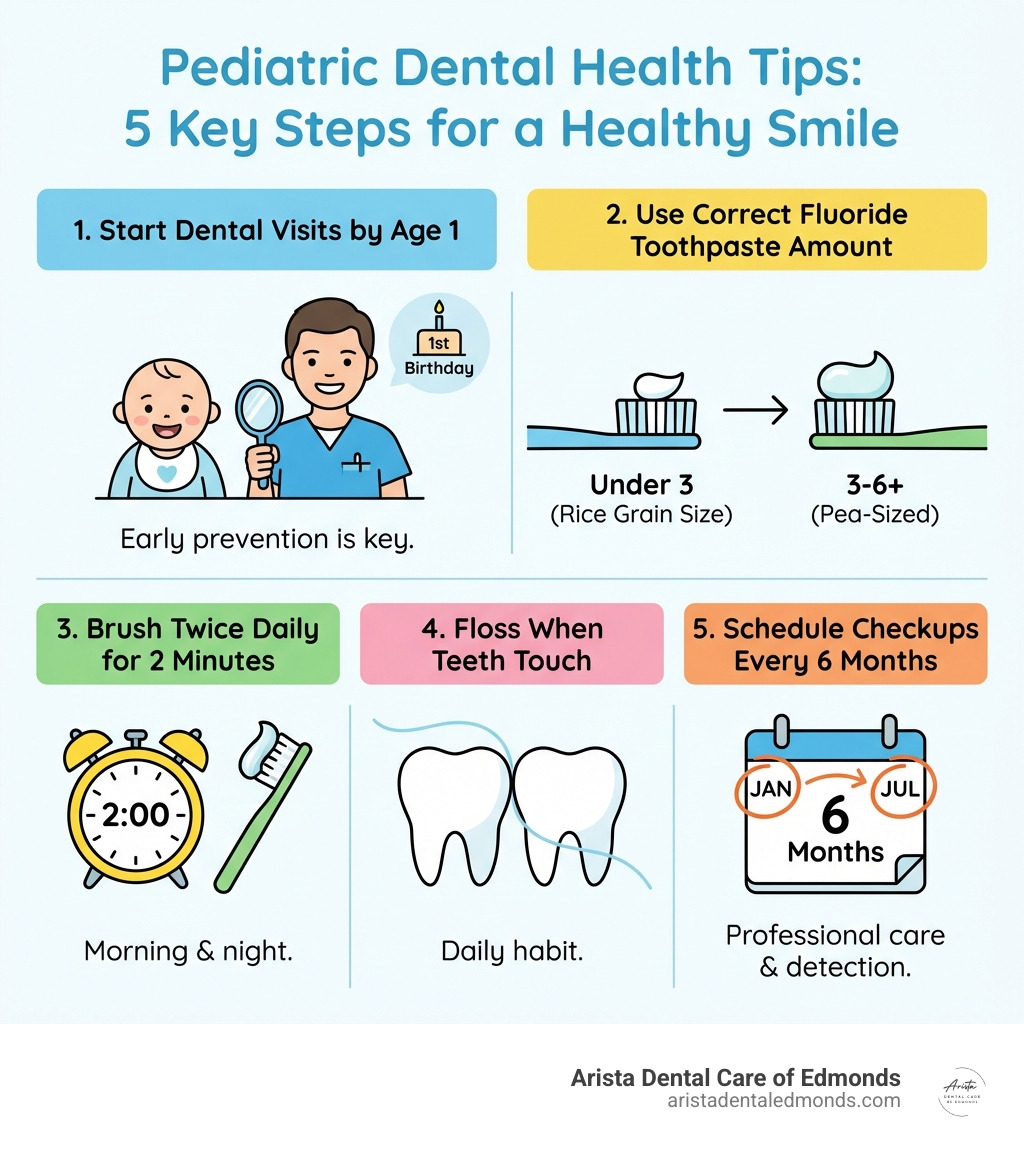
Here are the most important pediatric dental health tips every parent should follow:
- Start early – Begin cleaning your baby’s gums with a soft cloth even before teeth appear, and schedule their first dental visit by their first birthday.
- Use the right amount of fluoride toothpaste – A smear the size of a rice grain for children under 3, and a pea-sized amount for ages 3-6.
- Brush twice daily for two minutes – Help your child brush using small circular motions at a 45-degree angle until they’re about 7-8 years old.
- Start flossing when teeth touch – Begin flossing as soon as any two teeth are touching each other.
- Limit sugary foods and drinks – Offer water or milk instead of juice and soda, and choose healthy snacks like cheese, yogurt, and fresh vegetables.
- Apply dental sealants – Ask your dentist about sealants for your child’s molars, which can prevent 80% of cavities.
- Schedule regular checkups – Visit the dentist every six months for professional cleanings and early problem detection.
The good news? Cavities are largely preventable. With the right habits established early, you can help your child avoid the pain, infections, and dental problems that affect millions of kids each year.
Baby teeth matter more than many parents realize. They’re not just placeholders—they help children chew properly, speak clearly, and hold space for permanent teeth to come in correctly. Poor oral health during early childhood can lead to problems that follow your child for years, affecting everything from their nutrition to their confidence to their academic performance.
As Dr. Risha Khan, DMD, I’ve spent over a decade helping families in the Edmonds area establish healthy dental habits that last a lifetime, and I’m passionate about sharing evidence-based pediatric dental health tips that make oral care easier for both parents and kids. In this guide, I’ll walk you through everything you need to know to protect your child’s smile—from their very first tooth through their school years.
Dental Care Foundations: From Infancy to Toddlerhood
Establishing good oral hygiene habits starts even before your child’s first tooth emerges. The earliest months and years are crucial for setting the stage for a lifetime of healthy smiles. We’ll explore essential pediatric dental health tips for our littlest patients, covering everything from initial gum care to managing pacifier use.
Your Baby’s First Dental Visit
Many parents ask us, “When should my child first see a dentist?” The answer is earlier than you might think! We recommend scheduling your child’s first dental visit by their first birthday, or within six months of their first tooth coming in, whichever comes first. This early visit is less about extensive treatment and more about education and prevention.
During this initial appointment, our pediatric dentist will perform a thorough oral examination, checking for any early signs of issues. We’ll also discuss important topics like thumb sucking and pacifier habits, fluoride use, and your baby’s feeding habits. This visit is key to establishing a “dental home” for your child, creating a familiar and comfortable environment for their ongoing care. It allows us to spot potential problems early and provide you with personalized guidance. Learn more about our Pediatric Dentistry services.
Preventing Baby Bottle Tooth Decay
Baby bottle tooth decay, also known as early childhood caries, is a serious concern that we often see. It occurs when a child’s teeth are frequently exposed to sugary liquids for extended periods. This includes not just juice and soda, but also milk and formula, especially when babies fall asleep with a bottle or sippy cup. The sugars in these liquids feed bacteria in the mouth, producing acids that attack tooth enamel and lead to decay.
To prevent this, here are some key pediatric dental health tips:
- Water Only at Bedtime: Never put your baby to bed with a bottle or sippy cup filled with anything other than water. If they need comfort, offer a clean pacifier or a bottle with plain water.
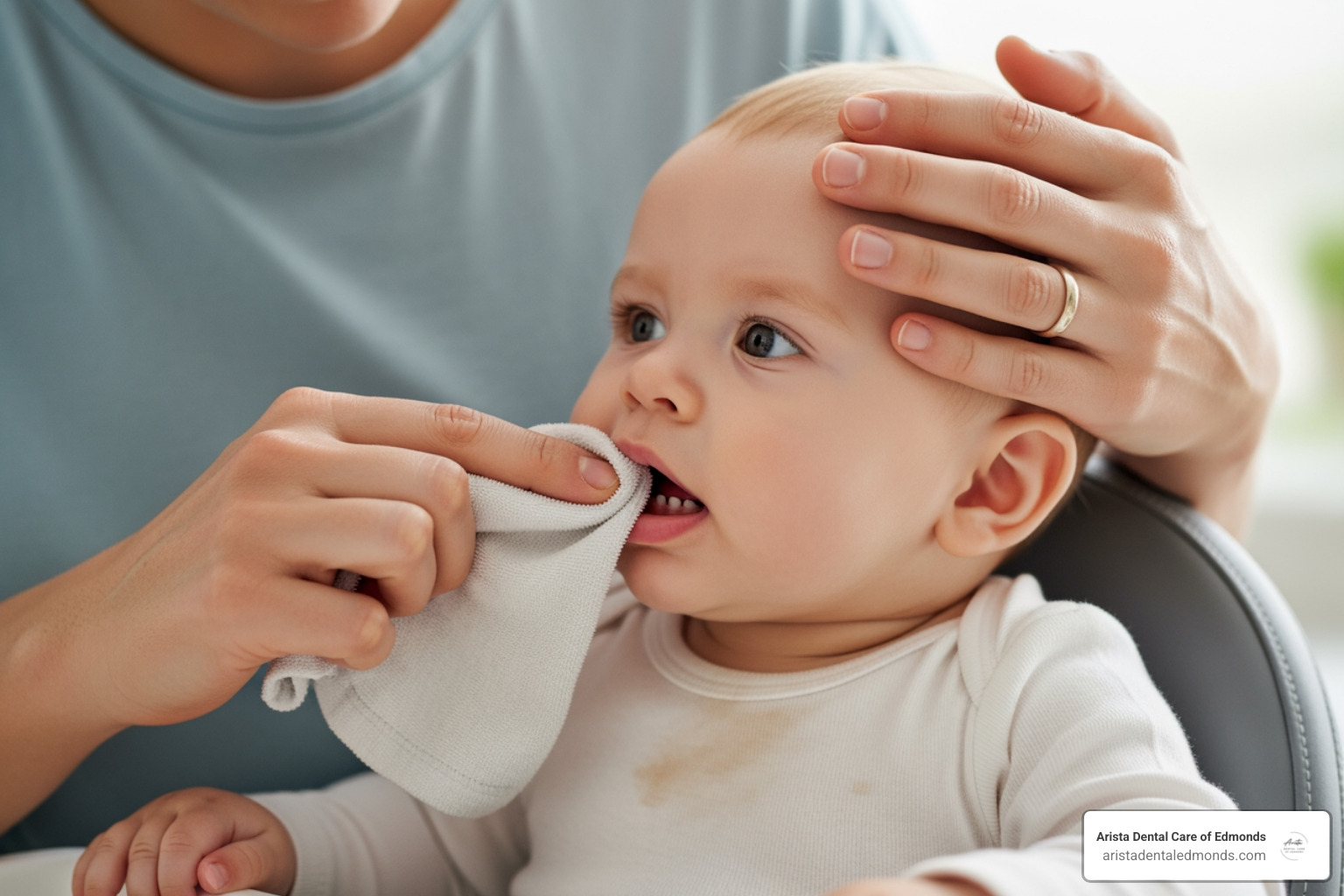
- Wipe Gums After Feeding: Even before teeth appear, gently wipe your baby’s gums twice a day with a soft, clean cloth or gauze, especially after the first feeding and right before bed. This helps remove bacteria and sugars.
- Transition to a Cup: Encourage your child to drink from a regular cup by their first birthday, and aim to discontinue bottle use entirely by 12-18 months.
For more detailed information on preventing this common issue, you can read more about How to prevent tooth decay in your baby.
Key Pediatric Dental Health Tips for Brushing and Fluoride
Brushing is the cornerstone of good oral hygiene, and knowing how to do it correctly from an early age is vital.
- When to Start Brushing: As soon as your baby’s first tooth appears (typically around 6-10 months), it’s time to start brushing! Use a small, soft-bristled toothbrush and plain water.
- Toothpaste Amount for Babies (Rice Grain): For children less than 3 years of age, use only a tiny smear of fluoride toothpaste, about the size of a grain of rice. This is crucial because young children often swallow toothpaste, and ingesting too much fluoride can lead to a condition called fluorosis, which causes white spots or streaks on permanent teeth.
- Toothpaste for Toddlers (Pea-Size): For children aged 3 to 6 years, increase the amount to a pea-sized dab of fluoride toothpaste. At this age, we teach them to spit out the toothpaste after brushing, though supervision is still key to ensure they don’t swallow too much.
- Brushing Technique for Babies: Gently brush all surfaces of their teeth twice a day—once in the morning and once before bed. Focus on small, gentle circular motions. You’re the primary brusher for your little one until they develop the dexterity to do it themselves, usually around age 6 or 7.
Essential Pediatric Dental Health Tips for Growing Kids
As children grow, their dental needs evolve, and so do the ways we encourage good oral hygiene. From mastering brushing and flossing techniques to understanding the impact of diet, these pediatric dental health tips are designed to empower both parents and children in the journey toward healthy smiles.
Mastering Brushing and Flossing
Once your child has several teeth, the routine becomes more structured:
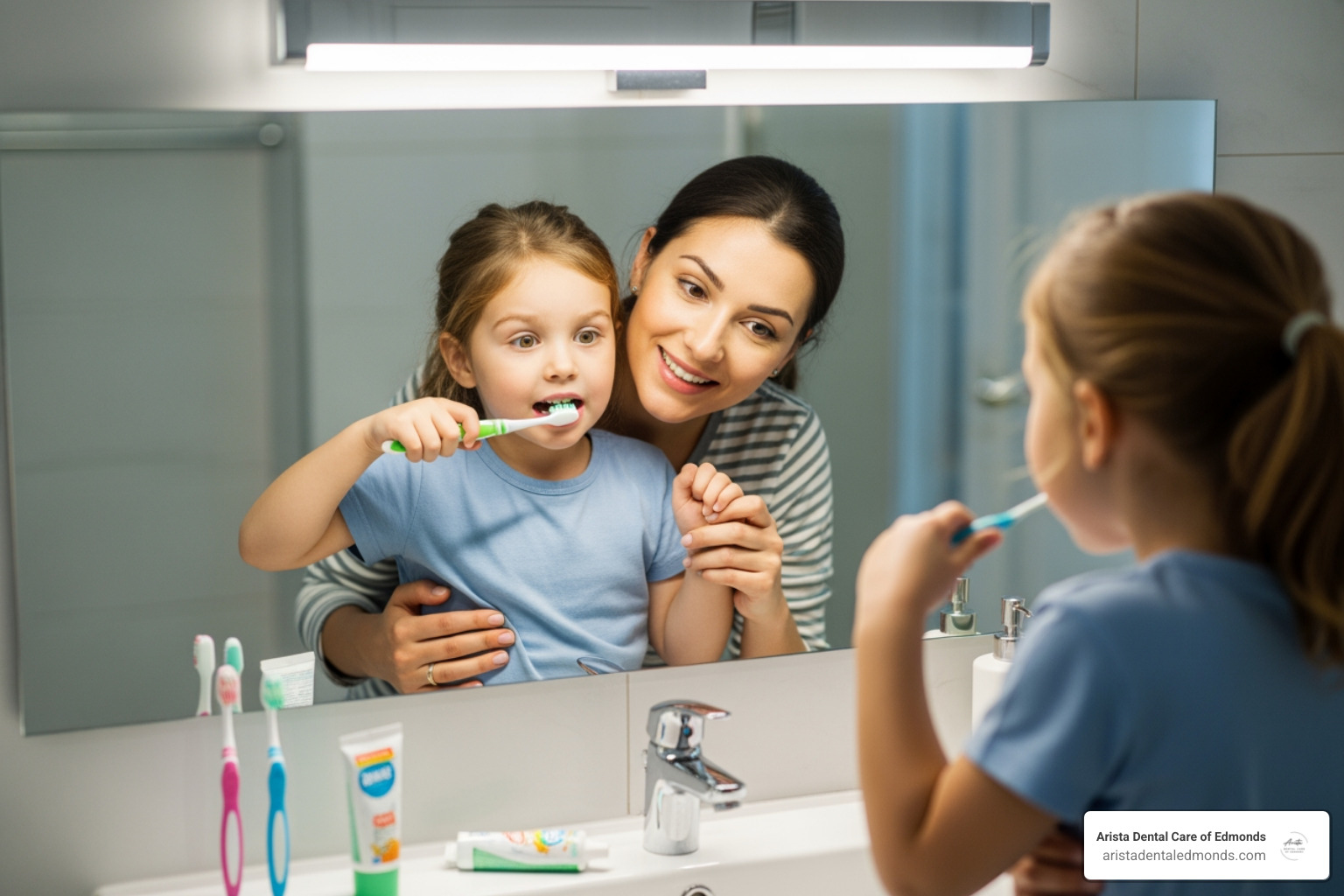
- Brushing Duration (2 Minutes): Encourage your child to brush their teeth twice a day for a full two minutes each time. This ensures enough time to clean all tooth surfaces thoroughly.
- 45-Degree Angle: Teach them to hold the toothbrush at a 45-degree angle to the gums, using gentle, short strokes or circular motions. This technique effectively cleans both the tooth surface and the gumline where plaque tends to accumulate.
- Brushing All Surfaces: Emphasize brushing the outer, inner, and chewing surfaces of every tooth. A common mistake is missing the back surfaces of molars, which can lead to cavities.
- When to Start Flossing (Teeth Touching): Flossing should begin as soon as any two of your child’s teeth are touching each other. This is typically when their molars come in, but it can be earlier for some children. Flossing removes food particles and plaque that toothbrushes can’t reach.
- Kid-Friendly Flossers: For younger children, pre-threaded flossing sticks can be easier to manage than traditional string floss.
- Supervising Children (Until Age 7-8): While children may want to brush and floss independently, most lack the fine motor skills to do an effective job until they’re about 7 or 8 years old. We recommend supervising and assisting them to ensure proper technique and thorough cleaning.
Making Oral Hygiene Fun
We know that getting kids excited about brushing and flossing can sometimes feel like pulling teeth! But with a little creativity, we can turn oral hygiene into an enjoyable part of their day. Here are some of our favorite pediatric dental health tips for making it fun:
- Let Them Pick a Toothbrush: Allow your child to choose their own toothbrush, perhaps one with a favorite character or a fun color. An electric toothbrush designed for kids can also add excitement.
- Use a Timer or Song: Play a two-minute song or use a fun sand timer to help them track the brushing duration. Many apps and videos are designed to make brushing interactive and engaging.
- Brushing Charts with Rewards: Create a brushing chart and let them put a sticker on it every time they brush. Offer small, non-food rewards for consistent effort, like choosing a book or extra playtime.
- Brush Together as a Family: Children learn by example. Make brushing a family activity, and let them see you taking care of your teeth. We often say, “Monkey see, monkey do!”
More Pediatric Dental Health Tips: Diet and Nutrition
What your child eats and drinks plays a significant role in their dental health. Sugary foods and drinks are the primary culprits behind cavities.
- Foods to Encourage:
- Cheese: Contains calcium and phosphate, which help remineralize tooth enamel.
- Yogurt: Rich in calcium and probiotics, beneficial for oral and gut health.
- Vegetables: Crunchy vegetables like carrots and celery act as natural toothbrushes, scrubbing away plaque.
- Fruits: While some fruits contain natural sugars, they are also rich in vitamins and fiber. Encourage whole fruits over juices.
- Foods and Drinks to Limit:
- Sugary Snacks: Candies, cookies, pastries, and other processed snacks provide fuel for cavity-causing bacteria.
- Sticky Candies: Gummy bears, caramels, and fruit leathers cling to teeth, giving bacteria more time to produce acid.
- Juice: Even 100% fruit juice is high in sugar. We recommend limiting juice intake to small amounts, ideally with meals, and offering water as the primary beverage.
- Soda and Sports Drinks: These are highly acidic and sugary, leading to enamel erosion and rapid decay.
- Importance of Water: Water is your child’s best friend for dental health. It helps rinse away food particles and acids, and if your community water is fluoridated, it provides a natural defense against cavities. Encourage your child to drink plenty of water throughout the day, especially after meals and snacks.
Proactive Prevention: Sealants, Sports Guards, and Spotting Problems
Beyond daily hygiene, there are additional proactive steps we can take to protect your child’s teeth. These pediatric dental health tips focus on preventive treatments and recognizing early warning signs of dental issues.
Protecting Teeth with Dental Sealants
Dental sealants are one of the most effective tools we have for preventing cavities, especially on the back teeth (molars).
- What are Sealants: Sealants are thin, protective coatings typically made of plastic or other dental materials.
- How They Work: They are painted onto the chewing surfaces of the back teeth, where food particles and bacteria often get trapped in the deep grooves and pits. Once applied, the sealant quickly bonds into these depressions, forming a smooth surface that effectively “seals out” food and plaque.
- Cavity Prevention Rate (80%): Studies show that applying dental sealants to the back teeth prevents 80% of cavities. This is a powerful statistic that highlights their effectiveness.
- Which Teeth to Seal (Molars): We typically recommend sealants for permanent molars as soon as they erupt, usually between ages 6 and 12, as these teeth are most susceptible to decay.
- Painless Application: The application process is quick, non-invasive, and completely painless, making it a comfortable experience for children.
We offer Dental Sealants as a key part of our preventive care for children at Arista Dental Care of Edmonds.
Mouth Guards: A Must for Young Athletes
If your child participates in sports, protecting their teeth from injury is just as important as protecting their knees or head.
- Preventing Dental Injuries: Contact sports like football, basketball, soccer, and martial arts carry a significant risk of dental injuries, including chipped or knocked-out teeth, jaw fractures, and soft tissue damage. A properly fitted mouth guard can drastically reduce this risk.
- Custom-Fitted vs. Store-Bought: While boil-and-bite mouth guards offer some protection, custom-fitted mouth guards from your dentist provide the best fit, comfort, and protection. They are less bulky, allow for easier breathing and speaking, and stay securely in place.
- Importance of Proper Fit: A well-fitting mouth guard absorbs shock, cushions impacts, and distributes forces evenly, minimizing the potential for injury.
The American Dental Association provides valuable information on Sports-related dental injuries and the importance of mouth guards. We also provide Mouth Guards custom to your child’s needs.
Signs of Dental Problems to Watch For
As parents, you are on the front lines of your child’s oral health. Knowing what to look for can help us catch problems early, when they are easiest to treat. Here are some warning signs that warrant a call to our office:
- White Spots on Teeth: These can be an early indicator of demineralization, the first stage of tooth decay. Often, these can be reversed with improved hygiene and fluoride.
- Tooth Sensitivity: If your child complains of pain or discomfort when eating hot, cold, or sweet foods, it could signal enamel erosion or a developing cavity.
- Persistent Bad Breath: While occasional bad breath is normal, persistent halitosis that doesn’t improve with brushing and flossing could indicate a deeper issue like gum disease or an infection.
- Bleeding or Swollen Gums: Healthy gums don’t bleed. If you notice bleeding when your child brushes or flosses, or if their gums appear red and swollen, it could be a sign of gingivitis.
- Toothaches: Any complaint of tooth pain, especially if it’s persistent or interferes with eating or sleeping, should be evaluated immediately. This often points to a cavity or infection.
- Discoloration: Dark spots, brown areas, or even black spots on the teeth are clear signs of decay that need professional attention.
Frequently Asked Questions about Children’s Dental Health
We understand that parents have many questions about their children’s oral health. Here, we address some of the most common inquiries we receive, providing clear and concise pediatric dental health tips based on expert recommendations.
What is the most common chronic childhood disease in the U.S.?
It’s a surprising fact to many parents, but dental decay (cavities) is indeed the number 1 chronic childhood disease in the United States. This means it affects more children than asthma, childhood obesity, or hay fever. The statistics are quite stark:
- More than half of children aged 6 to 8 years have had a cavity in at least one of their baby (primary) teeth.
- More than half of adolescents aged 12 to 19 years have had a cavity in at least one of their permanent teeth.
- Nearly 1 in 4 (23%) children ages 2 to 5 get cavities in their baby teeth.
- By age 3, 28% of children have one or more cavities.
Untreated decay is not just a minor inconvenience; it leads to significant pain, infections, and can severely impact a child’s ability to eat comfortably, speak clearly, play, and learn effectively in school.
How often should my child have a dental checkup?
Regular dental checkups are fundamental to maintaining your child’s oral health and detecting problems early.
- First Visit by Age 1: As we mentioned, the American Academy of Pediatric Dentistry recommends the first dental visit by your child’s first birthday or within six months of their first tooth erupting.
- Regular Checkups Every Six Months: For most children, we recommend routine dental checkups and cleanings every six months. These visits allow us to monitor dental development, provide professional cleanings that remove plaque and tartar, and apply preventive treatments like fluoride varnish.
- More Frequent Visits for High-Risk Children: If your child has a higher risk of cavities (e.g., due to diet, certain medical conditions, or poor oral hygiene habits) or existing dental issues, we might recommend more frequent visits, perhaps every three or four months, to ensure optimal care.
These regular appointments are a valuable opportunity to reinforce good pediatric dental health tips and ensure your child’s smile stays healthy as they grow.
What is a pediatric dentist?
While many family dentists are excellent at providing care for children, a pediatric dentist has specialized training and expertise in treating infants, children, and adolescents.
- Specialized Training for Children: Pediatric dentists complete an additional two to three years of specialized training after dental school. This training focuses on the unique dental and developmental needs of children, including child psychology, growth and development, behavior management techniques, and specialized treatment modalities for children with special health care needs.
- Manages Dental Development: We have a deep understanding of how children’s teeth grow and change, from the eruption of baby teeth to the development of permanent teeth and jaw structures. This allows us to anticipate and address potential issues early.
- Cares for Children with Special Health Care Needs: Pediatric dentists are uniquely equipped to provide comprehensive oral health care for children with physical, developmental, mental, or emotional disabilities.
- Creates a Child-Friendly Environment: Our offices are often designed to be welcoming and fun for children, helping to reduce anxiety and create a positive association with dental visits.
Choosing a pediatric dentist can be a great option for parents seeking specialized care for their children. You can find more information about how to Find a Pediatric Dentist in your area. At Arista Dental Care of Edmonds, we are proud to offer comprehensive Pediatric Dentistry services right here in Edmonds, WA, and serve families from Shoreline, Lynnwood, and Mountlake Terrace.
Your Partner in Lifelong Dental Health
We hope this extensive guide has provided you with valuable pediatric dental health tips and empowered you with the knowledge to protect your child’s smile. Establishing good oral hygiene habits early is one of the greatest gifts you can give your child, setting them up for a lifetime of healthy teeth and overall well-being.
We believe that building a positive relationship with dental care from a young age is crucial. Our compassionate team at Arista Dental Care of Edmonds is dedicated to providing gentle, comprehensive dental care for children of all ages. We’re here to support you every step of the way, making dental visits a comfortable and even enjoyable experience for your little ones.
Take the first step toward a lifetime of healthy smiles for your child by scheduling their next check-up with our compassionate team. You can easily Contact Us to book an appointment. Learn more about our Pediatric Dentistry services and how we can help your child achieve a bright, healthy smile.

Edmonds Dentist

21727 76th Ave W Ste G, Edmonds, WA 98026
(425) 967-7272
info@aristadentaledmonds.com