

Unpacking Dental Implants: From Cosmetic to Same-Day Solutions
Understanding Modern Tooth Replacement
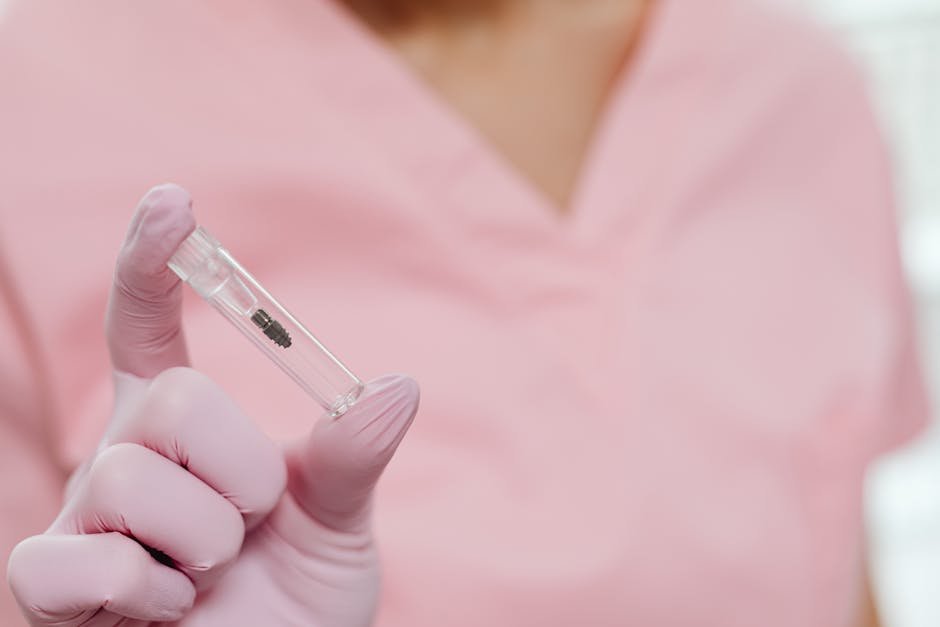
What are dental implants? They are artificial tooth roots, usually made of titanium, that are surgically placed into your jawbone to support replacement teeth. Through a natural process called osseointegration, they fuse with your bone to create a stable foundation for crowns, bridges, or dentures that look, feel, and function like natural teeth.
Quick Answer:
- What they are: Titanium posts surgically inserted into the jawbone
- What they do: Replace missing tooth roots and support artificial teeth
- How they work: Fuse with bone (osseointegration) over 3-6 months
- What they support: Single crowns, bridges, or full dentures
- Success rate: Over 95% with proper care
If you’re self-conscious about missing teeth or struggling with uncomfortable dentures, dental implants offer a permanent solution that won’t damage healthy teeth. Missing a tooth affects how you eat and speak, and can even change your facial structure as the jawbone shrinks. Unlike traditional bridges that require grinding down adjacent teeth or dentures that can slip, dental implants are different.
They replace both the root and the crown of your missing tooth, preserving your jawbone and giving you back the confidence to smile, laugh, and enjoy your favorite foods without worry.
I’m Dr. Risha Khan, and over the past decade, I’ve helped countless patients in the Edmonds area understand what are dental implants and how they can transform their lives. At Arista Dental Care of Edmonds, we combine advanced technology with personalized care to make your implant journey as comfortable and successful as possible.
So, What Are Dental Implants and How Do They Work?
At its core, a dental implant acts as a sturdy, artificial tooth root. Imagine a strong, stable anchor that holds your new tooth firmly in place. That’s essentially what are dental implants. According to the FDA, they are “medical devices surgically implanted into the jaw to restore a person’s ability to chew or their appearance, providing support for artificial teeth like crowns, bridges, or dentures.”
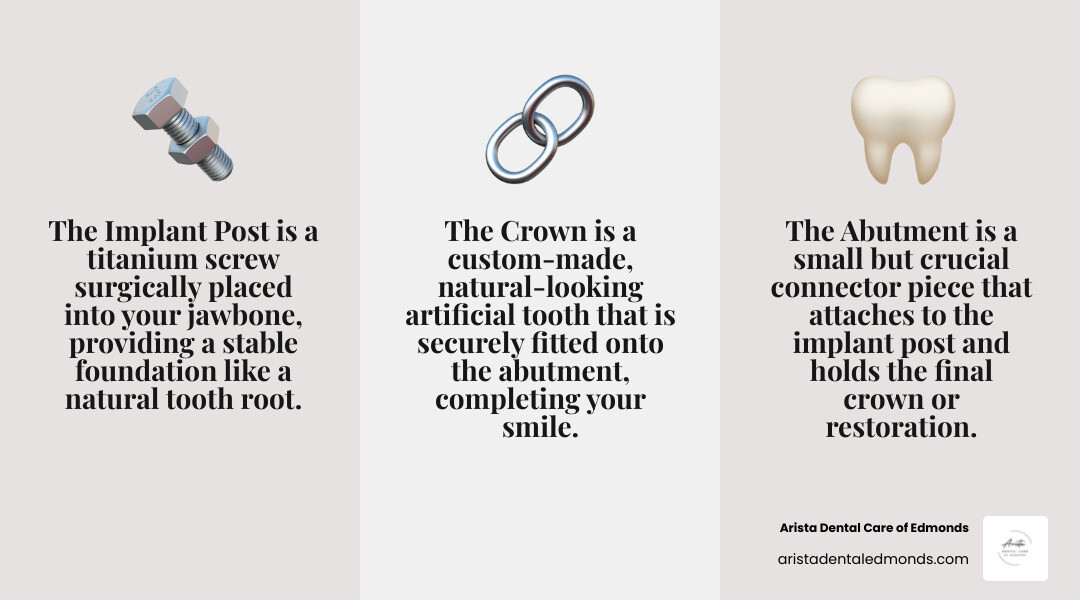
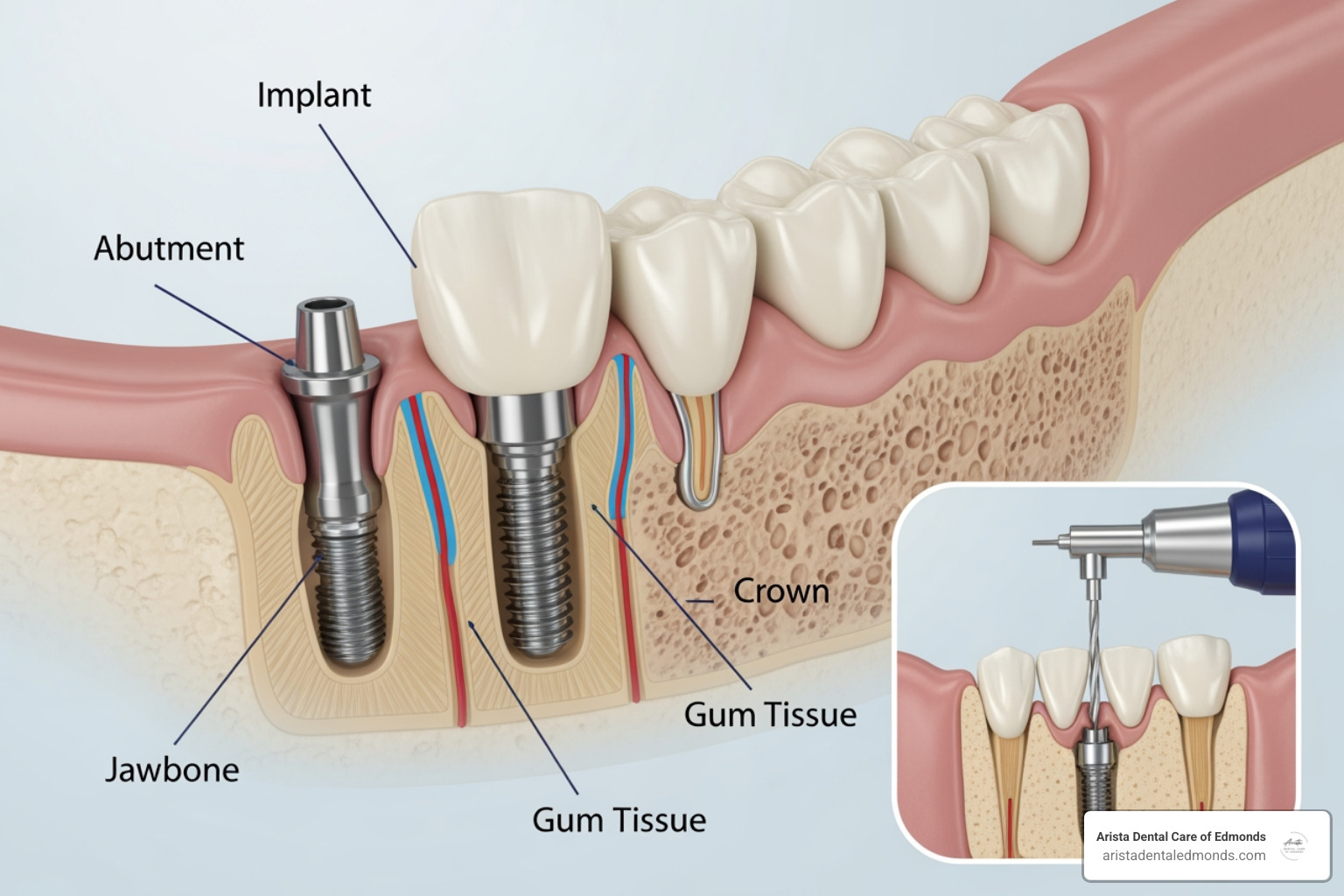
The system typically consists of three main parts:
- The Implant Body (the Post): This is the small, screw-shaped post, usually made of medical-grade titanium or zirconium oxide, that our skilled specialists surgically place directly into your jawbone. Titanium is highly biocompatible, meaning your body readily accepts it, allowing it to fuse with the bone.
- The Abutment (the Connector): Once the implant body has healed, a small connector piece called an abutment is attached to it. This abutment extends just above the gum line and serves as the foundation for your new tooth.
- The Restoration (the New Tooth): This is the visible part of your new smile – a custom-made crown, bridge, or denture that is securely fastened to the abutment. These restorations are carefully crafted to match the color, size, and shape of your natural teeth, ensuring a seamless and beautiful result.
The magic behind the stability and longevity of dental implants lies in a biological process called osseointegration. This term, coined by Per-Ingvar Brånemark, the “father of modern dental implantology,” describes the direct structural and functional connection between living bone and the surface of a load-bearing implant. Essentially, your jawbone grows around and bonds with the implant post, making it an integral part of your anatomy. This fusion creates an incredibly strong and durable foundation, much like the roots of your natural teeth.
This intimate bond between the implant and your bone is crucial. It means your new tooth won’t slip, make noise, or cause bone damage like some traditional tooth replacement options might. It provides the stability needed for you to chew, speak, and smile with complete confidence. For more authoritative information on dental implants, you can visit the American Academy of Periodontology website.
The Dental Implant Journey: From Consultation to Your New Smile
Starting on the journey to a restored smile with dental implants is a personalized process we guide you through every step of the way.
Initial Consultation and Planning
Your journey begins with a comprehensive consultation at our office. We’ll perform a detailed examination, including advanced 3D imaging (CBCT scan), to get a precise view of your jawbone structure. This allows us to assess your bone quality and ensure optimal implant placement. After reviewing your medical history, we’ll develop a personalized treatment plan, discuss all your options, and answer your questions to ensure you feel informed and comfortable.
The Surgical and Healing Phases
The surgical phase is performed with your comfort as our priority, using various anesthesia and sedation options for a pain-free experience. The process involves several key steps:
- Preparation: If needed, a damaged tooth is gently extracted. If your jawbone lacks sufficient density, a bone graft may be performed to create a solid foundation for the implant.
- Implant Placement: A small, titanium post is surgically placed into your jawbone. The gum tissue is then closed over the implant to begin the healing process.
- Healing and Osseointegration: Over the next three to nine months, the implant post will fuse with your jawbone in a process called osseointegration. This creates a strong, stable root for your new tooth. We can provide temporary teeth for visible areas during this time.
- Abutment Placement: Once healing is complete, a small connector called an abutment is attached to the implant post. This piece sits just above the gum line and will hold your new crown.
The Final Restoration
This is the final step in getting your new smile.
- Impressions and Crafting: We take precise impressions of your mouth to have our dental lab craft a custom crown, bridge, or denture. We work with you to select the perfect shade to match your natural teeth.
- Placement and Final Adjustments: Once your restoration is ready, we securely attach it to the abutment. We then perform a final bite check and make any minor adjustments to ensure a comfortable and perfect fit, restoring your ability to chew and speak with ease.
Are You a Candidate? Types of Implants and Restorations
Determining if dental implants are right for you involves several factors. Thankfully, advancements in technology mean most people can now benefit from this life-changing treatment.
Who is a Good Candidate for Dental Implants?
Ideal candidates for dental implants are in good overall health and committed to excellent oral hygiene. Key factors include:
- Good General Health: Your body’s ability to heal is crucial. We’ll review your medical history, as uncontrolled chronic illnesses can affect implant success.
- Healthy Gums: Active gum disease must be treated before implant placement to prevent complications.
- Sufficient Jawbone Density: Implants require a strong bone foundation. If needed, bone grafting can build up the required volume, making implants a viable option for more patients.
- Non-Smokers: Smoking impairs healing and significantly increases the risk of implant failure. We strongly advise quitting for optimal results. Scientific research on smoking and implant success highlights the negative impact of tobacco.
- Commitment to Oral Hygiene: Daily cleaning and regular professional check-ups are essential for the long-term health of your implants.
- Age Considerations: For younger patients, we wait until jaw growth is complete (typically late teens) to ensure proper implant alignment.
What are the Different Types of Dental Implants?
Various implant types exist to meet different patient needs:
- Endosteal Implants: The most common type, these are screw-like posts placed directly into the jawbone.
- Subperiosteal Implants: A framework placed on top of the jawbone but under the gums. This is a less common option for patients with insufficient bone height.
- Zygomatic Implants: Longer implants anchored in the cheekbone (zygoma) for cases of severe upper jaw bone loss.
- Mini Dental Implants (MDIs): Smaller-diameter implants used to stabilize dentures or in areas with limited bone.
- Same-Day Implants (Immediate Loading): In certain cases, a temporary restoration can be attached on the same day the implant is placed, reducing overall treatment time.
What are the Different Restorations for Dental Implants?
Implants can support various restorations based on your needs:
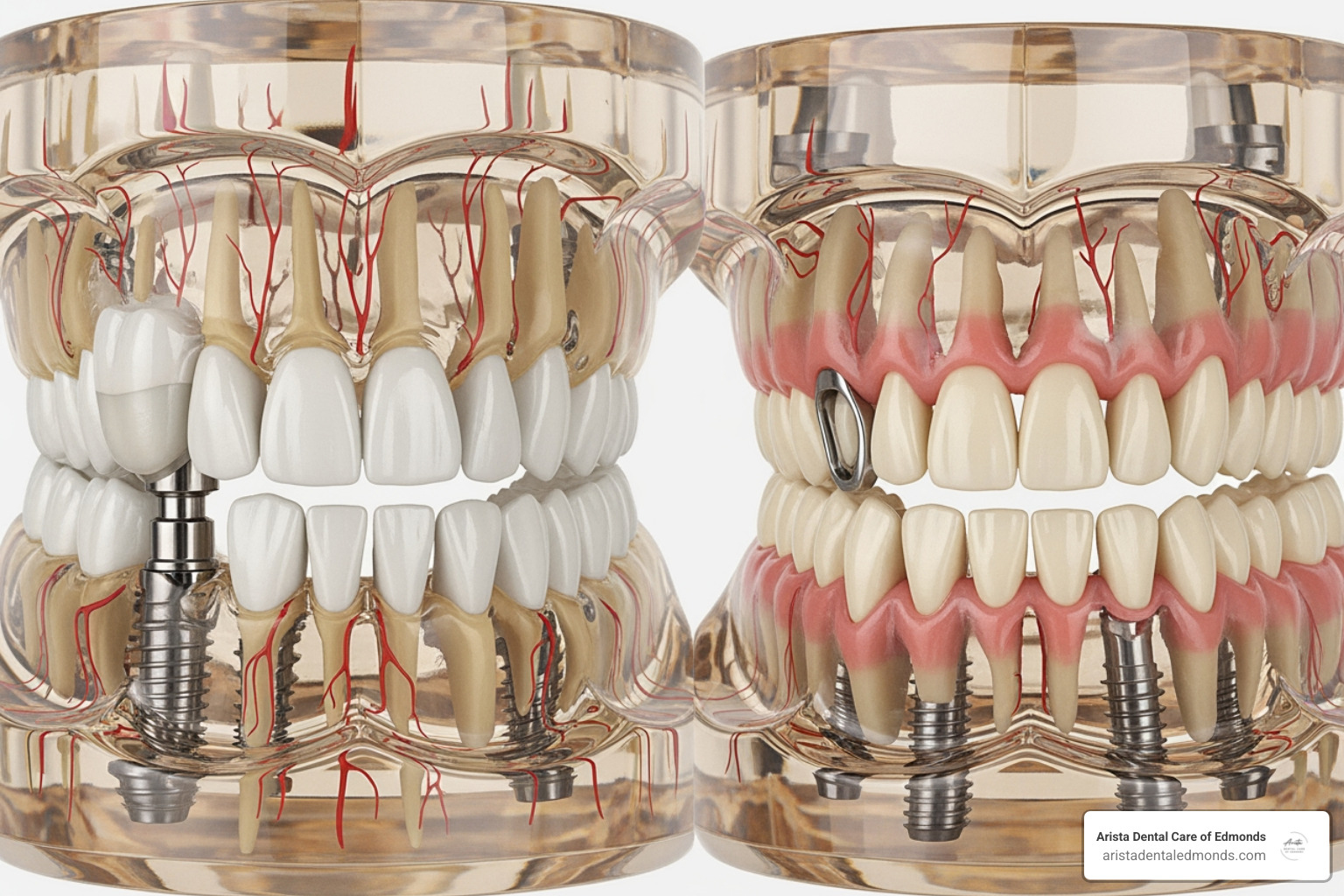
- Single Implant Crowns: A single implant and crown replace one missing tooth.
- Implant-Supported Bridges: Two or more implants anchor a bridge to replace several adjacent teeth, preserving neighboring healthy teeth.
- Full-Arch Replacements: For patients missing all teeth in an arch, implants provide a stable foundation for a full set of new teeth. This includes options like:
- All-on-4® Treatment Concept: A technique using just four implants to support a full, fixed bridge, often providing an immediate solution.
- Implant-Retained Overdentures: A few implants are used to anchor a removable denture, providing much greater stability and comfort than traditional dentures.
Implants vs. Alternatives: A Clear Comparison
When considering tooth replacement, it’s helpful to see how dental implants compare to traditional alternatives like bridges and dentures. Implants often emerge as the gold standard for long-term health, function, and aesthetics.
The Best Benefits of Dental Implants
The advantages of dental implants extend far beyond just filling a gap.
- Prevents Bone Loss: Implants act like natural tooth roots, stimulating the jawbone to prevent the bone shrinkage that occurs after tooth loss. The FDA highlights that implants “help keep the jawbone from shrinking.”
- Restores Full Chewing Power: Anchored directly into your bone, implants provide exceptional stability, allowing you to eat your favorite foods without worry.
- Looks and Feels Like Natural Teeth: Custom-designed and integrated with your bone, implants are virtually indistinguishable from natural teeth in look, feel, and function.
- Does Not Damage Adjacent Teeth: Unlike traditional bridges, implants don’t require grinding down healthy adjacent teeth.
- High Success Rate: With a success rate above 95% according to the AAID, implants are one of the most reliable tooth replacement options available.
- Durability and Longevity: With proper care, the implant post can last a lifetime, making it a permanent solution.
Understanding Potential Risks and Costs
It’s important to consider the potential risks and financial investment involved.
| Feature | Dental Implants | Traditional Dental Bridge | Removable Dentures |
|---|---|---|---|
| Cost | Higher initial investment, but often more cost-effective long-term | Moderate initial cost, but potential for replacement and adjacent tooth issues | Lower initial cost, but ongoing maintenance and replacement needed |
| Longevity | Can last a lifetime with proper care (implant post), 10-15 years for restoration | Typically 5-15 years, depending on care and adjacent tooth health | Typically 5-10 years, requiring relining/replacement |
| Bone Health | Preserves jawbone by stimulating it | Does not stimulate bone, can lead to bone loss underneath bridge | Accelerates bone loss due to lack of stimulation and pressure |
| Adjacent Teeth | Does not affect adjacent teeth | Requires grinding down healthy adjacent teeth | Does not affect adjacent teeth, but can cause wear |
| Maintenance | Regular brushing, flossing, professional cleanings | Regular brushing, flossing (special tools for under bridge), professional cleanings | Daily cleaning, soaking, regular relining/adjustments |
| Stability | Excellent | Good | Can be unstable, may slip or click |
Potential Risks and Complications: Dental implant surgery is highly successful, with complications occurring in less than 5% of cases. Potential risks are generally small and treatable:
- Surgical Risks: These include infection, damage to surrounding structures, nerve damage (causing numbness or tingling), or sinus issues with upper jaw implants.
- Infection (Peri-implantitis): Inflammation around the implant caused by plaque. Good oral hygiene is crucial for prevention.
- Implant Failure: In rare cases, the implant may not fuse with the bone (osseointegration failure). A failed implant is typically removed to allow the site to heal.
- Mechanical Complications: Though uncommon, the implant or restoration components can fracture or loosen over time.
- Upfront Investment vs. Long-Term Cost: Implants have a higher initial cost but are often more cost-effective long-term due to their durability and benefits like bone preservation. In the US, they are typically a private treatment, with insurance coverage varying by plan.
Caring for Your Implants for a Lifetime of Smiles
Once your dental implants are in place and fully restored, maintaining them is key to ensuring their longevity and the health of your entire mouth. Think of them like your natural teeth – they need consistent care to stay healthy and functional for a lifetime of smiles!
Daily Hygiene Routine
Your daily oral hygiene routine for dental implants is very similar to what you’d do for your natural teeth, but with a few important considerations:
- Brushing Twice Daily: Brush your teeth and implants at least twice a day using a soft-bristled toothbrush and fluoride toothpaste. Pay special attention to the area where the implant crown meets your gum line, as this is where plaque can accumulate.
- Flossing Techniques: Flossing is crucial to clean around your implants. We might recommend special implant-specific floss, water flossers, or interdental brushes that can effectively clean hard-to-reach areas around the abutment and crown without damaging the implant surface.
- Water Flossers: Many patients find water flossers (oral irrigators) particularly effective for cleaning around implants, as they can gently flush out food particles and plaque from under the gum line.
Regular Professional Cleanings
Even with excellent home care, regular visits to our office in Edmonds, Shoreline, Lynnwood, or Mountlake Terrace are essential. Your hygienist will use specialized instruments designed for cleaning around implants, which are typically made of hard plastic or rubber to avoid scratching the titanium surface. These professional cleanings help remove stubborn plaque and tartar buildup and allow us to monitor the health of your implants and surrounding tissues.
Protecting Your Investment
- Avoiding Excessive Force: While implants are strong, it’s wise to avoid chewing on extremely hard items like ice, hard candy, or non-food objects, as this can potentially damage your restorations or, in rare cases, the implant itself.
- Nightguards for Bruxism: If you grind or clench your teeth (a condition known as bruxism), especially at night, we may recommend a custom-fitted nightguard. Bruxism can place excessive force on your implants and natural teeth, potentially leading to complications. A nightguard helps protect your implants from this damaging force. Research indicates that bruxism can be a factor in dental implant complications, making protective measures important.
By following these simple care instructions, you can significantly extend the life of your dental implants and keep your smile healthy and radiant for years to come.
Frequently Asked Questions About Dental Implants
We understand you likely have many questions about dental implants, and we’re here to provide clear, straightforward answers.
Does the dental implant procedure hurt?
During the procedure, you won’t feel any pain. We use local anesthesia to numb the area, and we offer sedation options for anxious patients to ensure complete comfort. Afterward, it’s normal to have some mild soreness and swelling, which is typically manageable with over-the-counter pain relievers. Most patients find the discomfort is less than expected and comparable to a simple tooth extraction. We provide detailed aftercare instructions to help you heal comfortably.
How long do dental implants last?
With proper care, the implant post itself can last a lifetime, making them a long-term investment in your health. The attached restorations (crowns or bridges) are also very durable, typically lasting 10-15 years or more before needing replacement. The success rate for implants is over 95%. Key factors for longevity include excellent oral hygiene, regular dental visits, good overall health, and avoiding habits like smoking or teeth grinding.
Are dental implants covered by insurance?
Coverage for dental implants varies significantly by insurance plan. Some plans offer partial coverage, while others may not, though coverage is becoming more common as the long-term health benefits are recognized. We recommend you contact your insurance provider to understand your specific policy. Our team at Arista Dental Care of Edmonds is here to help. We can submit a pre-treatment estimate to determine your exact benefits and out-of-pocket costs. We also offer various financing options and payment plans to make this life-changing treatment accessible for our patients in Edmonds, Shoreline, Lynnwood, and Mountlake Terrace.
Conclusion: Your Path to a Complete Smile in Edmonds
We’ve explored what are dental implants, how they work, the journey from consultation to your new smile, who makes a good candidate, the different types available, and how they compare to other tooth replacement options. It’s clear that dental implants offer a superior solution for missing teeth, providing unparalleled stability, aesthetics, and long-term oral health benefits.
By preventing bone loss, restoring full chewing function, and looking and feeling just like your natural teeth, implants are truly considered the gold standard in modern dentistry. They offer an improved quality of life, allowing you to eat, speak, and smile with renewed confidence and comfort.
At Arista Dental Care of Edmonds, we are dedicated to providing personalized dental implant solutions that meet your unique needs and exceed your expectations. Our compassionate team, combined with advanced technology, ensures a smooth and comfortable experience every step of the way. If you’re ready to learn more and explore your path to a complete, healthy smile, we invite you to reach out to us.
Schedule your dental implant consultation with Arista Dental Care of Edmonds today. We look forward to helping you refind the joy of a fully functional and beautiful smile!

Edmonds Dentist

21727 76th Ave W Ste G, Edmonds, WA 98026
(425) 967-7272
info@aristadentaledmonds.com