

Straight Talk: Braces for Overbite Explained

Why Understanding Braces for Overbite Matters
Braces for overbite are one of the most common orthodontic treatments recommended when upper front teeth significantly overlap lower front teeth. If you’re wondering whether you or your family member needs this treatment, here’s what you need to know:
Quick Answer: Key Facts About Braces for Overbite
- What it treats: Vertical overlap of upper teeth over lower teeth exceeding 2-3mm
- Treatment duration: 6 months to 3 years depending on severity
- Types available: Traditional metal, ceramic, and self-ligating braces
- Success rate: Highly effective for mild to severe cases
- Cost range: $3,000-$7,000 for traditional braces (varies by case, can go beyond this range)
- Adult treatment: Yes, braces work for adults though treatment may take longer
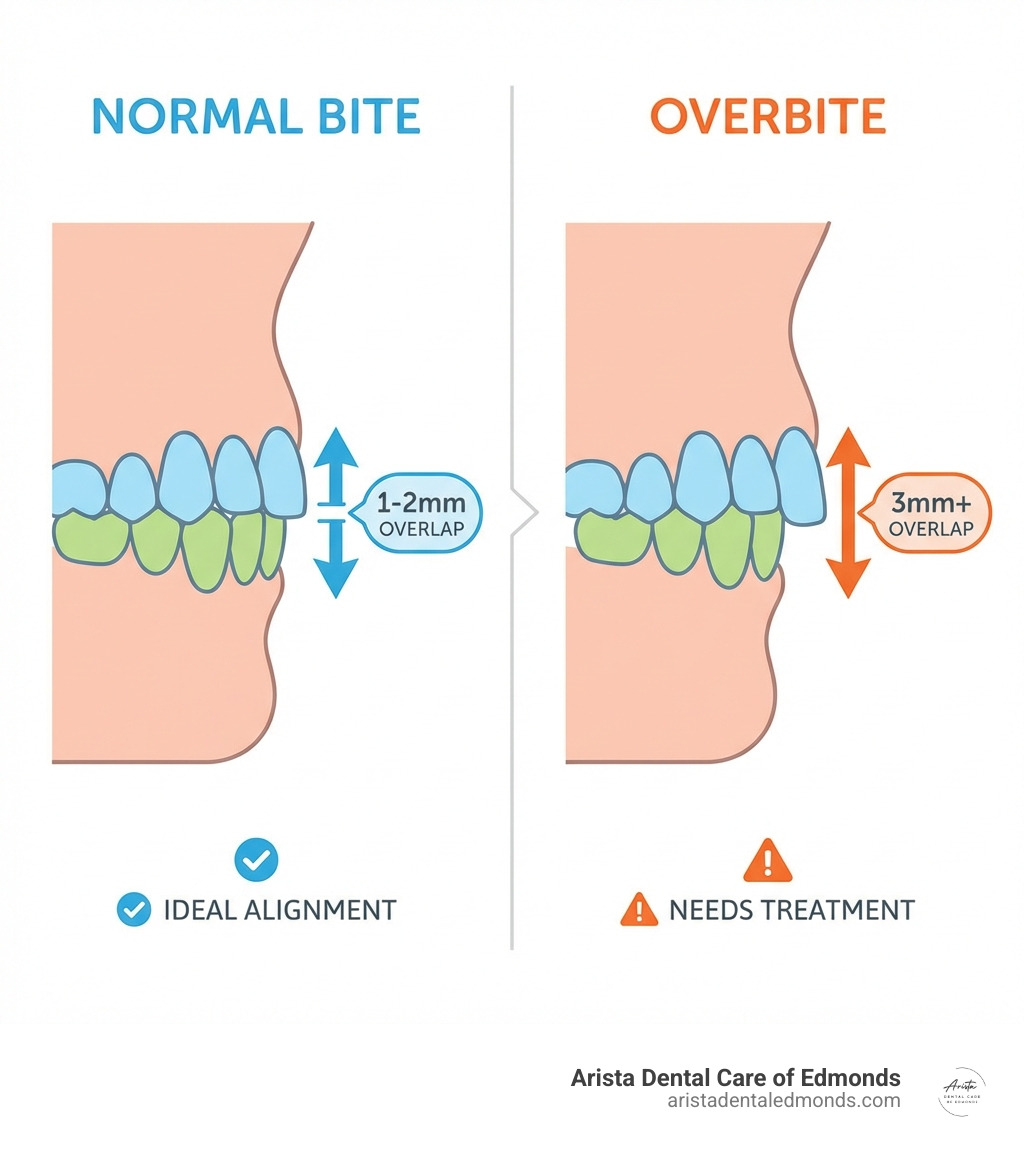
An overbite is a type of malocclusion (dental misalignment) where your upper front teeth extend too far over your lower front teeth. While a slight overlap of 1-2mm is normal and necessary for proper chewing, anything beyond that can cause problems.
According to research, approximately 22% of people worldwide have an overbite that needs treatment. This isn’t just about appearance. Left untreated, overbites can lead to jaw pain, headaches, tooth wear, speech difficulties, and even TMJ disorder.
The good news? Braces apply consistent, gentle pressure to gradually move your teeth and jaw into proper alignment. Whether you’re dealing with crowded teeth, jaw discomfort, or simply want a healthier smile, orthodontic treatment can deliver lasting results.
As Dr. Risha Khan, DMD at Arista Dental Care of Edmonds, I’ve helped many patients transform their smiles through personalized orthodontic care, including braces for overbite correction that address both functional and aesthetic concerns.
Understanding Overbites: More Than Just an Aesthetic Issue
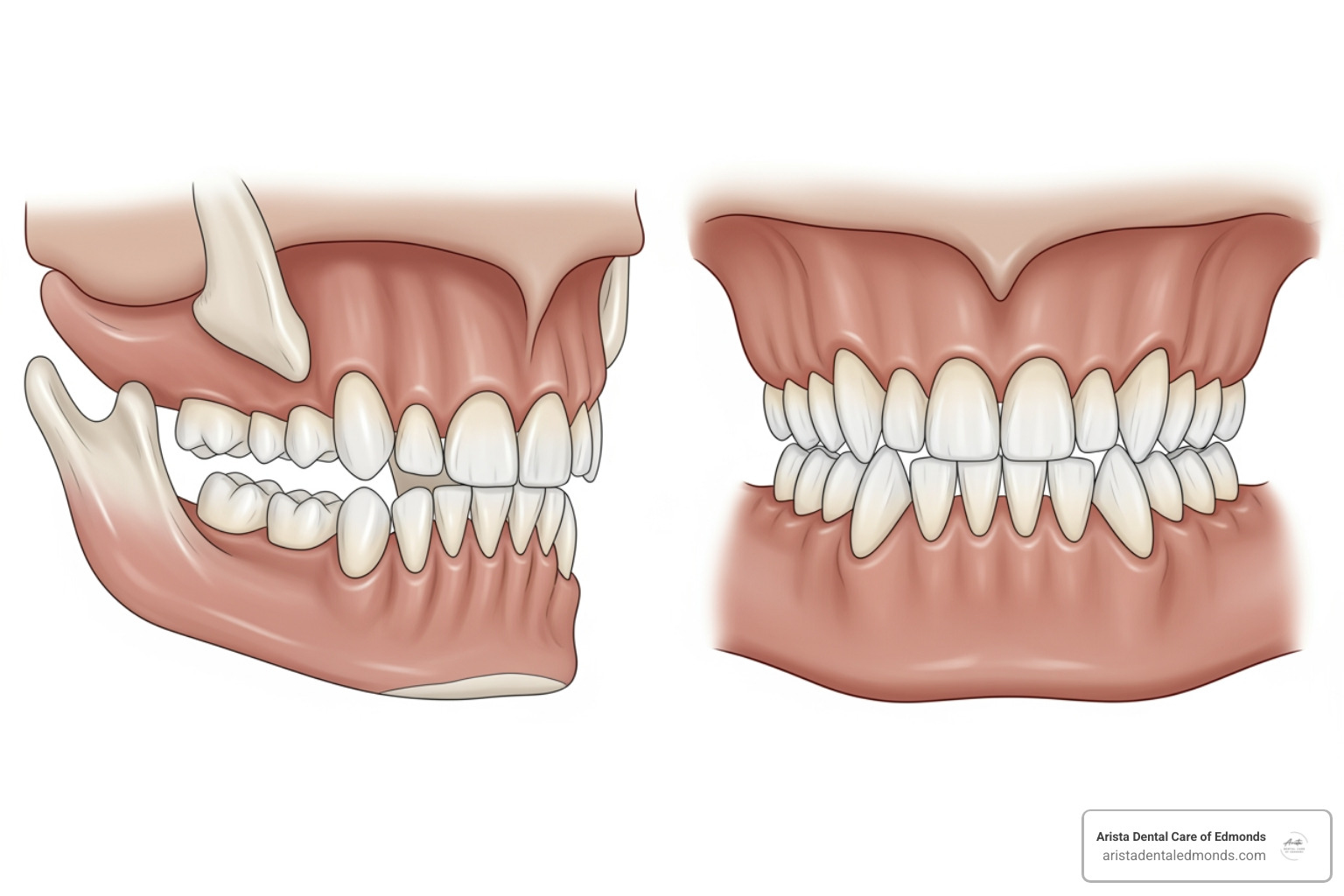
When we talk about an overbite, we’re referring to a condition where your upper teeth extend vertically over your lower teeth when your mouth is closed. While a slight overlap is perfectly normal and even beneficial for proper chewing, too much overlap can become an issue. A normal overbite, or ideal bite, is when your upper incisors cover approximately 1/3 to 1/2 (about 2-4mm) of your lower incisors. Anything beyond this, particularly an overlap of more than 2 to 3 millimeters, is usually considered an overbite in need of treatment. This is also why an overbite is sometimes known as a “deep bite.”
Orthodontists and dentists refer to overbites as a type of malocclusion, which simply means a misalignment of the teeth or jaws. An overbite can range from mild to severe, and its diagnosis involves a thorough evaluation. At Arista Dental Care of Edmonds, our team performs a comprehensive assessment that includes a visual examination of your teeth and jaw, dental X-rays, and often digital imaging. These diagnostic tools help us understand the exact nature and severity of your overbite, distinguishing between a dental overbite (where the teeth themselves are misaligned) and a skeletal overbite (where the jawbones are not properly aligned).
What Causes an Overbite?
Overbites can develop for a variety of reasons, often a combination of genetic and environmental factors. Understanding the root cause helps us tailor the most effective treatment plan for you.
One of the primary causes is genetics. You might simply inherit a jaw shape or size that predisposes you to an overbite. For example, if your upper jaw is significantly larger than your lower jaw, or if your jaws grow at different rates, it can lead to a skeletal overbite.
Jaw development problems can also play a role. Sometimes, jaws are not large enough to allow for teeth to grow in properly, leading to crowding and misalignment that contributes to an overbite.
Beyond genetics, certain childhood habits are major contributors. These include:
- Thumb-sucking and pacifier use: Prolonged sucking habits, especially past the age of five, can exert pressure on developing teeth and jaws, pushing the upper teeth forward and impacting proper jaw alignment.
- Tongue thrusting: This habit involves pushing the tongue against the front teeth during swallowing, which can also contribute to an overbite over time.
- Other causes may include factors like nail biting, chewing on objects, or even mouth breathing. An untreated lost tooth can also cause surrounding teeth to shift, potentially leading to or worsening an overbite.
Signs You Might Need Overbite Correction
While not all overbites require treatment, it’s important to recognize signs that it could be impacting your oral health. If you notice any of the following, we encourage you to seek an orthodontic evaluation:
- Jaw pain or soreness: An improperly aligned bite can put undue stress on your jaw joints and muscles.
- Difficulty chewing or biting: When your teeth do not meet correctly, it can make it challenging to bite into and chew food efficiently.
- Speech impediments: An overbite can affect tongue placement and air flow, potentially causing lisps or other speech difficulties.
- Visible protrusion of upper teeth: Often referred to as “buck teeth,” a noticeable protrusion can impact facial aesthetics and self-confidence.
- Excessive tooth wear: When the upper and lower teeth don’t align properly, certain teeth may grind against each other excessively.
- Gum irritation or injury: In severe cases, the lower front teeth may bite into the gum tissue behind the upper front teeth, causing irritation or even injury.
Recognizing these signs is the first step toward a healthier, more comfortable smile. Our experienced team at Arista Dental Care of Edmonds is here to help you understand your specific needs and guide you through the best treatment options available in Edmonds, Shoreline, Lynnwood, and Mountlake Terrace.
The Health Risks of an Untreated Overbite
While the aesthetic impact of an overbite is often noticed first, the health consequences of leaving it untreated extend far beyond appearance. Correcting an overbite is about improving your oral health and preventing potential problems.
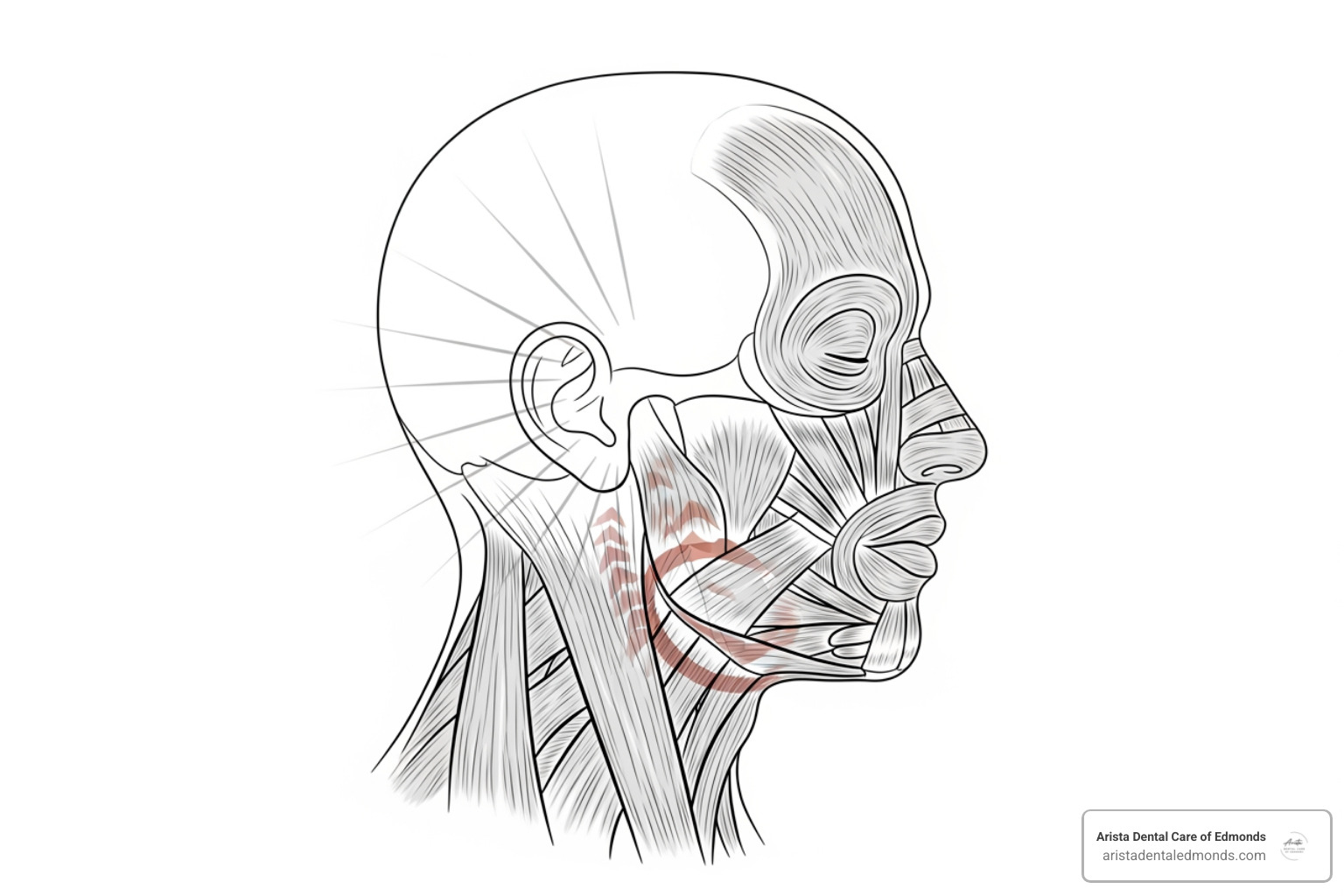
One of the common issues connected to an overbite is temporomandibular joint (TMJ) disorder. The TMJ connects your jawbone to your skull, allowing for essential movements like eating, drinking, and talking. When your bite is misaligned due to an overbite, it can place excessive strain on this joint, leading to symptoms including jaw pain, clicking or popping sounds, difficulty moving your jaw, and even locking of the jaw.
Furthermore, headaches and migraines are common in people with an overbite. Because the jaw is not aligned properly, the muscles connecting the jaw to the skull may work harder and become strained. This chronic muscle tension can trigger frequent headaches.
Beyond jaw pain and headaches, an untreated overbite can lead to:
- Increased risk of tooth decay and gum disease: Misaligned teeth are harder to clean effectively, creating nooks and crannies where plaque and food particles can accumulate.
- Abnormal wear and tear on tooth enamel: The improper contact between upper and lower teeth can cause certain teeth to grind against each other more than they should.
- Difficulty with speech and chewing: A severe overbite can impair your ability to speak clearly and chew food thoroughly.
- Increased risk of injury to front teeth: Protruding upper front teeth are more susceptible to trauma, such as chips or fractures.
- Sleep apnea: In some cases, a severe overbite can contribute to airway obstruction, leading to sleep-disordered breathing.
Fixing an overbite is not merely a cosmetic procedure; it is a step toward safeguarding your long-term oral health and overall well-being. Early intervention can prevent many of these issues from developing or worsening, but adults can also benefit greatly from treatment.
The Complete Guide to Braces for Overbite Correction
Correcting an overbite with braces is a well-established and highly effective treatment. The journey typically begins with a thorough orthodontic evaluation, where our team at Arista Dental Care of Edmonds will assess your unique situation. This initial assessment allows us to understand the specifics of your overbite, including whether it’s dental or skeletal, and its severity. We use this information to create a personalized treatment plan custom to your needs. If you’re ready to start this journey, you can easily schedule your Edmonds Dental Appointment with us.
Traditional braces consist of small brackets that are carefully bonded to the front surface of each tooth, and an arch wire that connects them. This arch wire is periodically adjusted, applying consistent, gentle pressure to gradually guide your teeth into their correct positions. Over time, this continuous force not only straightens individual teeth but also helps to align your bite.
For overbite correction specifically, braces often work in stages. Initially, the arch wire focuses on aligning and leveling your teeth. Once the teeth are better positioned, additional components come into play. Elastics (small rubber bands) may be used to slowly shift the jawline into the correct position. These elastics are typically attached to brackets on the upper and lower teeth, creating the necessary force to correct the vertical overlap and improve jaw harmony.
Types of Braces for Overbite Correction
When it comes to braces for overbite treatment, you have several effective options. We will help you determine the best choice based on your specific needs, lifestyle, and aesthetic preferences.
Traditional Metal Braces: These are the most common and often the most cost-effective type of braces. Made from high-grade stainless steel, they are durable and effective for correcting all types of overbites, from mild to severe. Modern metal braces are smaller and more comfortable than in the past. Traditional metal braces generally range from $3,000-$7,000.
Ceramic Braces: For those who desire a less noticeable option, ceramic braces are an excellent choice. They function similarly to metal braces but use clear or tooth-colored ceramic brackets that blend in with your natural teeth. They can be more prone to staining if not cared for properly, and they may be a bit more fragile than metal braces. Their cost is typically comparable to or slightly higher than metal braces.
Self-Ligating Braces: These braces are a variation of traditional braces that use a specialized clip or door mechanism to hold the arch wire in place, rather than elastic bands. This can result in less friction and potentially fewer adjustment appointments. Self-ligating braces are effective for overbite correction and come in both metal and clear (ceramic) options.
The choice of braces for your overbite will depend on the severity of your condition, your budget, and your aesthetic concerns. Our team in Edmonds, Shoreline, Lynnwood, and Mountlake Terrace will guide you through each option.
How Long Do Braces for Overbite Take?
The duration of braces for overbite treatment is highly individualized and influenced by the severity and complexity of your overbite, as well as your age and how diligently you follow our instructions.
Generally, orthodontic treatment with braces for an overbite can last anywhere from 6 months to 3 years. Here is a general guide:
- Mild overbites (4-6mm): Often require 6-12 months of treatment.
- Moderate overbites (6-8mm): Typically need 12-18 months with braces and elastics.
- Severe overbites (8mm+): Usually require 18-24+ months of comprehensive braces treatment, and in very extreme situations, surgical intervention may be considered.
After your braces are removed, your teeth have a natural tendency to shift back to their original positions. This is why retainers are essential for maintaining the results of your overbite correction. We will provide you with a custom-made retainer, and consistent wear, as prescribed, helps ensure your results last.
Can Braces for Overbite Work for Adults?
Braces for overbite are highly effective for adults, not just children and teens. Abnormal bites like overbites are often treated earlier in life, but adults can achieve successful outcomes as well.
The primary difference for adult orthodontics is that your jawbones are mature and no longer growing. This means that while teeth can still be moved effectively, significant skeletal discrepancies (jaw alignment issues) might require more complex approaches, potentially involving additional appliances or, in rare severe cases, jaw surgery. However, for many adult overbites, braces alone are a strong solution.
Adult patients often seek orthodontic treatment for aesthetic improvements, relief from jaw pain, better chewing function, and improved oral health. We understand that adults may prefer more discreet treatment options or need to balance treatment with professional and personal commitments, so we offer a range of brace types, including ceramic and self-ligating options.
At Arista Dental Care of Edmonds, we believe it’s never too late to work toward a healthy, confident smile. Our experienced team is adept at treating adults and creating personalized treatment plans that fit your needs and lifestyle. Feel free to Meet Edmonds Dental Team and learn more about our approach to adult orthodontics.
Braces and Other Overbite Correction Options at Arista Dental Care
While braces for overbite are versatile and effective, sometimes, especially in more severe cases or when dealing with skeletal discrepancies, other treatments may be necessary in conjunction with braces. Our comprehensive approach at Arista Dental Care of Edmonds ensures that we provide the most appropriate and effective solution for your specific overbite.
For many overbites, particularly those that are primarily dental (meaning the teeth are misaligned, but the jaw structure is relatively balanced), braces alone are sufficient to achieve excellent results. The consistent pressure from the brackets and wires, often combined with elastics, can effectively move teeth and correct the vertical overlap.
However, in severe cases, especially those involving skeletal overbites where there is a significant imbalance in jaw size or position, additional interventions might be recommended. For children and teens who are still growing, we have the opportunity to guide jaw development. This might involve:
- Palate expanders: If your child has a narrow upper jaw contributing to their overbite or crowding, we might use a palate expander to increase the size of the jaw. A larger jaw can create more space for teeth to align properly and make the job of braces easier.
- Headgear: In some growing patients, headgear might be used to influence jaw growth and help correct the overbite by guiding the development of the upper or lower jaw.
For adults with severe skeletal overbites, where jaw growth is complete, options beyond braces alone might include:
- Tooth extractions: In cases of significant crowding that contributes to an overbite, extracting one or more teeth might be necessary to create space for proper alignment. This is carefully considered and only done when essential for the outcome.
- Jaw surgery (orthognathic surgery): For very severe skeletal overbites, where the upper and lower jaws are significantly misaligned and braces alone cannot achieve a stable bite, jaw surgery may be recommended. Braces are typically worn before and after surgery to fine-tune tooth positioning.
At Arista Dental Care of Edmonds, we offer comprehensive orthodontic solutions. Our team evaluates each patient individually, considering all factors to determine the most effective and least invasive path to correcting their overbite.
Frequently Asked Questions about Overbite Correction
We understand that starting orthodontic treatment brings many questions. Here are some of the most common inquiries we receive about braces for overbite correction.
How much do braces for an overbite cost?
The cost of braces for an overbite can vary based on the type of braces chosen, the complexity and severity of the overbite, the duration of treatment, and your geographic location. Generally, traditional braces range from $3,000 to $7,000.
Factors that influence the total cost include:
- Type of braces: Metal braces are typically the most affordable, while ceramic or self-ligating options might be slightly more.
- Severity of overbite: More complex cases requiring longer treatment times or additional appliances will naturally incur higher costs.
- Insurance coverage: Many dental insurance plans offer some coverage for orthodontic treatment, often covering 25-50% of the total cost.
- Payment plans: At Arista Dental Care of Edmonds, we offer various flexible payment plans to help make treatment affordable for our patients in Edmonds, Shoreline, Lynnwood, and Mountlake Terrace.
During your initial consultation, we’ll provide a detailed breakdown of the costs involved and discuss your financial options.
Is getting braces for an overbite painful?
Getting braces for an overbite typically involves some initial discomfort, but it is usually manageable and temporary.
When your braces are first placed, or after adjustments, you might experience:
- Soreness or tenderness: Your teeth and gums might feel tender or sore for a few days as they adapt to the new pressure.
- Pressure: You will likely feel a sensation of pressure on your teeth.
- Irritation: The brackets and wires can sometimes irritate the inside of your cheeks, lips, and tongue as your mouth adjusts. Orthodontic wax can be applied to help alleviate this.
To manage this discomfort, we recommend:
- Soft foods: Stick to a diet of soft foods for the first few days after placement or adjustments.
- Over-the-counter pain relief: Medications like ibuprofen or acetaminophen can help reduce soreness.
- Saltwater rinses: Rinsing with warm salt water can help soothe irritated gums and mouth sores.
Most patients find that any significant discomfort subsides within a week after placement and within a day or two after routine adjustments.
What happens after the braces come off?
Once your braces for overbite have successfully corrected your bite and teeth alignment, the next crucial phase begins: retention.
After your braces are removed, your teeth have a natural tendency to shift back to their original positions, known as relapse. To help prevent this, we will fit you with a custom-made retainer. There are generally two types:
- Removable retainers: These are typically made of clear plastic or a combination of wire and acrylic. You’ll wear them full-time initially, and then usually just at night for an extended period.
- Fixed retainers: These consist of a thin wire bonded to the back surface of your front teeth (upper or lower). They are discreet and permanently attached, offering continuous retention.
The role of retainers is to hold your teeth in their new, corrected positions while the bone and tissues around them stabilize. Lifelong retainer wear, especially at night, is the best way to maintain your results.
Your Path to a Healthier, Aligned Smile
Correcting an overbite with braces is more than just an aesthetic improvement; it is an investment in your long-term oral health, comfort, and confidence. Braces for overbite can address visible misalignment and help prevent issues like jaw pain, headaches, excessive tooth wear, and gum problems.
At Arista Dental Care of Edmonds, we are committed to helping our patients achieve optimal oral health and attractive smiles. Our team provides personalized care and custom treatment plans that address your unique needs and goals.
Choosing to get braces is a significant decision, and we aim to make your journey as smooth and comfortable as possible. From your initial consultation to the final retainer fitting, you will receive attentive care from our dedicated team.
If you’re in Edmonds, Shoreline, Lynnwood, or Mountlake Terrace, and you’re ready to take the first step towards a healthier, more aligned smile, we invite you to connect with us. Find the benefits of orthodontic treatment and the comprehensive dental care available at Arista Dental Care of Edmonds.
Don’t let an overbite hold you back from the smile you deserve. Book Appointment with us today. You can also Learn more about our Edmonds Braces & Orthodontics services to see how we can help you achieve your best smile.

Edmonds Dentist

21727 76th Ave W Ste G, Edmonds, WA 98026
(425) 967-7272
info@aristadentaledmonds.com