

Don’t Grin and Bear It: Emergency Dental Options Across Washington State
When Dental Pain Strikes: Understanding Your Emergency Options in Washington
Dealing with severe tooth pain, a broken tooth, or a knocked-out tooth is overwhelming. When you need emergency dental care WA, knowing where to turn can make all the difference in saving your tooth and relieving your pain. This guide will help you steer your options across Washington State.
Quick Answer: Finding Emergency Dental Care in Washington State
- Call your regular dentist first – Most offer same-day emergency appointments if you call before noon.
- After-hours emergencies – Contact your dentist’s emergency line or seek care at urgent care facilities.
- Community health centers – Many accept walk-ins for dental emergencies.
- University dental clinics – The UW School of Dentistry in Seattle provides urgent care.
- Life-threatening situations – Go to the ER for uncontrolled bleeding, severe swelling affecting breathing, or jaw injuries.
Dental emergencies, from an abscessed tooth to a knocked-out tooth from a sports accident, cause significant pain and anxiety. The good news is that you have many options for emergency dental care WA, including same-day appointments at local dental practices, walk-in services at community health centers, and specialized urgent care clinics.
I’m Dr. Risha Khan, a dentist at Arista Dental Care of Edmonds. I am passionate about helping patients steer emergency dental care WA situations with compassion and advanced technology. My focus is on providing immediate relief and creating personalized treatment plans to address the urgent issue and prevent future emergencies.
Recognizing a Dental Emergency: When to Act Fast
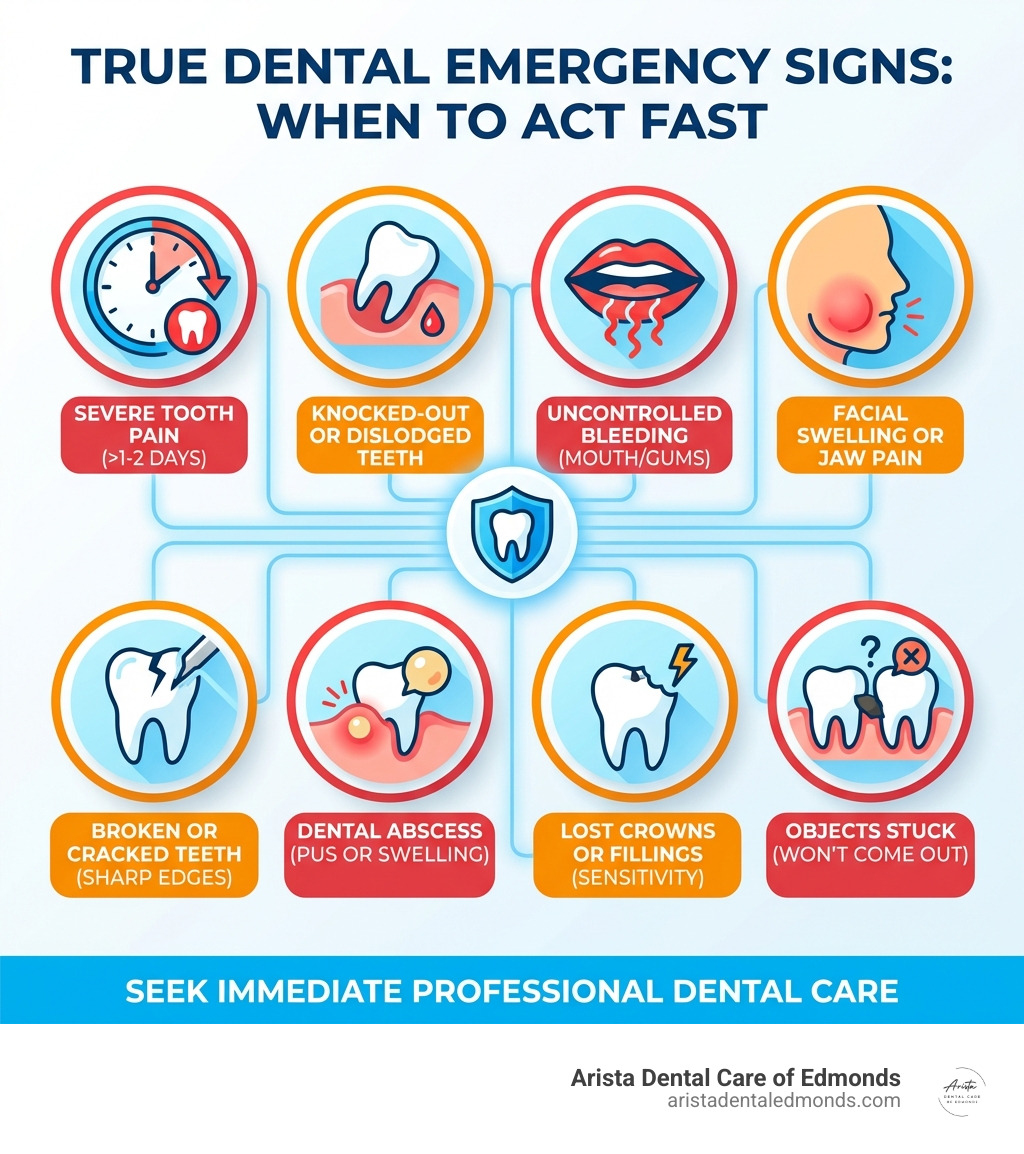
When dental pain strikes, it can be a sign of a serious problem requiring immediate attention. A dental emergency is any oral health issue causing severe pain, excessive bleeding, infection, or a loose or missing tooth. These situations can worsen rapidly if left untreated, leading to more complex and costly procedures.
For example, a severe toothache may indicate a deep cavity or cracked tooth. Swelling around the jaw can signal an abscess, a serious infection that can spread throughout your body. Uncontrolled bleeding is always a concern, and a knocked-out tooth is a time-sensitive emergency with a narrow window for successful re-implantation.
To help you distinguish between what can wait and what needs immediate attention, here are the differences between an “emergency” and “urgent” dental issue:
| Feature | Emergency Dental Issue | Urgent Dental Issue |
|---|---|---|
| Severity | Severe, debilitating pain; life-threatening potential | Discomfort, persistent pain, but not immediately life-threatening |
| Symptoms | Uncontrolled bleeding, severe swelling affecting breathing, knocked-out tooth, jaw fracture, severe infection with fever | Lost filling/crown causing sensitivity, chipped tooth without severe pain, loose bracket/wire |
| Timeframe | Requires immediate attention (within hours) | Should be addressed promptly (within 24-48 hours) |
| Risk if Delayed | Tooth loss, spread of infection, systemic health problems, permanent damage | Worsening pain, further damage, increased treatment complexity |
Common Dental Emergencies and Their Symptoms
Here are the most common dental emergencies and their symptoms:
- Knocked-Out Tooth: This is a critical emergency. A permanent tooth dislodged from its socket must be re-implanted as quickly as possible (ideally within 30-60 minutes) for the best chance of survival.
- Broken or Cracked Teeth: A fracture can expose sensitive inner layers, causing pain and sensitivity. Prompt treatment prevents further damage and infection.
- Lost Fillings or Crowns: This leaves the underlying tooth exposed and vulnerable to sensitivity, decay, or fracture. It should be addressed quickly.
- Dental Abscess: A serious infection with a pocket of pus around the tooth root. Symptoms include severe, throbbing pain, facial swelling, fever, and a foul taste. Abscesses require immediate attention as the infection can spread.
- Severe, Persistent Tooth Pain: A toothache that lasts more than a day or two is a red flag for a serious issue like a deep cavity, infection, or cracked tooth. Don’t ignore it.
- Bleeding Gums: While minor bleeding can be a sign of gum disease, sudden, heavy, or uncontrolled bleeding after an injury requires immediate attention.
When to Visit the ER Instead of a Dentist
While a dentist is best for most dental emergencies, go to the nearest emergency room (ER) for life-threatening conditions. Most ERs do not have a dentist on staff but can manage critical issues. Go to the ER if you experience:
- Uncontrolled Bleeding: Bleeding from your mouth that doesn’t stop after 10-15 minutes of applied pressure.
- Severe Swelling Affecting Breathing or Swallowing: This can indicate a rapidly spreading infection that could compromise your airway.
- Jaw Fracture or Dislocation: If you suspect a broken or dislocated jaw from trauma.
- Head or Neck Trauma: Any dental emergency accompanied by head trauma or loss of consciousness requires immediate ER attention.
For all other dental emergencies, your dentist is better equipped to provide effective diagnosis and treatment.
First Aid for Dental Emergencies: What to Do Before You See a Dentist
Knowing what to do immediately after a dental emergency can reduce pain, prevent further damage, and improve treatment outcomes. These first aid measures are crucial bridging steps before you can get to a dental professional.

Managing a Knocked-Out or Broken Tooth
When a tooth is knocked out, time is critical. Your actions in the first few minutes can determine if the tooth can be saved.
- Handle with Care: Pick up the tooth by the crown (the chewing surface), not the root.
- Rinse Gently: If dirty, rinse the tooth with cold water for no more than 10 seconds. Do not scrub or wipe it.
- Reinsert if Possible: Gently try to place the tooth back into its socket, ensuring it’s facing the correct way. Bite down on clean gauze to hold it in place.
- Store Properly: If you can’t reinsert it, place the tooth in a cup of cold milk or hold it in your mouth next to your cheek (if there’s no risk of swallowing). Do not use plain water.
- Contact Us Immediately: Call us at Arista Dental Care of Edmonds right away. The sooner you get here, the better the chance of saving the tooth.
For a broken or chipped tooth:
- Rinse your mouth with warm water.
- Collect any broken pieces and bring them with you.
- Apply a cold compress to your face to reduce swelling.
- If there’s a sharp edge, cover it with sugar-free gum or dental wax.
- Seek prompt care to prevent further damage. We can discuss options like cosmetic bonding or a crown. For more information, see our page on Edmonds Crowns and Bridges.
How to Handle Pain, Swelling, and Lost Restorations
Here’s how to get temporary relief at home:
- For Pain: Rinse with warm salt water (1/2 tsp salt in 8 oz water). Use over-the-counter pain relievers like ibuprofen or acetaminophen as directed. Oral numbing gels can also provide temporary relief.
- For Swelling: Apply a cold compress to the outside of your cheek for 15-20 minutes at a time. When resting, keep your head liftd.
- For Lost Fillings or Crowns: Protect the exposed tooth with sugar-free gum or temporary dental cement from a pharmacy. Avoid chewing on that side. If a crown comes off, save it and bring it to your appointment. Sometimes it can be re-cemented.
These are temporary measures. A lost filling leaves your tooth vulnerable. For information on modern restorations, visit our page on Edmonds White Fillings. Always contact us as soon as possible for professional treatment.
Finding Emergency Dental Care WA: Your Guide to Washington State Providers
When a dental emergency strikes, knowing where to turn is key, especially after hours. Fortunately, there are various options for emergency dental care WA, particularly in and around our service areas of Edmonds, Shoreline, Lynnwood, and Mountlake Terrace.
Many dental practices, including ours, offer same-day appointments for emergencies. Community health centers often provide walk-in or same-day services, sometimes on a sliding fee scale. For those near Shoreline, the University of Washington School of Dentistry in Seattle also operates a Dental Urgent Care Clinic for patients with pain, swelling, or other immediate needs.
How to Find an Emergency Dentist in Washington State
Here’s how to find emergency dental care WA when you need it most:
- Contact Your Regular Dentist First: Your established dental office, like Arista Dental Care of Edmonds, should be your first call. We prioritize patient emergencies and will make every effort to see you quickly. Many practices also offer after-hours emergency contact numbers.
- Online Search: A search for “emergency dentist Edmonds WA,” “emergency dental care Shoreline WA,” or similar local terms can provide a list of options. Look for practices that mention emergency services or extended hours.
- Washington State DOH Resources: The Department of Health (DOH) has a directory of dental providers. You can search their website to find providers in your area: Find a provider via the WA DOH.
- Community Health Centers: These centers are a great option for affordable care, including emergency services, and many accept WA Apple Health (Medicaid). You can find clinics in Edmonds, Lynnwood, and the greater Seattle area that offer drop-in times or same-day appointments for emergencies.
- University Dental Clinics: As mentioned, the UW School of Dentistry in Seattle provides an urgent care clinic. While wait times can vary, they offer assessment, diagnosis, and treatment of urgent dental problems.
When calling any clinic, be sure to clearly explain your symptoms and the urgency of your situation.
What to Expect from an Emergency Dental Care WA Visit
When you arrive for an emergency dental care WA visit, our primary focus is to relieve your pain and address the immediate problem.
- Assessment and Diagnosis: We’ll start with an examination and may take X-rays to accurately diagnose the issue.
- Pain Relief: Our immediate priority is to make you comfortable. This may involve local anesthesia or prescribing medication.
- Immediate Treatment: Depending on the diagnosis, we will perform the necessary procedure. This could include a temporary filling, draining an abscess, or in severe cases, an emergency extraction. For more on this, see our Edmonds Teeth Extractions page. For severe infections, a root canal may be started to save the tooth. Learn more on our Edmonds Root Canals page. If you arrive quickly with a knocked-out tooth, we will attempt to re-implant it.
- Follow-Up Plan: After addressing the emergency, we’ll discuss a long-term treatment plan and schedule any necessary follow-up appointments to ensure the root cause is resolved.
Costs, Payment, and Prevention of Dental Emergencies
Understanding the financial aspects of emergency dental care WA and taking steps to prevent future incidents are vital parts of managing your oral health.
Understanding the Cost of Emergency Dental Care WA
The cost of emergency dental care varies based on the treatment needed. Here’s what to know:
- Emergency Fees: Some offices may charge an additional fee for emergency or after-hours appointments.
- Insurance Coverage: Most dental insurance plans cover a portion of emergency procedures. Contact your provider to understand your benefits, deductibles, and co-pays.
- Payment Options: If you lack insurance or full coverage, many practices offer payment options, including credit cards and third-party financing like Care Credit. Some, like us, may offer payment plans.
- Sliding Scale Options: Community health centers are excellent resources for affordable care, often offering services on a sliding fee scale based on income or accepting WA Apple Health (Medicaid).
At Arista Dental Care of Edmonds, we believe finances shouldn’t prevent you from receiving care. We offer various Edmonds dental insurance and financing options to help.
How to Prevent Future Dental Emergencies
While not all emergencies are avoidable, many can be prevented with good habits:
- Consistent Oral Hygiene: Brush twice a day with fluoride toothpaste and floss daily. This prevents cavities and gum disease, common causes of toothaches and abscesses.
- Regular Dental Visits: Schedule check-ups and cleanings twice a year. This allows us to spot and fix minor issues before they become emergencies.
- Wear a Mouthguard for Sports: A custom-fitted mouthguard is essential for contact sports to protect against knocked-out or broken teeth. Learn about our options on the Edmonds Mouth Guards page.
- Avoid Using Teeth as Tools: Don’t use your teeth to open packages or bite on hard, non-food items.
- Be Mindful of Hard Foods: Chewing on ice, hard candies, or popcorn kernels can crack teeth or dislodge restorations.
- Address Minor Issues Promptly: Don’t ignore sensitivity or a small chip. Getting it treated early can prevent a future emergency.
By taking these proactive steps, you can significantly reduce your risk of needing emergency dental care WA.
Frequently Asked Questions about Emergency Dental Care
It’s common to have questions when facing a dental emergency. Here are answers to some of the most frequent ones.
Will the ER pull a tooth?
Generally, no. Hospital emergency rooms (ERs) are not equipped for specialized dental work like extractions. An ER can provide pain medication, prescribe antibiotics for severe infections, and control significant bleeding. However, they will almost always advise you to follow up with a dentist for definitive treatment, such as a root canal or extraction to address the source of the problem.
How quickly do I need to see a dentist for a knocked-out tooth?
For a knocked-out permanent tooth, time is critical. You should see a dentist as quickly as possible, ideally within 30 to 60 minutes. The success rate for re-implantation drops significantly after this window. Prompt action is vital because the cells on the tooth’s root, which are necessary for reattachment, begin to die once the tooth dries out. If you act fast and follow the proper first aid steps, the chances of saving the tooth are much higher.
What’s the difference between urgent and emergency dental care?
While both require prompt attention, there’s an important distinction:
Emergency Dental Care: This involves situations that are potentially life-threatening or cause severe pain, bleeding, or risk of permanent damage if not treated within hours. Examples include a knocked-out tooth, uncontrolled bleeding, a severe abscess with fever, or facial swelling that affects breathing. For life-threatening issues, go to the ER first.
Urgent Dental Care: This describes conditions that are not immediately life-threatening but still require prompt attention to avoid becoming a true emergency. Discomfort can be significant. Examples include a lost filling, a chipped tooth without severe pain, or a persistent but manageable toothache. For urgent issues, contact your dentist for the earliest possible appointment.
If you’re unsure whether your situation is urgent or an emergency, always err on the side of caution and call your dentist for guidance.
Conclusion: Your Next Steps for a Healthy Smile
Navigating a dental emergency can be a stressful and painful experience, but knowing your options for emergency dental care WA can make all the difference. The key takeaways are to recognize the signs of a true dental emergency, take immediate first aid steps, and seek professional help without delay. Prompt care can alleviate pain, prevent further complications, and often save your tooth.
We understand that dental emergencies are never convenient, which is why we are committed to providing compassionate, efficient, and effective care when you need it most. At Arista Dental Care of Edmonds, we use advanced technology and a gentle approach to ensure your comfort and well-being.
Don’t let dental pain or injury disrupt your life. If you’re experiencing a dental emergency in Edmonds, Shoreline, Lynnwood, or Mountlake Terrace, please don’t hesitate to contact us. We’re here to help you get back to smiling brightly.

Edmonds Dentist

21727 76th Ave W Ste G, Edmonds, WA 98026
(425) 967-7272
info@aristadentaledmonds.com